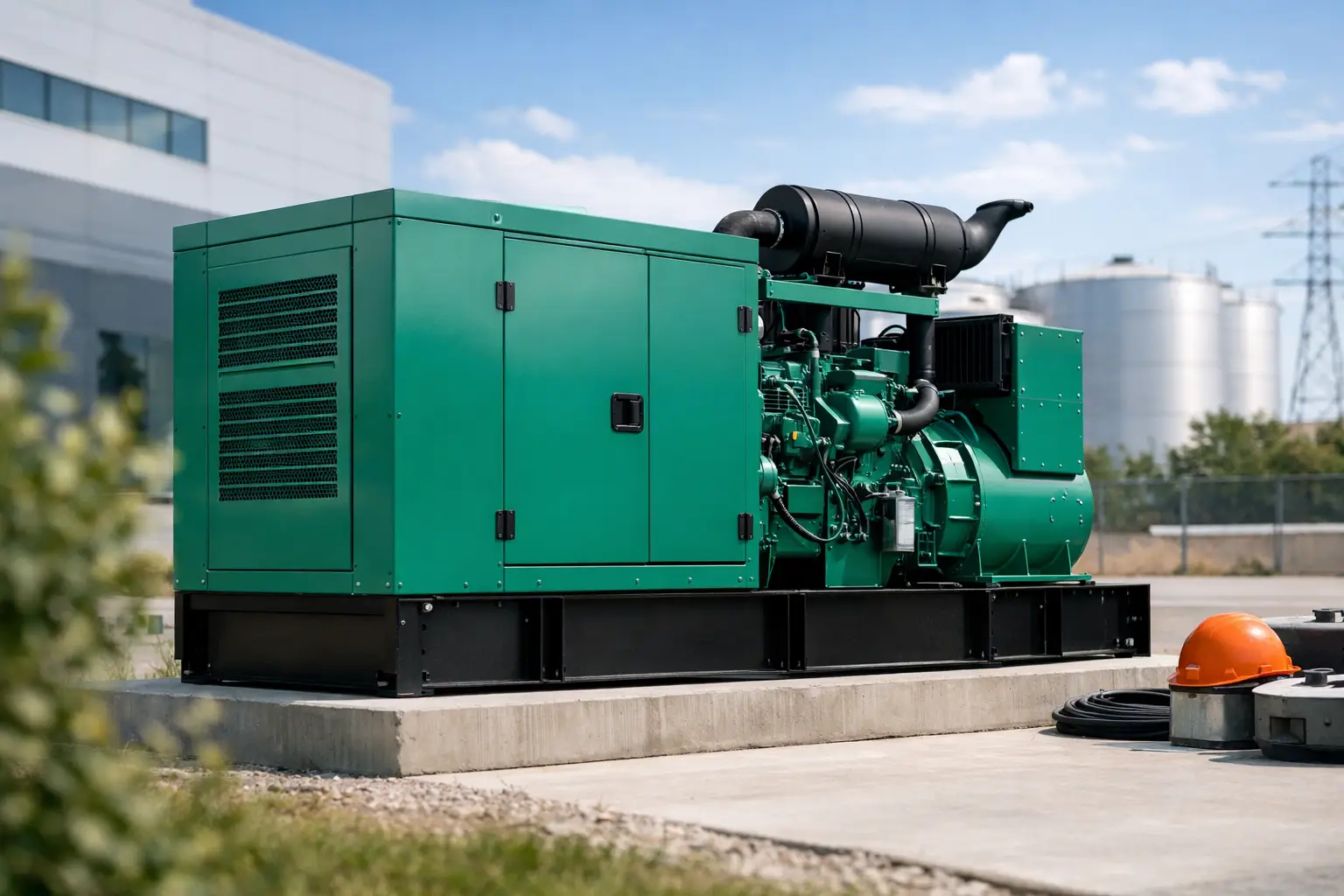
When a site cannot afford a failed start, the Cummins C220D5EQ diesel generator from Global Generators Ltd sits in the category buyers usually shortlist early. At this power level, the decision is rarely about having any generator on site. It is about securing dependable output, matching the set to the duty profile, and avoiding under-specification that leads to operational risk later.
This is a generator that suits serious standby and continuous power planning. For facilities teams, contractors and project engineers, the real question is not whether a 220 kVA-class Cummins set looks capable on paper. It is whether the package, ratings and support arrangement fit the application properly from day one.
Why the Cummins C220D5EQ diesel generator matters
The Cummins C220D5EQ sits in a useful part of the market. It is large enough to support substantial commercial and industrial loads, but still practical for many single-site installations where a very high-capacity plant would be excessive. That makes it relevant across warehousing, manufacturing, construction compounds, healthcare support services, telecoms infrastructure and large commercial buildings.
In operational terms, this size of generator often bridges a gap. Smaller sets may cover lighting, basic services and a limited number of circuits, but they can struggle once HVAC demand, process loads, pump systems, refrigeration or critical plant are included. A unit in the C220D5EQ class gives procurement teams and specifiers more headroom to design for real conditions rather than ideal ones.
That extra margin matters because generator performance is never judged in a brochure. It is judged during mains failure, during periods of peak demand and during adverse weather, delayed maintenance windows or extended run times. Buyers looking at a Cummins-powered set are usually doing so because they want a proven engine platform with established credibility in critical power environments.
Standby or prime power - the specification decision that changes everything
One of the most common purchasing mistakes is treating standby and prime power as if they are interchangeable. They are not. The right interpretation depends on how the generator will be used on site.
If the C220D5EQ is being installed for emergency backup, the focus is on dependable start-up, stable performance under transfer, and the ability to carry essential loads during utility interruptions. In that case, standby rating is the main reference point. Hospitals, data support facilities, logistics centres and office buildings with life safety systems often assess the set from this angle.
If the generator is expected to run for extended periods as a working power source, the prime rating becomes more significant. Construction sites, temporary installations, remote compounds and certain industrial operations may need the unit to operate as part of normal site activity rather than purely as a contingency asset. That changes how the machine should be sized, maintained and integrated.
This is where a specification-led buying process matters. A generator that looks suitable under standby assumptions may not be the right choice for repeated daily loading. Equally, some buyers over-specify for a straightforward backup role and add unnecessary capital cost. The best outcome usually comes from load analysis, realistic duty assessment and a clear view of future site expansion.
What buyers should look at in the Cummins C220D5EQ
The Cummins name carries weight because buyers associate it with dependable engine performance, parts support and broad market familiarity. That is useful, but a serious purchase should still be assessed on the full generator package rather than the engine badge alone.
For the Cummins C220D5EQ diesel generator from Global Generators Ltd, the practical questions are straightforward. What is the standby and prime power output? What voltage and phase configuration does the project require? Is the set supplied in open or enclosed format? What are the acoustic expectations on site? How will fuel storage, ventilation and access for service be handled?
A silent canopy can be the right decision for commercial premises, residential-adjacent developments or urban infrastructure where noise limits affect planning or operation. An open set may make sense in a dedicated plant environment where enclosure is handled separately and service access is a priority. Neither is universally better. It depends on the installation context, environmental restrictions and maintenance strategy.
Control system capability also deserves attention. Buyers should expect visibility on operating status, alarms and shutdown conditions, along with a control arrangement that supports reliable transfer and practical fault finding. In critical power applications, control clarity is not a convenience feature. It shortens response times when something needs attention.
Where the C220D5EQ fits best
A generator in this range is well suited to medium-to-large load groups where continuity has direct commercial consequences. In manufacturing, it can support production lines, compressors, extraction systems and essential process equipment, provided starting currents and load sequencing are properly planned. In logistics, it can protect dock operations, refrigeration, security systems and warehouse automation. On construction projects, it may serve as a principal site power source where utility supply is unavailable or delayed.
It is also a strong candidate for large commercial buildings and institutional environments that need resilient backup for lifts, fire systems, emergency lighting, server rooms and selected mechanical services. The exact coverage depends on the load study. That point is worth stressing because the same nominal generator size can perform very differently depending on motor loads, step loading and power factor characteristics.
For some buyers, the C220D5EQ will be the right fit immediately. For others, it may sit just below the capacity needed once all starting demands and redundancy requirements are accounted for. That is why good suppliers do not reduce the discussion to headline kVA alone.
The commercial case for a stock-backed supplier
Availability is often as important as specification. Many generator purchases are not made on a relaxed project timescale. They are driven by delayed utility connections, resilience upgrades, plant failure, contract mobilisation or urgent risk mitigation. In those situations, long lead times can be as disruptive as the power problem itself.
That is where a stockist model has practical value. A supplier with established inventory at key power sizes can move faster on quotations, technical confirmation and delivery scheduling. For UK buyers, fast availability reduces exposure to downtime and project slippage. For export customers, it can simplify sourcing where local supply chains are inconsistent.
Global Generators positions itself around this requirement - dependable stock, recognised generator platforms and a commercially direct route from enquiry to specification review. For procurement teams, that matters because it shortens the path from identified need to installed equipment.
Buying the Cummins C220D5EQ diesel generator with fewer surprises
The best procurement outcomes usually come from answering a few technical questions early. Buyers should confirm the full load profile, not just the estimated running load. They should identify any large motors or peak inrush demands, clarify whether the set is standby or prime, and decide how much future expansion needs to be allowed for.
Site conditions also matter. Ambient temperature, altitude, ventilation path, delivery access and fuel autonomy can all affect the final recommendation. A generator that is technically suitable in principle may need changes in enclosure, tank arrangement or control options to work properly in practice.
It is also worth being honest about operating expectations. If a site says it needs backup power but in reality expects long-duration operation during grid constraints, that should be reflected in the specification from the outset. Likewise, if acoustic performance is critical, that should not be treated as a late-stage add-on.
Is the Cummins C220D5EQ the right generator?
For many commercial and industrial applications, yes - provided the duty, load profile and installation conditions align with what the set is built to do. The C220D5EQ occupies a practical middle ground where buyers get meaningful power capacity from a recognised engine platform without stepping immediately into much larger and more expensive plant.
Its appeal is clear. It offers the kind of output range that can support serious infrastructure, it suits both standby and certain prime power scenarios when correctly specified, and it comes from a brand family widely trusted in mission-critical environments. The trade-off is equally clear: a set at this level still needs proper sizing, proper installation and realistic planning around runtime, acoustics and service access.
For buyers who are already in the market, that is the sensible way to view it. Not as a generic generator, but as a power asset that needs to be matched carefully to the site. Get that right, and the result is not just emergency cover on paper - it is dependable power when the mains fails and the operation still has to keep moving.