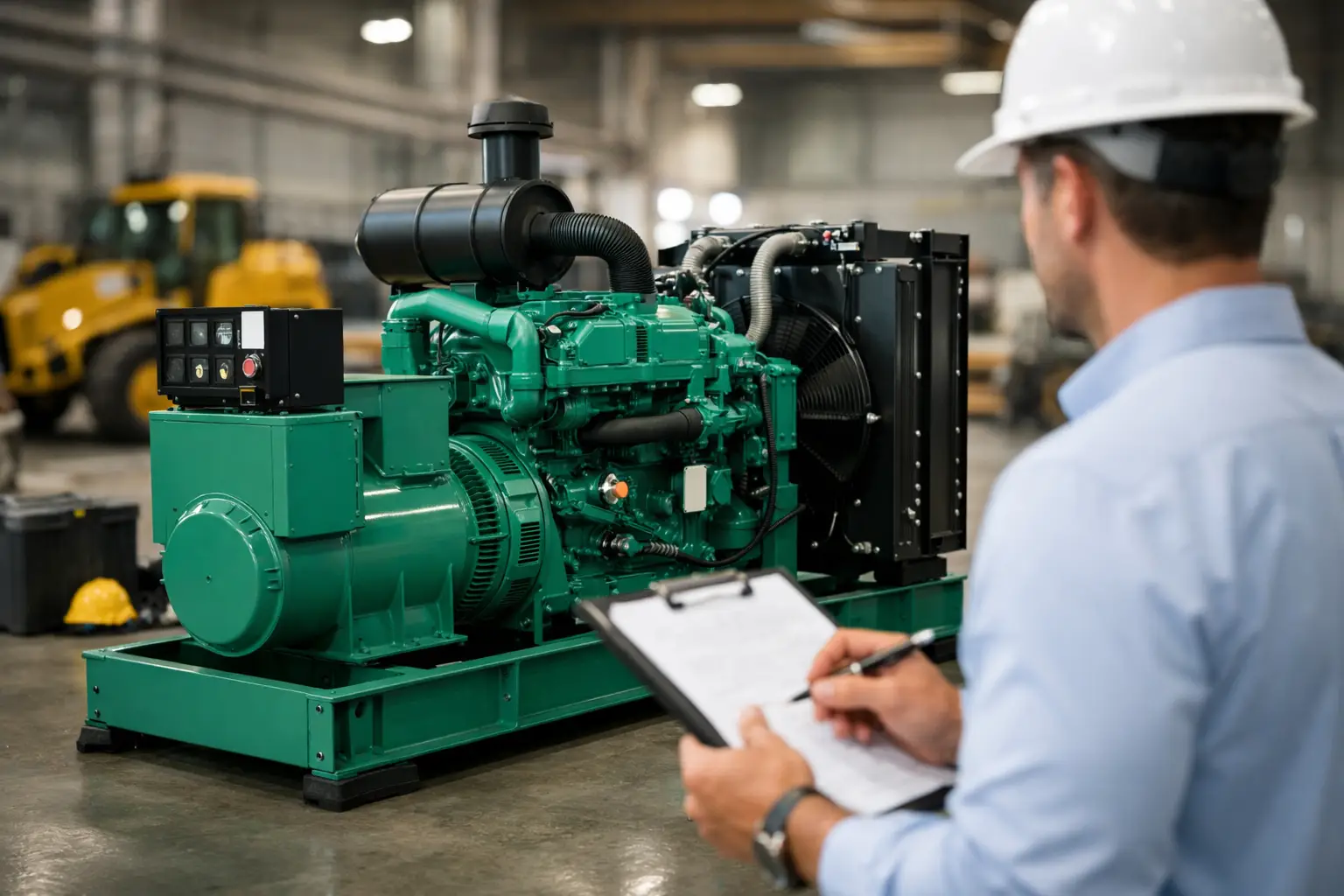
How to Buy Industrial Generator Equipment
If you are working out how to buy industrial generator equipment, the cost of getting it wrong is rarely limited to the purchase price. A generator that is undersized, wrongly configured or poorly matched to the site can create nuisance tripping, poor motor starting, fuel waste and unplanned downtime. For critical operations, the buying process needs to start with the load, the duty and the site conditions rather than the headline price.
How to buy industrial generator systems for real operating conditions
Industrial generators are bought for one of two broad duties - standby power when the mains fails, or prime power where the set carries the site load as the main source of electricity. That distinction matters immediately because a standby set and a prime-rated set are not interchangeable in commercial terms, even if they look similar on paper. Prime applications need closer attention to running hours, fuel consumption, maintenance intervals and the effect of variable loading over time.
The first serious step is to define what the generator must support. Some sites need to carry the entire facility. Others only need life safety systems, selected production lines, IT rooms, pumps or temporary construction loads. That scope affects the required kVA, the transfer arrangement and whether load prioritisation will be more cost-effective than buying a larger set.
Many buyers begin with an estimated total connected load and stop there. That is where mistakes begin. Connected load is not the same as actual running load, and actual running load is not the same as starting demand. Motors, compressors, pumps and HVAC plant can create high inrush currents that a generator must handle without unacceptable voltage dip. If the site includes non-linear loads such as UPS systems, variable speed drives or telecoms equipment, you also need to consider harmonics and alternator performance.
Start with kVA, load profile and starting characteristics
Generator sizing should be based on measured or properly modelled demand. For an existing site, load studies are far more reliable than guesswork. For a new project, the electrical schedule, motor list and load sequence are the starting point. You need to know the base load, the peak load, which loads start together and which can be staged.
In practice, a set that looks correctly sized for steady-state load can still struggle if several motors start at once. That is why procurement teams should ask not only for the standby and prime rating, but also for the alternator and engine performance against the actual load profile. A reputable supplier should be able to discuss step load acceptance, transient response and any derating factors.
Single phase or 3 phase is another early decision. Most industrial environments require 3 phase generators because plant, machinery and distribution systems are built around that supply. Single phase only makes sense for smaller or specific loads. Buying the wrong output configuration creates avoidable complications on installation.
Choose the right duty rating and fuel arrangement
When buyers ask how to buy industrial generator packages at the right price, the answer often depends on duty rating. Standby-rated sets are generally more cost-effective where the generator only runs during mains outages and for periodic testing. Prime-rated units are designed for longer operational use and should be specified when the set will carry regular or continuous load. If you expect extended outages, remote operation or temporary off-grid supply, prime power usually needs to be part of the discussion.
Diesel remains the standard choice for most industrial standby and prime applications because it offers dependable starting, strong load acceptance and established service support. Fuel tank sizing then becomes part of the resilience plan. A small tank may reduce initial spend, but it can leave sites exposed during prolonged outages or in locations where refuelling access is difficult. On the other hand, very large onboard storage may not be practical on space-restricted sites, so separate bulk storage and fuel management may be the better route.
Buyers should also check whether they need an integrated bunded tank, external fuel connections, fuel polishing provision or controls for low fuel alarms and remote monitoring. These details affect compliance, uptime and operating practicality.
Match the enclosure and installation format to the site
The question is not simply whether to buy a silent generator or an open generator. It is where the set will be installed, what acoustic limits apply and how the unit will be maintained. Open sets are commonly used inside dedicated plant rooms where ventilation, exhaust routing and noise containment are already engineered into the building. They can be a good fit where internal access is straightforward and weather protection is not required.
Silent generators are more suitable for outdoor installation, mixed-use estates, healthcare environments, commercial premises and sites with stricter noise expectations. That does not mean every canopy set is suitable for every location. You still need to review sound pressure levels, access for servicing, radiator airflow, ambient conditions and any planning restrictions.
Physical footprint matters as much as electrical specification. Check crane or forklift access, plant room door sizes, delivery route restrictions and whether the generator needs to be containerised, skid mounted or installed on a baseframe with integral fuel storage. A technically suitable set that cannot be positioned or maintained properly is not a suitable purchase.
Controls, switching and resilience features matter
A generator is only one part of the standby power system. The switching arrangement is just as important. Automatic transfer switch requirements should be defined early, along with synchronisation needs, load shedding logic and any integration with building or site management systems. If there are multiple generators or multiple incomers, the control philosophy becomes more complex and should not be left until late in the buying process.
For mission-critical sites, remote monitoring is often a sensible requirement rather than an optional extra. Alarm visibility, run status, fuel status and service reminders all support faster response and better maintenance planning. Some operations also need battery chargers, jacket water heaters, emergency stop arrangements, output breakers, extended warranty support and commissioning documentation as part of the package.
If resilience is the priority, ask how the set behaves under realistic site conditions, not just in a brochure. Cold starting performance, service accessibility, controller capability and parts support will matter far more over the life of the asset than cosmetic features.
Evaluate the supplier as carefully as the generator
Knowing how to buy industrial generator equipment also means knowing who you are buying from. For industrial buyers, availability, specification clarity and aftersales support are commercial factors, not soft considerations. A supplier should be able to confirm engine brand, alternator data, enclosure type, voltage, frequency, standby rating, prime rating and lead time without ambiguity.
Stock availability can be critical when a project is live or a site has an identified resilience gap. There is a practical difference between equipment that is genuinely available and equipment that is only notionally available on a long manufacturing lead time. If your project programme is fixed, confirm what is in stock, what can be delivered quickly in the UK and what export arrangements are possible if the equipment is for an overseas site.
Recognised engine platforms matter because they usually support better parts access, service familiarity and residual confidence in the product. Cummins-powered sets, for example, are widely specified because buyers know what they are assessing in terms of performance and support expectations. That does not remove the need to verify the exact set specification, but it reduces uncertainty.
Price should be judged against risk, not headline cost
The cheapest quotation can become the most expensive option once installation extras, compliance items and operating limitations are exposed. Buyers should compare like for like. That means checking what is included for control panel specification, circuit breaker, base tank, acoustic canopy, battery system, commissioning support and delivery. It also means asking whether the quoted rating is standby or prime, and under what ambient assumptions.
There are also situations where buying slightly more capacity than the immediate load requires is commercially sensible. Future plant expansion, additional welfare loads, seasonal HVAC demand or site redevelopment can make a tightly sized set look short within a year or two. Oversizing is not always the answer because underloaded diesel sets can create their own problems, but a narrow margin can be just as risky.
A sound purchasing decision balances capital cost, running cost, maintainability and operational exposure. For a warehouse, hospital wing, telecoms site or manufacturing line, the financial impact of downtime usually outweighs any small saving on procurement.
What to ask before you place the order
Before approval, make sure the supplier has enough information to match the set to the application. That includes the duty type, voltage, phase, frequency, load profile, starting sequence, site layout, noise expectations and fuel autonomy requirement. If any of those points are vague, the quotation is likely to carry assumptions that may not suit the site.
It is also worth confirming who is responsible for delivery, offloading, positioning, installation, commissioning and handover testing. In many projects, generator procurement is treated as complete when the set is ordered. In reality, value is only realised when the installed system starts, transfers and carries the intended load correctly.
For buyers who need dependable backup or prime power, the best route is usually a specification-led enquiry rather than a price-led one. That is where a specialist stockist such as Global Generators can add value - not by making the decision more complicated, but by narrowing the choice to the sets that genuinely fit the duty, the site and the timescale.
A generator purchase should leave you with fewer operational risks, not more paperwork. If the specification is clear and the supplier is credible, the right unit tends to stand out quickly.