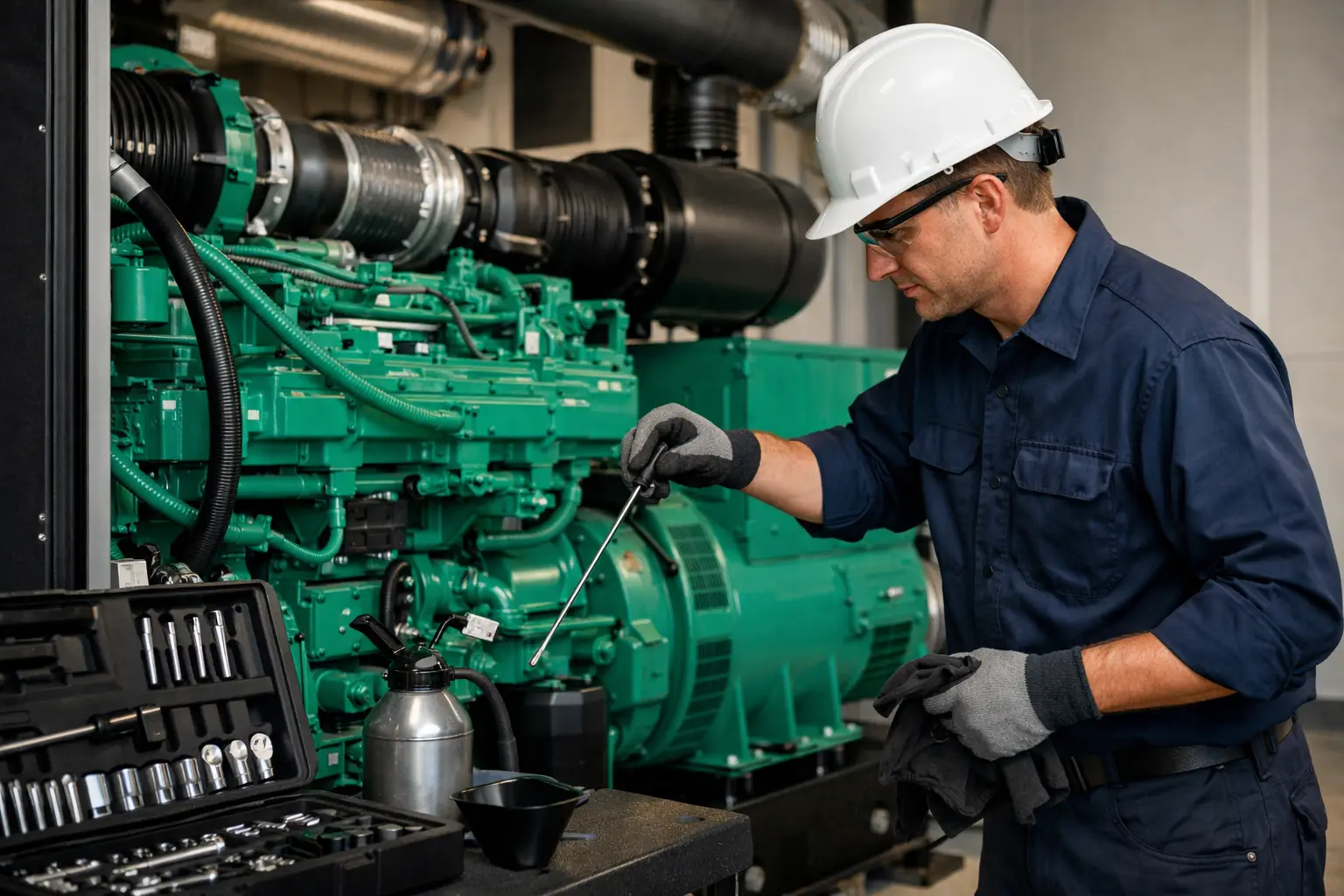
A diesel generator that starts on command after months of standby does not do so by luck. It does so because someone has serviced it properly, at the right intervals, and with attention to the details that usually cause failures - fuel quality, battery condition, cooling performance, lubrication, and control settings. If you are asking how to service diesel generator equipment correctly, the real objective is not routine maintenance for its own sake. It is protecting uptime when the mains supply fails.
For commercial and industrial sites, servicing needs to be approached as a reliability task, not a box-ticking exercise. A generator supporting a warehouse, telecoms site, healthcare setting, factory, or construction operation may sit idle for long periods and then be expected to carry load immediately. That creates a different maintenance profile from many other items of plant. Age, duty cycle, site conditions, and whether the set is used for standby or prime power all affect the service plan.
How to service diesel generator equipment properly
The correct service method starts with the manufacturer's service schedule. Engine brand, alternator design, control panel specification, enclosure type, and operating environment all influence what should be done and when. A small standby set operating in a clean plant room will not need exactly the same approach as an open generator on a dusty construction site or a prime power unit running extended hours.
That said, most diesel generator servicing follows the same core sequence. Begin with safe isolation and visual inspection. Confirm the set is shut down correctly, isolated where required, and protected against accidental start. Then inspect for oil leaks, coolant leaks, loose hoses, damaged belts, corrosion, vibration marks, and signs of exhaust leakage. Many generator faults announce themselves physically before they cause a shutdown.
After the visual check, move to consumables and condition-based items. Engine oil, oil filter, fuel filters, and air filters are the usual starting point. Oil degrades with both running hours and calendar time, particularly on standby sets that experience repeated short exercise runs. Fuel filters often become a problem after contamination has already entered the system, so replacement at planned intervals is cheaper than dealing with injector or fuel pump issues later.
Cooling system checks are equally important. Verify coolant level, coolant concentration, hose condition, radiator cleanliness, and fan belt tension. Overheating remains one of the most common service-related generator failures. On enclosed or silent generators, airflow restriction inside the canopy can also affect cooling performance, so servicing should include cleaning and confirming that vents are unobstructed.
Battery maintenance is often underestimated because the generator itself may be mechanically sound while the start system is not. Check battery voltage, terminals, charger operation, electrolyte level where applicable, and cable integrity. A standby generator with a weak battery is effectively unavailable, no matter how good the engine condition appears on paper.
Service intervals and what changes them
There is no single answer to service frequency because hours run are only part of the picture. Many operators work to minor and major service intervals, often based on running hours such as 250, 500, or 1000 hours, combined with annual servicing for low-hour standby sets. That is a sound starting point, but site risk should shape the final plan.
A hospital, data environment, utility site, or critical manufacturing facility should not use the minimum possible maintenance standard simply because the generator has seen limited hours. Fluids age, seals harden, chargers fail, and fuel can deteriorate in storage. By contrast, a heavily used prime power generator may need more frequent servicing driven by actual operating hours, oil analysis, and load profile.
Environmental conditions also matter. Dusty sites clog filters faster. Coastal locations increase corrosion risk. Cold weather affects batteries, heaters, and fuel behaviour. High ambient temperatures push the cooling system harder. Good service planning takes these conditions into account rather than relying on generic intervals.
The main service tasks that protect uptime
A proper generator service is broader than an oil and filter change. The engine is only one part of the power system. The alternator, fuel system, cooling circuit, exhaust, control panel, switchgear interface, and enclosure all need attention.
Lubrication service should include draining and replacing the oil to the specified grade, fitting the correct oil filter, and checking for contamination in the old oil. Milky oil may indicate coolant ingress. Excessive metal content may point to internal wear. Even before laboratory testing, used oil can reveal whether a wider issue is developing.
Fuel system work should cover primary and secondary filters, water separator inspection, fuel line condition, and signs of diesel contamination. Stored fuel is a known weak point in standby power systems. Water ingress, microbial growth, and sediment can all lead to blocked filters and poor combustion. Where fuel has been stored for extended periods, fuel quality management should be part of the maintenance plan, not an afterthought.
Air intake service involves replacing or cleaning filters as specified, checking restriction indicators where fitted, and inspecting pipework for leaks or collapse. Poor air supply reduces combustion efficiency and can increase smoke, fuel consumption, and engine stress. On some sites, filters may need replacement far earlier than the standard interval.
The cooling system needs both routine and periodic deeper attention. Besides coolant level and hose inspection, look at radiator core cleanliness, thermostat performance, water pump condition, and block heater operation if fitted. A generator that starts but fails under load because temperature rises too quickly has not been properly maintained.
Electrical checks should include battery charger output, starter motor connections, earthing points, alternator output condition, and control panel alarms. Test indication lamps, shutdowns, and warning functions. On modern sets, fault history in the controller can be useful for spotting intermittent issues such as low battery voltage, failed starts, or abnormal frequency behaviour.
Testing after servicing matters as much as the service itself
One of the most common mistakes in generator maintenance is stopping at component replacement without proving performance. After servicing, the generator should be run and observed. Check oil pressure, coolant temperature, voltage, frequency, charging rate, exhaust condition, and any abnormal noise or vibration. A no-load test is useful, but it does not tell the full story.
Where site conditions allow, load testing provides a more meaningful confirmation of readiness. A set can appear healthy at idle or low load and still have weaknesses in governor response, cooling capacity, fuel delivery, or voltage regulation. For standby units in particular, regular exercised operation under realistic conditions is one of the best ways to find service issues before a mains failure does.
Automatic mains failure systems should also be verified where installed. Start command, transfer sequence, return-to-mains timing, and shutdown behaviour all need to be checked. Servicing the generator while ignoring the wider power system leaves a significant gap in resilience.
Common servicing mistakes
Most generator failures linked to maintenance come down to a small number of avoidable issues. The first is using time-based servicing alone without looking at actual site conditions. The second is fitting incorrect filters, fluids, or batteries. The third is ignoring fuel quality because the engine has not run many hours.
Another frequent problem is incomplete record keeping. Service logs should show date, hours run, work completed, parts used, test results, and any developing concerns. Without that information, patterns get missed. Repeated low coolant level, recurring battery weakness, or rising oil consumption are easier to act on when they are documented.
It is also unwise to assume all generator formats can be treated identically. Silent generators require enclosure-related checks for airflow, acoustic panels, doors, and latches. Open generators demand closer attention to the installation environment. Three phase sets need output balance and load distribution considered as part of performance review. The service basics remain similar, but the operating context changes what matters most.
When to bring in specialist support
Basic inspections can be handled in-house by competent site teams, particularly where routine checks are already part of plant management. However, planned servicing on industrial generator sets should usually involve qualified engineers familiar with the engine, alternator, and controller package. This becomes more important as output size, site criticality, and system complexity increase.
For larger standby and prime power installations, service quality directly affects asset life and operational risk. A low-cost, minimal maintenance approach may look acceptable in the short term, but it often creates higher spend later through emergency repairs, call-outs, and avoidable downtime. Buyers responsible for critical power continuity are generally better served by a structured maintenance regime tied to the generator specification and duty profile.
If you operate multiple sets across different kVA ranges, standardising records, intervals, and test procedures can make maintenance easier to control. That is particularly relevant for businesses managing mixed fleets across depots, projects, or national estates. Suppliers such as Global Generators typically see this first-hand - the best performing generator assets are rarely the newest ones, but the ones maintained with discipline.
A serviced diesel generator should not simply be capable of running. It should be ready to accept load, hold performance, and do its job without hesitation when the site needs it most. That is the standard worth maintaining.