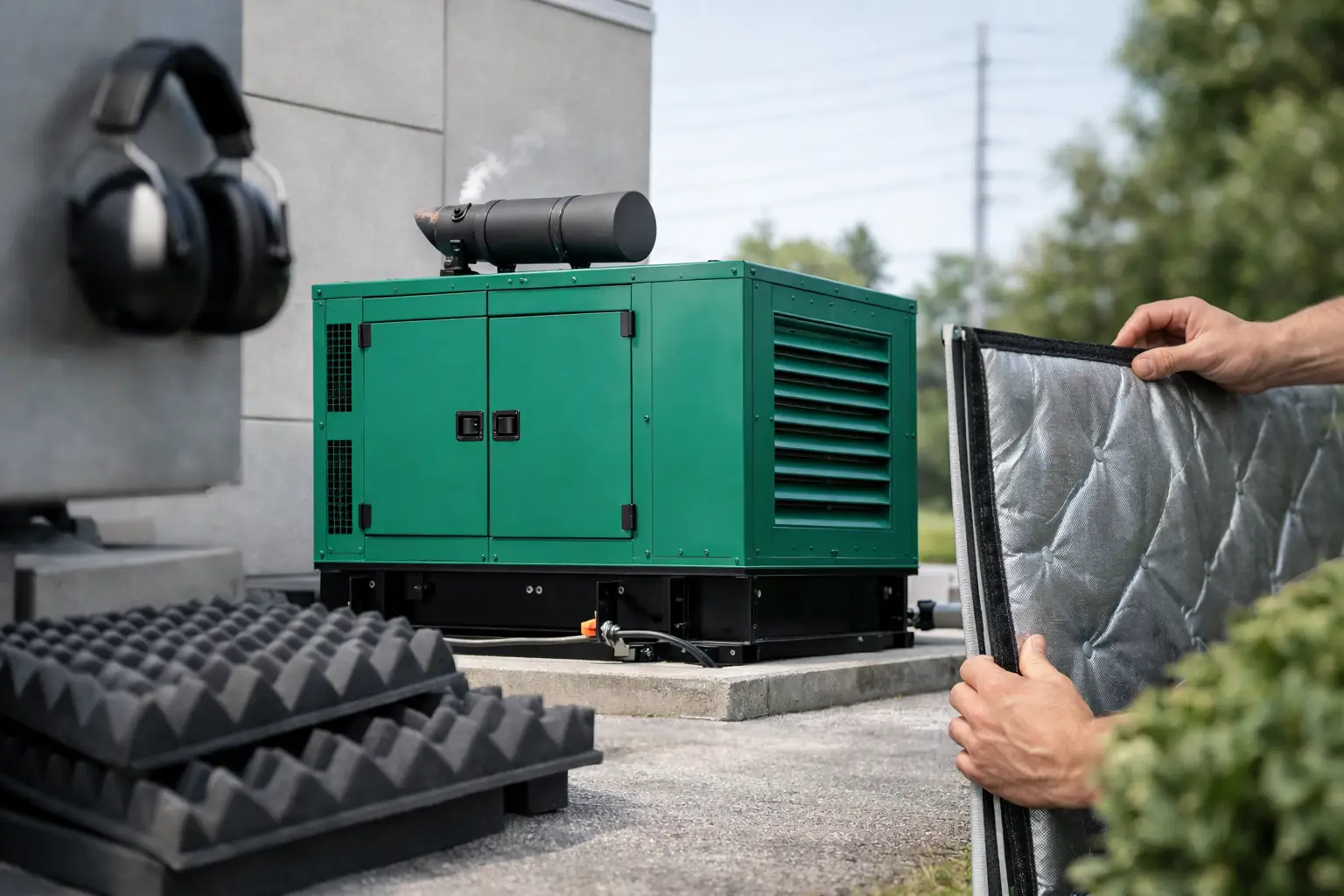
When a diesel generator is too loud, the problem is rarely just comfort. On a construction site, at a logistics hub, beside a healthcare facility or near a commercial building, excessive noise can create complaints, breach site limits and restrict operating hours. If you are looking at how to silent diesel generator noise, the right answer is not one quick fix. It is a combination of enclosure design, exhaust treatment, vibration control, site layout and correct generator sizing.
How to silence diesel generator noise properly
The first step is to identify where the noise is coming from. Diesel generators produce sound from three main sources - the engine and alternator, the cooling system, and the exhaust. There is also structure-borne vibration, where noise transfers through the baseframe, concrete slab or nearby steelwork. If you treat only one source, the set may still remain too loud for the application.
For that reason, noise reduction should be approached as an engineered package rather than an accessory purchase. A canopy alone may help, but if the exhaust silencer is underspecified or the unit is mounted poorly, results will be limited. Equally, fitting a larger silencer without considering airflow can cause back pressure and affect engine performance. The best outcome comes from balancing acoustic performance with cooling, service access and long-term reliability.
Start with the generator type
If the application has a strict noise requirement, the most effective point to address it is at specification stage. A purpose-built silent generator will nearly always outperform an open set that has been modified after installation. Acoustic enclosures are designed around airflow paths, internal lining, panel density and access doors, so they reduce noise while still allowing the engine to breathe and technicians to maintain the unit.
That does not mean retrofitting is impossible. An open generator installed in a plant room or external acoustic housing can still achieve good results, particularly on fixed industrial sites. The trade-off is usually footprint, installation cost and complexity. For temporary or fast-track projects, an integrated silent set is usually the more efficient option.
Use an acoustic enclosure that matches the duty
An acoustic enclosure is the core measure for reducing airborne noise. Good canopies use sound-attenuating materials, sealed panel joints and carefully designed intake and discharge paths. The aim is not to trap all sound completely, which is unrealistic, but to prevent direct noise breakout while maintaining cooling air volume.
Not all enclosures perform to the same standard. Buyers should check the rated sound pressure level, usually expressed in dB(A) at a stated distance such as 7 metres. Without the distance, the figure is less useful. You should also ask how the result was measured, because test conditions affect the number.
In practical terms, lower noise levels usually come with a heavier and better insulated canopy, more refined internal baffling and stronger door sealing. That can increase purchase cost, but on sites with planning constraints or nearby occupancy, it may be the difference between compliant operation and constant disruption.
Plant room versus external canopy
For fixed installations, a generator in a plant room can be quieter outside the building if the room is designed acoustically. However, poor duct design or untreated louvres can create noise breakout points that negate the benefit. External silent generators are simpler to deploy, but they need enough clearance around them so sound does not reflect excessively from walls or compounds.
Upgrade the exhaust silencer
The exhaust is often the most obvious single noise source, especially under load. Standard silencers may be acceptable for general industrial use, but they are not always enough for sensitive environments. In those cases, a higher-grade residential or critical silencer can make a significant difference.
This is not a fit-and-forget decision. Every exhaust silencer adds resistance, and excessive back pressure can damage performance, fuel efficiency and engine life. Silencer selection must therefore be checked against the engine manufacturer’s allowable limits. Pipe diameter, run length, bends and termination point all matter.
Positioning matters as well. If the exhaust discharges towards a boundary, office façade or yard surface that reflects noise, perceived sound can remain high even with a better silencer. Redirecting the outlet and managing the stack height may improve results without changing the generator itself.
Control vibration at the base
A generator that is mechanically isolated badly will transmit vibration into the supporting structure. That vibration then reappears as noise elsewhere - through floors, walls, handrails or cable trays. Buyers sometimes focus on the enclosure and overlook the base, but for many installations this is a costly mistake.
Anti-vibration mounts between the engine-alternator assembly and baseframe are standard on quality sets, but the installation as a whole also needs attention. Spring or elastomer isolators between the baseframe and plinth may be required, particularly on rooftops, mezzanines or enclosed plant areas. Flexible connections on fuel lines, exhausts and cable interfaces also help prevent vibration bridging.
The correct arrangement depends on the generator size, loading profile and the structure beneath it. A mount that works on a small standby unit may not be suitable for a larger prime power set with long operating hours.
Manage airflow without creating more noise
Cooling air is essential, but moving large volumes of air generates sound. Fans, louvres and ducts can all become acoustic weak points. This is why generator noise control is often a compromise between quieter operation and thermal performance.
If you reduce opening sizes too aggressively or add poorly designed acoustic barriers, the generator may run hot. High ambient temperatures, recirculated discharge air and restricted ventilation can all reduce reliability. For critical power applications, overheating is not an acceptable price to pay for lower noise.
The better solution is acoustic louvre design, lined ducting and airflow paths that absorb sound while preserving free air movement. In larger installations, this part of the design should be calculated rather than guessed.
Site the generator with noise in mind
If you want to know how to silent diesel generator impact in real-world conditions, siting is one of the most cost-effective steps. The same generator can seem significantly louder or quieter depending on where it is placed.
Hard reflective surfaces amplify perceived noise. Courtyards, close boundary walls and corners are particularly problematic because sound reflects back and concentrates. Increasing the distance from occupied buildings, rotating the set so the noisiest side faces away from sensitive receptors, and avoiding enclosed reflective spaces can all help.
Temporary screening walls may also reduce direct line-of-sight noise, but they must not obstruct maintenance access or cooling airflow. On permanent sites, dedicated acoustic barriers can be worthwhile if they are designed to the correct height and position.
Size the generator correctly
An oversized generator can create avoidable noise, especially if it spends long periods running at low load where combustion quality is poorer and the engine is not operating in its most efficient range. An undersized set has different problems - it may run harder, hotter and noisier under demand peaks.
Correct sizing improves more than performance. It helps noise control because the engine, fan and exhaust system are matched to the actual duty. Standby and prime applications should also be treated differently. A generator intended for occasional backup use can be specified differently from one expected to run daily for extended periods.
For commercial buyers, this is where specification discipline matters. Power requirement, load step, starting current, site acoustics and operating hours should all be reviewed together, not in isolation.
Maintenance affects noise more than many operators expect
A generator that becomes noisier over time is often signalling a maintenance issue. Exhaust leaks, worn mounts, damaged door seals, loose panels, fan imbalance and poor combustion can all increase sound output. Even simple issues such as unsecured access doors or degraded insulation lining can change measured noise levels noticeably.
Routine inspection should therefore include acoustic condition, not just mechanical service intervals. If a site has a formal noise limit, sound checks should be part of ongoing compliance rather than something reviewed only when complaints begin.
When a quieter generator is the better commercial decision
There is a point where modifying an existing unit becomes less economical than specifying a silent generator from the outset. If the site has nearby residential receptors, hospital buildings, schools, offices or local authority restrictions, engineered acoustic performance is not a luxury. It is part of the operating requirement.
For buyers comparing options, the key figures are not just capital cost. Consider installation time, attenuation performance, space claim, service access, fuel efficiency and the risk of future remedial works. A lower-cost set can become expensive quickly if additional acoustic treatment is needed after commissioning.
Global Generators works with buyers who need that decision made on specification, not guesswork. For mission-critical sites, the right generator is the one that meets the load, the duty and the acoustic requirement without compromising uptime.
If noise is already becoming a site issue, treat it as an engineering problem early. The fastest route to a quieter installation is usually a proper assessment of enclosure, exhaust, mounting and siting before the next complaint forces the timetable.