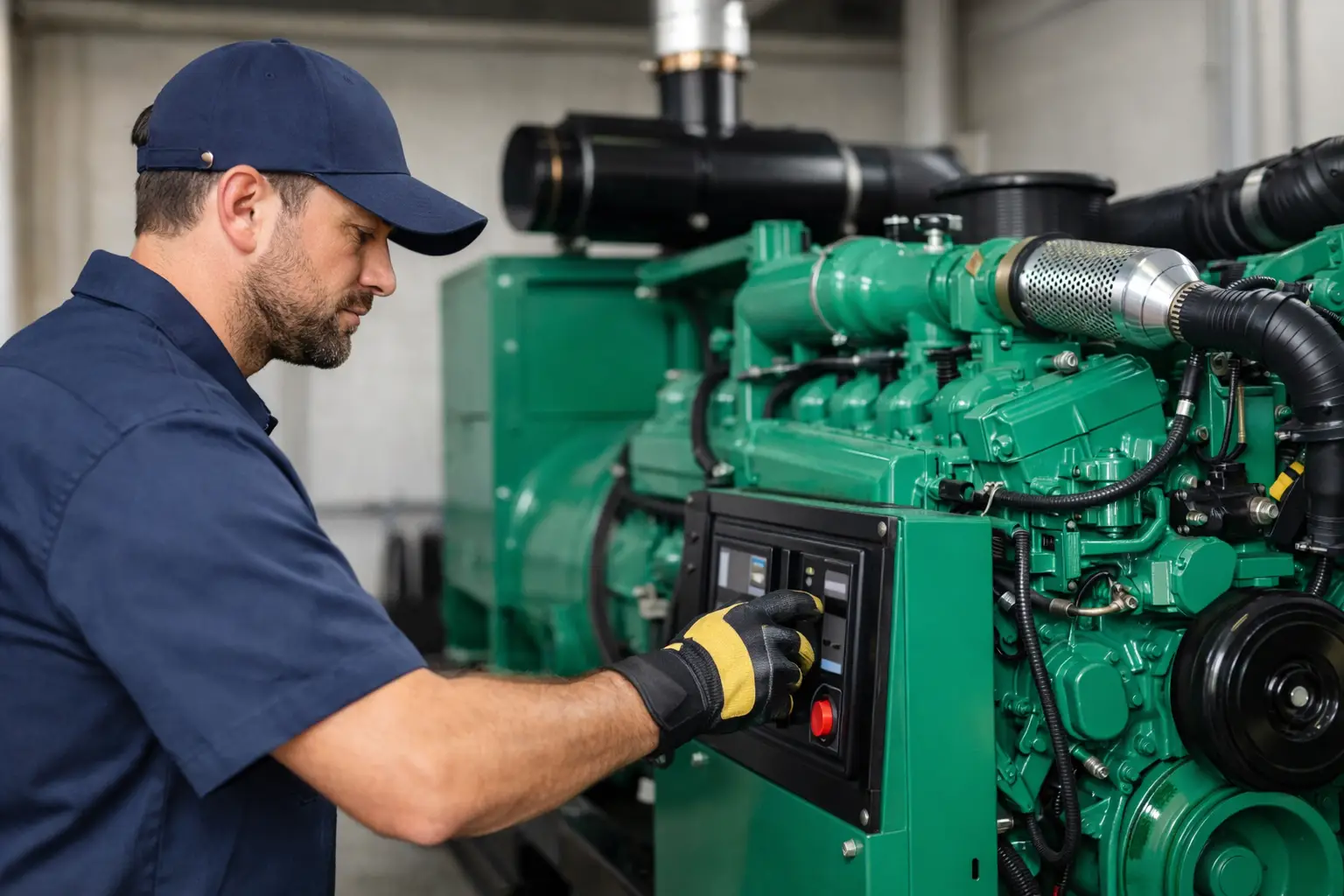
A diesel generator that will not auto-start during a mains failure is more than an inconvenience. On a live site, it can stop production, disrupt critical systems and expose weaknesses in maintenance routines. That is why knowing how to start diesel generator manually matters, even where an automatic transfer system is installed.
Manual starting is not difficult, but it does need to be done in the right order. The exact sequence varies by manufacturer, control panel and engine configuration, yet the principles are consistent across most industrial sets. The objective is simple - confirm the machine is safe to run, start it without introducing avoidable faults, and bring load on in a controlled way.
Before you start a diesel generator manually
The first decision is whether the set is safe to start at all. If a generator has tripped on low oil pressure, high coolant temperature, overspeed or another protection, starting it again without finding the cause can turn a manageable issue into a major repair. A manual start procedure should always begin with inspection, not the start button.
Check the installation area first. Ensure ventilation paths are clear, there are no fuel leaks, no loose panels, and no obvious signs of impact damage or overheating. On enclosed sets, confirm intake and discharge paths are unobstructed. On open sets in plant rooms, pay close attention to airflow and extraction, because poor ventilation can quickly create temperature and combustion problems.
Then inspect the core service points. Fuel level should be adequate for the expected run time, engine oil should be within operating range, and coolant level should be correct if the set is cold and safe to inspect. A low battery is another common cause of failed starts, particularly on standby machines that are not tested properly. If the charger has failed or the battery terminals are corroded, the engine may crank slowly or not at all.
The control panel should also be checked before any attempt to start. Look for alarms, lockouts and emergency stop status. Many failed manual start attempts come down to a reset condition not being cleared, or the set being left in the wrong control mode after servicing.
How to start diesel generator manually safely
In most cases, the correct approach is to place the generator into manual mode at the controller, reset any inactive alarms, and then initiate start from the panel. On some units this is a keyed selector switch and separate start push button. On others it is handled through a digital controller with manual, auto and stop positions.
Once manual mode is selected, confirm the emergency stop has not been engaged and that any external interlocks allow starting. Press and hold the start control if required by the panel logic. The engine should crank, fire and stabilise at rated speed. If it does not start after the normal cranking cycle, do not keep repeating attempts without checking the reason. Persistent cranking can flatten batteries, overheat the starter motor and mask an underlying fuel or air issue.
After start-up, allow the engine to settle at no load for a short period. This gives oil pressure time to stabilise and lets you confirm that voltage and frequency are within expected limits. On a healthy industrial set, the panel should show normal operating indications with no active fault messages.
At this stage, listen to the engine as much as you watch the panel. Uneven running, excessive smoke, unstable frequency or abnormal vibration suggests the generator may not be ready to accept load. A machine that starts is not necessarily a machine that is fit for service.
Bringing load on after manual start
If the generator is supplying a site manually, load transfer must be controlled correctly. The critical rule is to avoid backfeeding the mains and to follow the site’s approved switching procedure. In commercial and industrial settings, this usually means ensuring the mains supply is isolated before the generator breaker is closed, whether through a manual changeover arrangement or an automatic transfer system placed into manual operation.
Do not apply the full connected load instantly if the site allows staged loading. Bringing essential circuits on first gives a better picture of generator stability and reduces the chance of a sudden overload trip. This matters particularly on older sets, lightly maintained units or applications with high motor starting currents.
Not every generator will tolerate the same load acceptance profile. A well-sized Cummins-powered standby set will behave differently from a smaller unit asked to pick up large inductive loads at once. The practical point is that generator starting and generator loading are part of the same operating event. A successful engine start means little if the set falls over the moment the site is transferred.
Common reasons a manual start fails
When buyers ask how to start diesel generator manually, the underlying issue is often not the procedure but the reason the machine did not start automatically in the first place. That distinction matters because the response should change depending on the fault.
Battery condition is one of the most common causes. Standby generators can sit for long periods and appear ready, yet a failed charger, sulphated battery or poor terminal connection leaves insufficient cranking power. Fuel problems are also frequent, including low fuel, contaminated fuel, blocked filters or air in the system after maintenance.
Control logic is another area to check. If the panel is in stop mode, an emergency stop circuit is active, or a previous shutdown has not been reset, the generator may be mechanically sound but electronically prevented from starting. More serious cases involve failed sensors, starter motor faults, low compression or governor issues. Those are not problems to solve by repeated manual starting attempts.
When not to force a start
There are times when manual intervention should stop and a technician should take over. If the engine cranks slowly, emits unusual mechanical noise, shows repeated alarm shutdowns, or has visible fluid leakage, the risk of damage outweighs the value of getting temporary power back quickly.
The same applies if the set starts but cannot hold stable voltage or frequency. Sensitive loads in healthcare, telecoms, manufacturing and data-led operations can be damaged by poor power quality. In those environments, a generator that runs badly is not a partial solution. It is an operational risk.
Manual starting on standby versus prime power sets
The manual start method is broadly similar across standby and prime power units, but the operating context is different. A standby set may have been idle for weeks and then called on suddenly in an emergency. That makes battery health, fuel quality and test discipline especially important.
A prime power set is likely to be used more regularly, which can reduce some start-related issues but increase wear-related ones. Operators may be more familiar with its controls, yet the consequences of poor manual start practice can still be significant, particularly where the generator supports continuous operations on construction sites, remote compounds or temporary infrastructure.
Control system sophistication also changes the process. Basic panels are straightforward but give less diagnostic detail. Modern controllers provide clearer alarm data, event logs and parameter readouts, which helps identify whether the problem is operational or mechanical. For procurement teams, this is one reason specification matters beyond headline kVA rating.
Good practice after the generator has started
Once running, the generator should be monitored rather than left unattended. Watch oil pressure, coolant temperature, battery charging status, output voltage and frequency. If the machine is under load, check that it is not approaching its limits and that exhaust appearance remains normal.
If the generator is only being run for testing or temporary cover, shut-down matters too. Remove load in a controlled way, allow a short cool-down period where recommended by the manufacturer, then stop the set from the controller. Abrupt stop under heavy thermal stress is poor practice, especially on larger industrial engines.
A record should then be made of why manual start was required. If the mains failed and the generator started correctly by hand, the issue may be with the auto-start circuit, transfer switch, controller settings or remote signalling. If the machine was difficult to start manually, the maintenance regime needs attention. Either way, the event should trigger inspection, not be treated as closed because the power came back.
For sites where uptime is non-negotiable, manual starting should be a contingency, not the operating plan. The strongest position is to specify a generator set correctly, maintain it properly and test it under realistic conditions so that manual intervention remains exactly what it should be - a backup measure when systems do not behave as expected.
If you are reviewing generator reliability, control configurations or replacement options, the right set is the one that starts when required, carries the load it was specified for and does so without uncertainty.