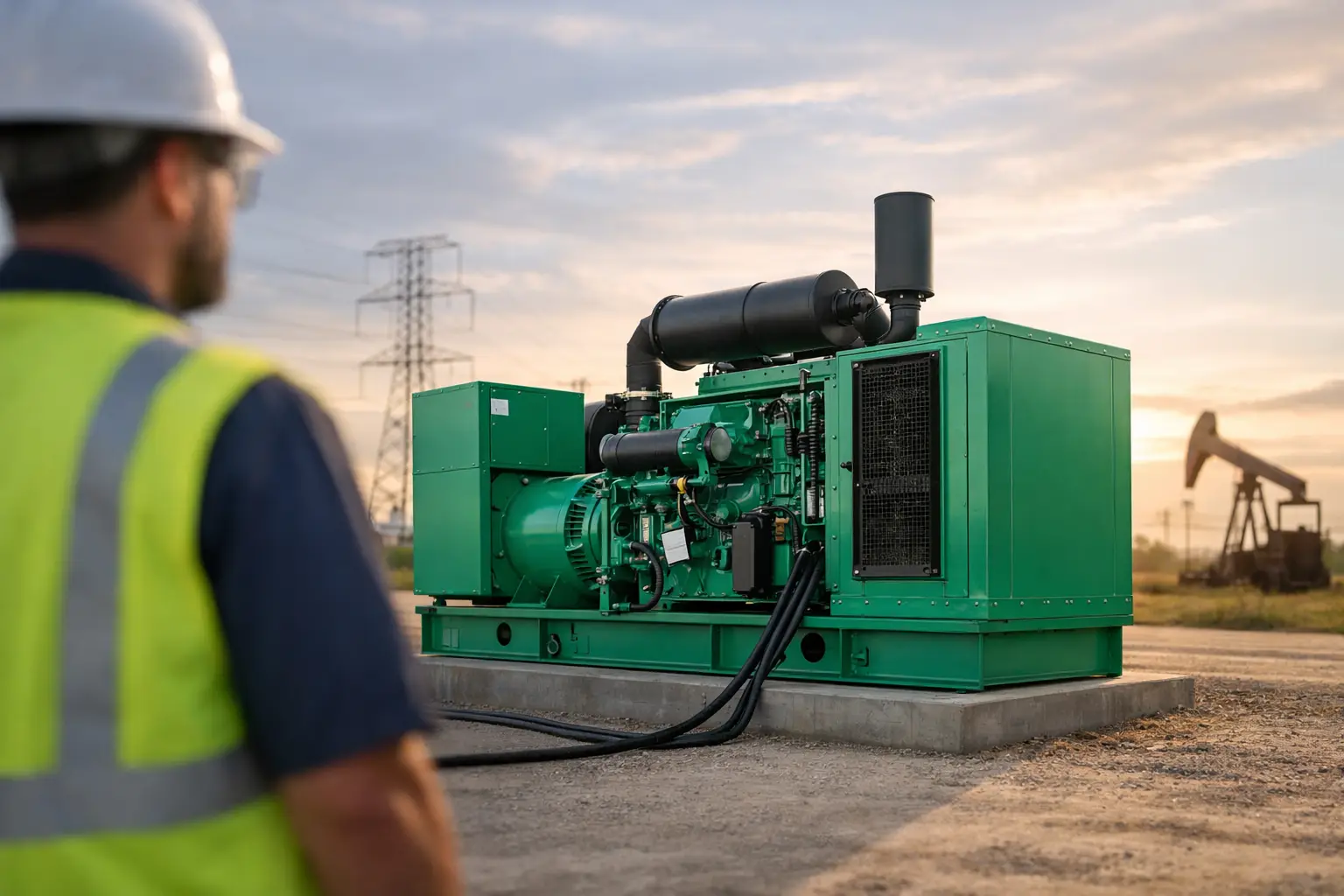
A generator that looks adequate on paper can still be the wrong machine for site duty. That usually happens when buyers focus on headline kVA and miss the rating category behind it. If you are asking what is prime power rating, you are really asking how long a generator can carry load, under what conditions, and whether it is built for continuous operational use rather than occasional emergency backup.
For commercial and industrial buyers, that distinction matters. A standby-rated set may cope with a mains failure a few times a year, but it is not specified for the same duty profile as a generator expected to run daily, support shifting site loads, or act as the main source of supply where utility power is unavailable or unreliable.
What is prime power rating in generators?
Prime power rating is the output a generator can supply as its main power source for an unlimited number of operating hours, provided the load profile varies and the average load remains within the manufacturer's stated limits. In simple terms, it is the rating used when the generator is expected to work, not just wait.
This is why prime power is commonly specified for construction sites, remote compounds, temporary infrastructure, off-grid facilities, quarries, telecom locations and industrial operations where grid power is absent, weak or not dependable enough for the application.
The exact definition is tied to recognised standards and to the engine manufacturer's duty cycle assumptions. In practice, a prime-rated generator can handle variable load over long periods, but it is not a licence to run permanently at maximum output every hour of every day. The detail in the data sheet still matters, especially around average load factor, overload allowance and service intervals.
How prime power differs from standby power
The easiest way to understand prime power rating is to compare it with standby power rating.
A standby-rated generator is intended for emergency use during a utility outage. It normally supports a variable load for a limited number of hours per year and usually has no overload capability. It is designed around occasional interruption, not continuous duty.
A prime-rated generator, by contrast, is intended to supply power as the principal source. It can run for extended periods and is suited to applications where operating hours are high. Depending on the standard and manufacturer, it may also permit a limited overload, often 10 per cent for one hour in twelve, though this should never be assumed without checking the technical specification.
That difference affects purchasing decisions more than many buyers realise. A set with a higher standby kVA figure may still be less suitable than a lower-rated prime machine if the site requires long daily running hours. Rating category is not a marketing label. It is a duty classification.
Why the prime rating is usually lower
On many generator data sheets, the prime power rating is lower than the standby rating for the same unit. That is normal.
The reason is thermal and mechanical loading. A machine designed for emergency operation can be allowed a higher intermittent output because it is not expected to sustain that duty continuously. A prime rating is more conservative because it reflects real operational endurance, fuel system demand, cooling performance and engine life under repeated use.
For procurement teams, this is where mistakes can start. If you compare generators by the biggest number on the page, you can end up under-specifying for real site conditions.
When a prime power generator is the right choice
Prime power is appropriate when the generator is not simply covering short outages but carrying regular operational demand. That includes remote projects with no permanent mains connection, phased developments waiting for utility energisation, rental-style site deployment, and industrial facilities in regions where grid instability is a commercial risk.
It can also be the correct choice where a site has utility power but uses on-site generation as part of its operating model for extended periods. That might be due to network limitations, load management or the requirement to maintain production in areas with unreliable supply.
The key test is simple: if the generator is expected to be the working source of power for substantial periods, prime rating should be assessed first.
What is prime power rating based on?
Prime power rating is based on more than alternator output. It reflects the engine's ability to sustain variable load, the cooling system's capacity, ambient reference conditions, fuel delivery, and the manufacturer's permitted duty cycle.
Standard reference conditions are important here. Generator ratings are often published at a stated ambient temperature, altitude and humidity. If your site sits at high elevation, experiences high summer temperatures, or has enclosure and ventilation constraints, the available output may need to be derated.
That is one reason specification-led buying matters. Two generators with similar nominal ratings may perform differently once installed conditions are accounted for.
Load profile matters as much as connected load
Prime rating is not just about the total connected kVA on site. It is about how that load behaves over time.
A site with large motor starts, cyclical demand, poor power factor or fast step loading can place a very different burden on a generator compared with a relatively stable resistive load. If the average demand looks acceptable but the transient peaks are severe, the set may still struggle, especially if the application involves pumps, compressors, cranes or process equipment.
This is why experienced buyers assess both the running load and the starting characteristics of the connected plant. The rating on the generator must suit the real electrical behaviour of the site, not only the arithmetic sum of nameplates.
Common sizing mistakes when specifying prime power
The most common error is treating standby and prime as interchangeable. They are not. Selecting a standby-rated machine for a prime duty application can shorten service life, increase maintenance exposure and create avoidable reliability issues.
The second mistake is sizing too tightly around average demand. A generator running near its upper limit for long periods leaves little margin for motor starting, future load growth or adverse ambient conditions. At the other end of the scale, oversizing can also create problems, particularly on diesel sets that then spend long periods at low load, which may lead to inefficient operation and wet stacking.
A third issue is failing to match the generator format to the operating environment. Prime power applications often involve longer daily run times, so enclosure design, fuel autonomy, access for maintenance, noise control and synchronisation capability can become just as important as the rating itself.
How to assess the right prime-rated generator
Start with the actual duty profile. Establish whether the generator will act as the sole source of power, how many hours it is likely to run each day and whether the load is stable or highly variable. Then review starting currents, load sequencing and any operational requirement for redundancy.
After that, confirm site conditions. Ambient temperature, altitude, fuel storage strategy, acoustic requirements and physical installation constraints all affect the suitability of the final set. If there is any expectation of future expansion, it is usually better to address that at selection stage than retrofit around an undersized machine later.
For serious applications, specification should also cover alternator performance, control system capability, voltage regulation, breaker configuration and maintenance access. Prime power is an operational asset, not a box-ticking purchase.
Why this rating matters commercially
Downtime is rarely just a technical problem. On a live site it becomes a production loss, a contractual issue, a programme delay or a service failure. Understanding what is prime power rating helps buyers avoid procuring equipment that appears cost-effective at purchase stage but proves unsuitable in service.
The right rating supports predictable operation, cleaner maintenance planning and a more realistic view of fuel and lifecycle costs. It also gives contractors, facilities teams and project engineers a specification basis they can defend internally.
That is particularly relevant where generator procurement has to satisfy operations, commercial teams and consultants at the same time. Clear duty classification reduces ambiguity.
Prime power rating and long-term reliability
A correctly specified prime-rated generator should give dependable service under sustained use, but reliability still depends on maintenance discipline, fuel quality and sensible loading. Prime duty does not remove the need for regular servicing. It makes it more important.
Where uptime is critical, buyers should think beyond the headline rating and consider supportability, parts availability, engine platform reputation and how quickly the supplier can respond if site conditions change. This is where a specialist supplier such as Global Generators can add value, especially when matching rating, configuration and availability to the actual duty rather than simply quoting the nearest kVA.
If you are comparing generator options, treat prime power rating as one of the first filters, not a footnote. It tells you whether the machine is built to carry the job day after day, which is usually the question that matters most when failure is not acceptable.