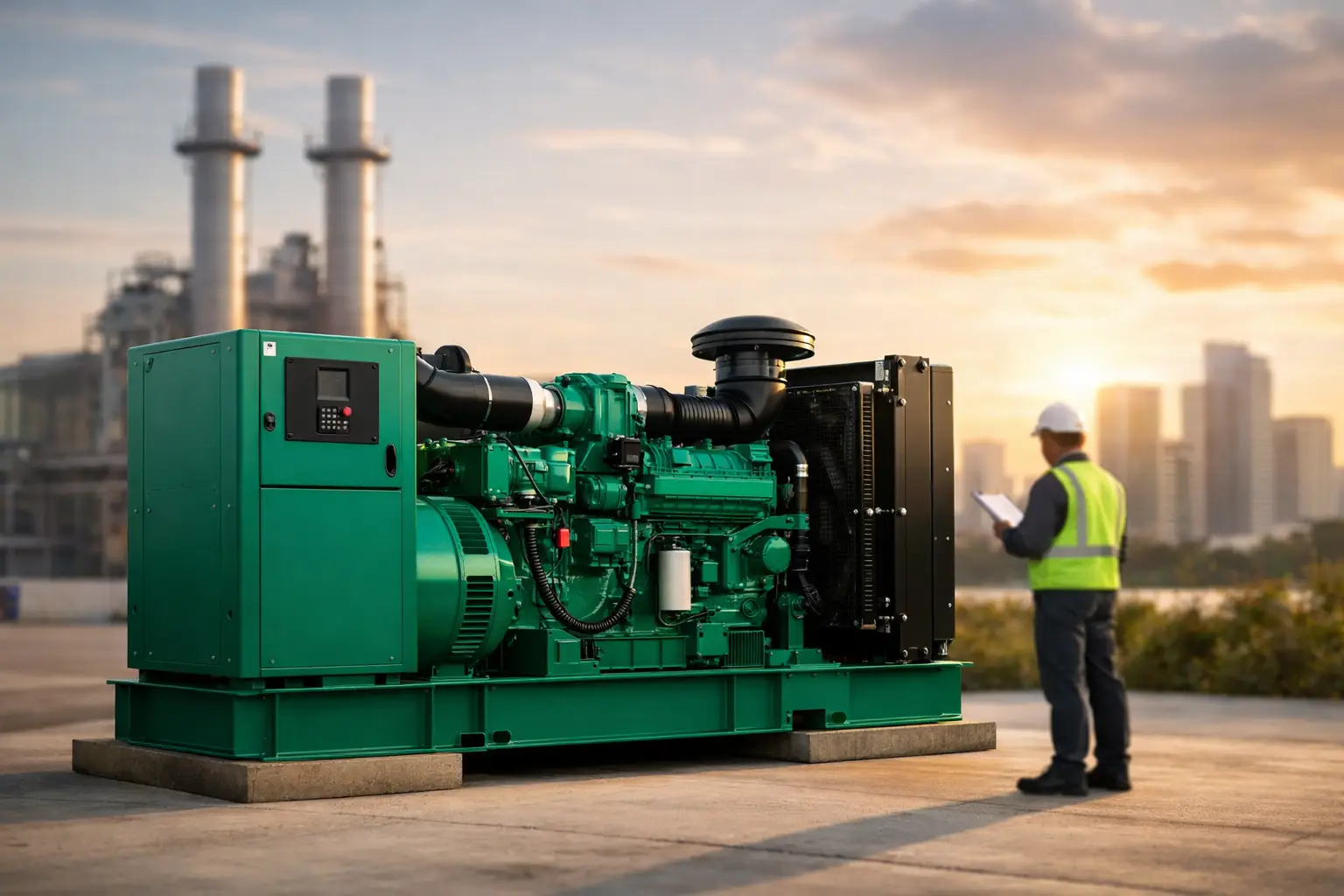
Power failure is rarely a minor inconvenience on a working site. In manufacturing, healthcare, telecoms, construction and large commercial buildings, a loss of supply can stop production, compromise safety systems and create immediate financial exposure. That is why buyers ask why choose Cummins generator sets when specifying standby or prime power. The short answer is simple: they have a long record of dependable performance, broad model coverage and strong supportability in serious operating conditions.
That said, brand alone is never enough. A generator set still has to be matched correctly to the load profile, duty cycle, site constraints and installation format. Cummins is often the preferred route because it gives engineers and procurement teams a solid platform to work from, whether the requirement is for a compact standby unit or a high-capacity industrial package.
Why choose Cummins generator sets for critical power
Cummins has earned its position by being proven where uptime matters. Buyers in critical sectors are not looking for novelty. They want equipment with predictable performance, consistent build quality and engine technology that is already trusted across demanding applications.
One of the main reasons Cummins remains a strong choice is its range. The brand covers a wide spread of outputs, which makes it easier to standardise around one recognised engine platform across different sites or project stages. For businesses operating mixed estates, that can simplify procurement, maintenance planning and parts stocking.
There is also a practical point around confidence. When a recognised engine brand sits at the centre of the generator package, it reduces perceived risk during specification and purchase approval. For facilities managers and procurement teams, that matters. The cost of selecting the wrong power solution is usually far higher than any small saving made upfront.
Reliable performance under standby and prime duty
Not every generator operates in the same way, and this is where the selection process becomes more technical. Some installations need standby protection for infrequent outages. Others rely on the generator as a regular or continuous source of power. Cummins generator sets are widely used across both standby and prime power applications, which is part of their appeal.
In standby use, the priority is immediate response and dependable operation after long periods of inactivity. A set may sit idle for weeks, then be expected to start without hesitation the moment mains power fails. Cummins-powered units are widely specified for this exact reason. They are built for high-consequence environments where failure to start is not acceptable.
For prime power, the conversation changes. Here, the set must handle sustained running hours, varying loads and more demanding operational cycles. Cummins generator sets are regularly chosen for temporary power on construction projects, remote sites and infrastructure applications because they are designed with these working conditions in mind. That does not remove the need for proper servicing and load assessment, but it does mean buyers are starting from a platform intended for real industrial duty.
Broad kVA coverage makes specification easier
A major reason to choose Cummins is the breadth of available power outputs. In practice, this means the brand is relevant to a wide cross-section of requirements, from smaller commercial installations through to major industrial and infrastructure projects.
This matters because many organisations do not buy generators only once. They may need one unit for a current requirement, then further sets later for expansion, temporary works or additional sites. If a supplier can offer Cummins-powered generator sets across a broad kVA range, buyers gain continuity. The same brand can support low, medium and high-capacity requirements without forcing a change in engineering standard or service expectations.
For consultants and contractors, that consistency can also help during design and tender stages. When product families are familiar and technically well understood, the specification process tends to move more quickly. There is less uncertainty around expected performance, integration and site suitability.
Configuration options for real site conditions
The generator itself is only part of the purchasing decision. Enclosure type, phase, acoustics, footprint and access constraints all affect what is suitable for the site. Cummins generator sets are commonly available in multiple configurations, including open and silent formats, along with single phase and 3 phase options where required.
For outdoor industrial use or projects where noise control is a planning or operational issue, a silent generator package may be the right fit. For plant room installation or controlled environments where acoustic treatment is addressed separately, an open set can be more appropriate. Neither option is universally better. It depends on the installation conditions, service access and noise limits.
This flexibility is one of the reasons Cummins works well across different sectors. A logistics hub, a hospital contractor and a remote construction site may all need backup or prime power, but not in the same form. Being able to specify a Cummins-powered unit in a format aligned to the site reduces compromise at the design stage.
Support, parts and long-term ownership value
The purchase price of a generator is only one part of the commercial assessment. Serious buyers look at total ownership value, including servicing, parts availability and expected operational life. This is where established engine brands usually justify themselves.
Cummins has global recognition for a reason. The installed base is substantial, the brand is familiar to engineers and service teams, and long-term supportability is generally stronger than with less proven alternatives. For organisations with uptime-sensitive operations, that support position has real value. If a unit requires scheduled maintenance or replacement parts, buyers want confidence that the process will be manageable.
This does not mean every Cummins model is automatically the lowest-cost option over time. Actual ownership cost depends on running hours, load factor, maintenance discipline and operating environment. However, in many cases, buyers are willing to invest more upfront for equipment with a better support outlook and lower operational risk.
Why brand reputation matters in procurement
In generator procurement, reputation is not a marketing detail. It affects project approval, stakeholder confidence and risk management. When operations directors or project engineers specify a Cummins-powered set, they are often choosing a known quantity.
That can make internal sign-off easier. Senior decision-makers may not be generator specialists, but they understand the value of selecting an established brand for mission-critical infrastructure. The same applies to consultants and main contractors, who are often expected to justify equipment choices under time pressure.
There is also a resale and redeployment consideration. Recognised generator brands tend to hold stronger market confidence than obscure alternatives. If a business later changes site strategy or project requirements, equipment from a trusted brand is usually easier to reassign or remarket.
The trade-offs buyers should consider
Cummins is a strong choice, but the right answer still depends on the application. If the duty is light, the budget is tight and the operational consequences of downtime are modest, some buyers may consider lower-cost alternatives. That is a commercial reality.
However, where power continuity is tied to production, compliance, safety or customer service, the tolerance for risk narrows quickly. In those cases, choosing a trusted brand usually makes more sense than chasing the lowest initial figure.
It is also worth noting that the best generator on paper can perform poorly if it is wrongly sized. Oversizing can lead to inefficient running and unnecessary capital spend. Undersizing creates instability, reduced lifespan and failure risk under load. The decision is not only about why choose Cummins generator sets, but why choose the right Cummins generator set for the actual site demand.
For that reason, specification should always consider starting loads, harmonic content, load growth, operating hours, fuel storage, environmental conditions and acoustic requirements. A good supplier will focus on those details rather than simply pushing a stock model.
Choosing the right supplier is part of the decision
Even a strong product requires the right supply partner. Availability, technical clarity and response speed all matter, particularly when projects are live or replacement power is urgent. Buyers should look for a supplier that can explain the differences between standby and prime ratings, advise on open versus silent formats and confirm what is actually available within the required timeframe.
For many purchasers, that is where a specialist stockist adds value. A supplier with ready access to key power sizes and practical knowledge of industrial applications can shorten procurement time and reduce specification errors. Global Generators operates in that space, supporting buyers who need dependable Cummins-powered solutions with clear technical guidance and fast availability.
Cummins generator sets remain a credible choice because they align with what serious power buyers are trying to achieve - reliable starting, stable output, broad application coverage and lower operational uncertainty. When downtime carries real cost, that is usually the standard that matters most.