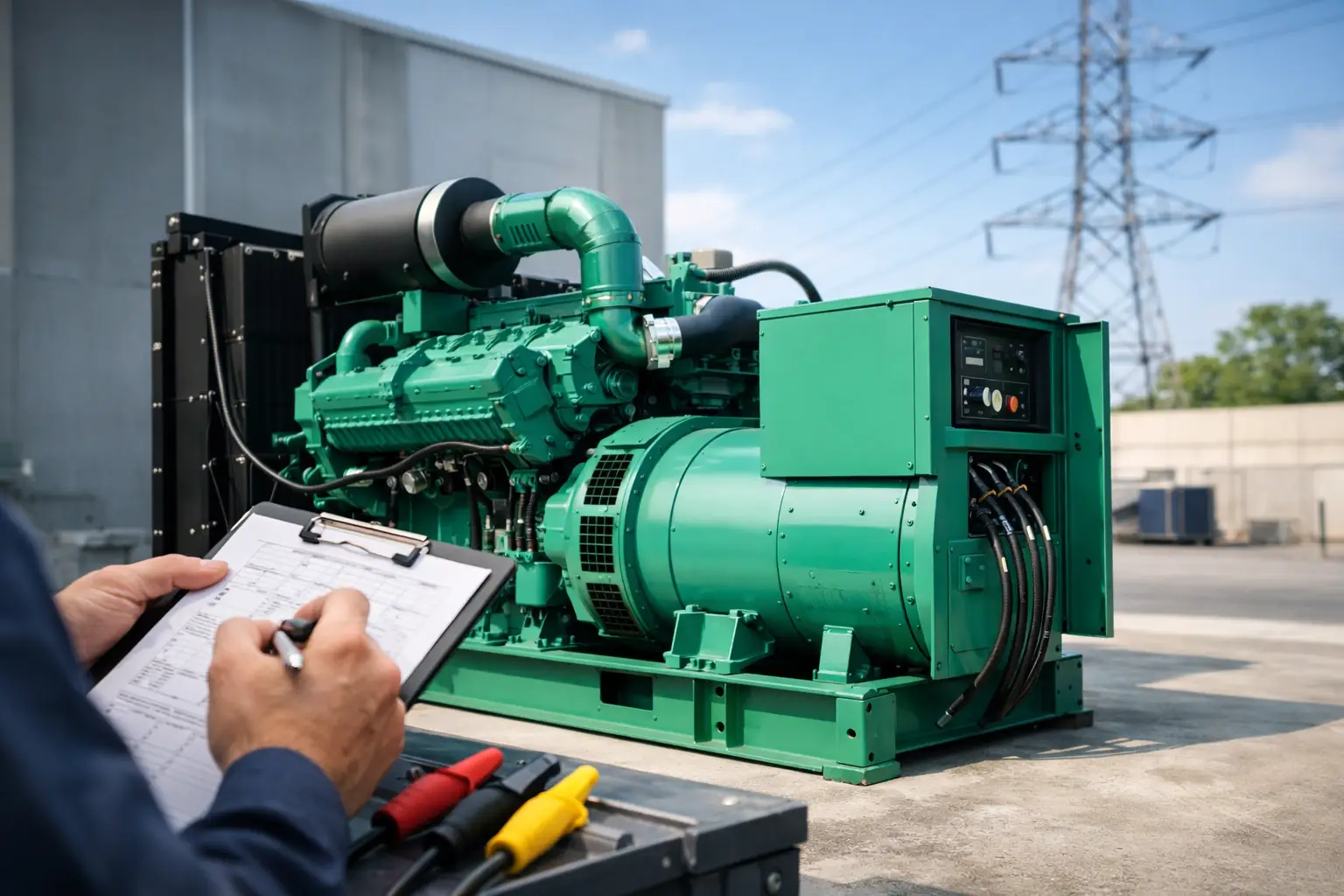
A 3-phase generator is rarely a discretionary purchase. In most cases, it sits behind a site where interruption means lost production, delayed programmes, compromised services or immediate financial exposure. That changes the buying process. The right unit is not simply the cheapest set at the required kVA - it is the one that matches the electrical profile of the site, the operating duty, the installation constraints and the response time your project demands.
For industrial and commercial buyers, three-phase power is usually the standard because the loads are heavier, the equipment is more demanding and the distribution across the site is built around balanced supply. Motors, pumps, compressors, HVAC systems, machine tools, lifting equipment and many building services all depend on stable three-phase output. If the generator specification is wrong, problems tend to appear quickly - poor motor starting, nuisance trips, unstable performance under load, excessive fuel use or a set that is oversized for the duty and inefficient to run.
What a 3-phase generator is used for
A 3-phase generator produces power across three alternating currents, offset from each other to provide a more consistent and efficient electrical supply than single-phase systems. In practical terms, that makes it suitable for facilities where power demand is higher and more complex. Warehouses, factories, construction sites, healthcare environments, data and telecom infrastructure, utilities, and large commercial buildings all commonly rely on three-phase power.
The key advantage is not just output capacity. A three-phase supply handles motor loads far better, supports a broader range of equipment and allows power to be distributed more evenly. That matters where operational continuity is tied to process equipment rather than basic lighting and small appliances.
Standby or prime power changes the specification
The first decision is usually duty classification. Understanding the difference between standby and prime power is essential before selecting a generator. A standby-rated set is intended for backup use during mains failure. It may sit idle for long periods and then be expected to start immediately and take critical load without hesitation. In that scenario, starting performance, transfer compatibility and reliability under emergency conditions matter more than long-duration fuel economy.
A prime-rated generator is different. It is intended to operate for extended periods as the main power source, either continuously or on a regular schedule. Construction projects, remote compounds, temporary infrastructure and off-grid operations often require this type of duty. Here, fuel consumption, service intervals, engine durability and load management become more commercially significant.
Some buyers focus too heavily on headline kVA and leave the duty rating until later. That can lead to a mismatch. A set suitable for standby use may not be the right choice for regular prime operation, even if the nominal output appears adequate.
How to size a 3-phase generator properly
Sizing is where most avoidable errors happen. The temptation is to work from the total connected load, add a margin and move on. For a serious installation, that is too simplistic. You need to understand what will actually run, what starts first, what starts together and whether the load profile is predominantly resistive, mixed or motor-heavy.
Motor starting has a major effect on generator performance. Pumps, fans, compressors and conveyors can draw a high inrush current at startup, which means a set that looks sufficient on running load may still struggle in operation. Voltage dip during startup can affect other connected equipment, especially controls and sensitive systems.
Load step acceptance also matters. If the site transfers onto generator and a large proportion of the load lands at once, the alternator and engine governor must be able to respond without unacceptable frequency or voltage variation. That is why a proper assessment considers both steady-state demand and transient behaviour.
As a rule, buyers should confirm:
- total running load in kW and kVA
- largest motor loads and their starting method
- expected load step when the set takes demand
- power factor across the installation
- future expansion requirements
That last point is often overlooked. Buying for today's demand only can create a capacity problem much sooner than expected, especially on growing industrial sites.
Voltage, frequency and site compatibility
A 3-phase generator must match the electrical standard of the site and the application. In the UK, this typically means three-phase output at 400/230V and 50Hz, but export projects and specialist installations may require different voltages or configurations. If the set is being shipped overseas or integrated into an existing plant package, compatibility must be checked early.
It is also worth confirming whether the site has sensitive electronics, variable speed drives, non-linear loads or a requirement for synchronisation. These factors can affect alternator specification, AVR performance and control panel requirements. A straightforward backup set for a warehouse is a different proposition from a generator supporting process control, telecom systems or hospital infrastructure.
Open or silent generator
Enclosure format is not a cosmetic choice. It affects where the generator can be installed, how it will be maintained and whether the site can comply with noise restrictions.
An open generator is often suitable for plant rooms, acoustic housings, dedicated compounds or containerised integrations where the surrounding installation provides the required environmental and noise control. It can also be the preferred option where service access is a priority.
A silent generator, housed in an acoustic canopy, is generally the practical choice for outdoor installation, urban sites, commercial premises and projects where noise is a planning or operational concern. The enclosure also provides weather protection, although buyers should still check the environmental conditions, ventilation path and maintenance clearance.
The correct format depends on the site. If the unit will operate near occupied areas, schools, hospitals, offices or residential boundaries, acoustic performance becomes a specification issue rather than a nice-to-have.
Engine brand and build quality still matter
For mission-critical use, the engine platform should be proven, supportable and properly matched to the alternator and controls. Buyers are not just purchasing output - they are purchasing starting reliability, serviceability, parts availability and confidence under load.
This is why many procurement teams prioritise recognised engine brands with established support networks and known performance characteristics. Cummins-powered sets, for example, are widely specified because they offer dependable duty capability across a broad power range and are familiar to engineers managing critical power assets.
The same principle applies to the wider build. Control systems, breaker configuration, base tank design, canopy construction, alternator class and access for maintenance all affect long-term ownership. A low price can lose its appeal quickly if the set is difficult to service, slow to obtain parts for or inconsistent in real operating conditions.
Delivery times and stock position
On paper, any supplier can quote a specification. In practice, availability often decides the purchase. If a site has an upcoming energisation deadline, a plant replacement issue or a live resilience gap, lead time is not a minor detail.
This is where stockholding matters. Buyers should ask not just whether a 3-phase generator can be supplied, but whether the required rating, enclosure type and configuration are actually available within the required timeframe. Fast UK delivery can be the difference between maintaining a programme and absorbing avoidable delay costs.
For export projects, the same applies with added complexity. Documentation, shipping arrangements, local compliance and packaging standards all need to be considered alongside the generator specification itself.
What serious buyers should ask before ordering
The most useful conversations happen when the application is clear. Suppliers can advise accurately when they know whether the set is for standby or prime use, what the load profile looks like, where it will be installed and what timescale the project is working to.
At minimum, buyers should be ready to confirm the required kVA, voltage, frequency, duty rating, enclosure preference, fuel tank requirements and any site restrictions. If there is an ATS requirement, synchronisation requirement or specific compliance standard, that should be part of the initial enquiry rather than an afterthought.
For larger or more critical installations, it is sensible to review the whole power continuity strategy, not just the generator in isolation. Transfer equipment, cabling, fuel autonomy, maintenance access and service support all influence whether the solution performs as intended when the mains fails.
Global Generators works with buyers who need that level of clarity because the cost of getting it wrong is usually far higher than the cost of specifying the right set first time.
A 3-phase generator should fit the site, the load and the operating risk. If the requirement is urgent, critical or technically specific, the best next step is not guesswork - it is a precise enquiry built around the real duty of the installation.