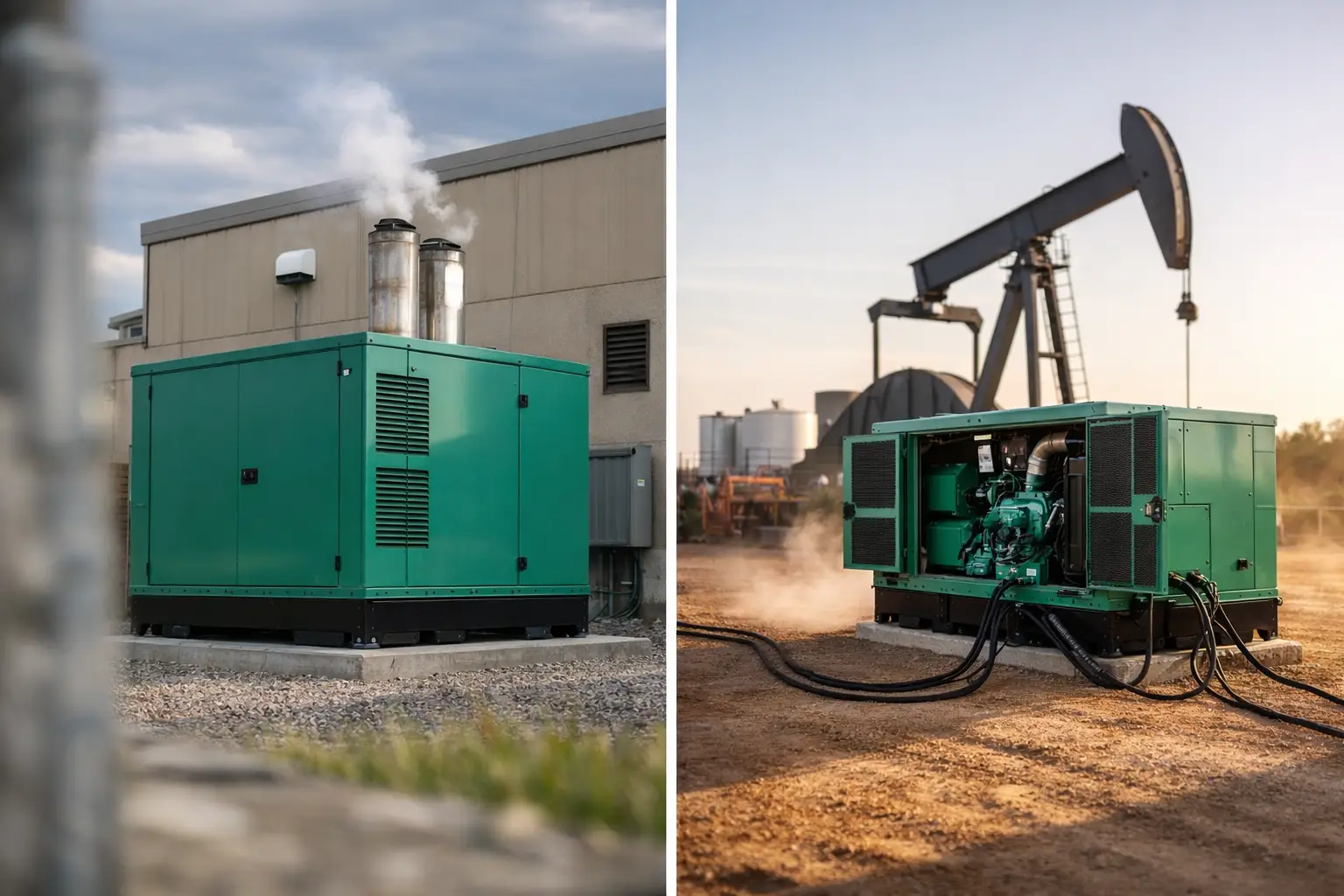
A generator that looks right on paper can still be the wrong machine for the job. The most common mistake is treating standby vs prime power as a labelling issue, when it is really an operating duty issue. If your site only loses mains supply occasionally, a standby-rated set may be appropriate. If the generator is expected to carry the load as a regular or continuous source, prime power is usually the correct specification.
That distinction matters because the rating affects engine loading, service intervals, lifespan expectations and, ultimately, uptime. For facilities managers, project engineers and procurement teams, getting this wrong can mean overspend at one end or premature wear and unreliable performance at the other.
What standby vs prime power actually means
Standby power is the maximum output a generator can deliver during a mains failure or other interruption to the normal electricity supply. It is intended for emergency use rather than routine daily operation. In most applications, the generator runs only when the utility supply is unavailable, and there is typically no overload capability built into the standby rating.
Prime power is different. A prime-rated generator is designed to operate for extended periods where no reliable grid supply exists, or where the generator is used as a primary source of electricity. Load levels can vary across the operating period, and prime-rated sets are built for this more demanding duty cycle.
In simple terms, standby is for backup. Prime is for working power.
Standby vs prime power in real operating conditions
The clearest way to assess standby vs prime power is to look at the site, not just the specification sheet. A hospital, data room or commercial building with a stable mains connection usually needs standby power. The generator may sit idle for long periods, then start immediately during an outage and support critical loads until mains power returns.
A construction site, remote telecoms installation, quarry or off-grid industrial operation usually fits prime power. In those environments, the generator is not there just in case. It is part of the daily operating plan.
There are grey areas. Some sites have poor grid reliability rather than no grid at all. Others run generators during peak tariff periods, planned shutdowns or seasonal demand spikes. In those cases, the right answer depends on expected run hours, average load factor and whether the set is carrying base load or simply bridging occasional interruptions.
Why the ratings are not interchangeable
A prime-rated generator can often have a lower kVA figure than the same engine package shown at standby rating. That can seem counterintuitive until you consider the duty. Standby rating reflects short-term emergency output. Prime rating reflects what the set can sustain over much longer periods without accelerating wear beyond intended limits.
This is where buyers can get caught out. If a site needs 400 kVA continuously and a generator is advertised at 440 kVA standby but only 400 kVA prime, the standby number is not the one to buy against if the machine will operate as the main supply. Selecting on the higher standby figure for a prime-duty application leaves little headroom and can push the set into a working pattern it was not intended to maintain.
The reverse is also true. Buying a prime-rated set for a straightforward backup role can be the right commercial decision in some cases, but it is not always necessary. If the application is genuinely emergency-only, standby specification may be more cost-effective.
Load profile matters as much as the headline kVA
Generator selection is rarely just about total connected load. The operating profile matters more than many initial enquiries suggest. A site with motor starting, cyclic machinery or intermittent high inrush can place a very different demand on the generator compared with a stable resistive load of the same nominal size.
For standby duty, you need to know what must run during an outage and what can be shed. For prime duty, you need a more complete view of daily consumption, peak loading, load steps and likely expansion. A generator that appears adequate at full-load calculation stage may perform poorly if the real application involves repeated transient spikes or prolonged low-load running.
This is one reason specification-led support is valuable. Matching the rating to the duty is only the first part. The enclosure type, phase, voltage, fuel tank arrangement and control system all influence how well the generator performs in service.
Fuel use, maintenance and service life
Standby and prime duty also differ commercially after purchase. A prime power application will naturally consume more fuel because the machine is operating for more hours. Maintenance requirements increase accordingly. Oil changes, filter replacements and general service intervals become part of routine operations rather than occasional compliance tasks.
That does not mean prime power is less efficient. It means the set is being used as a productive asset rather than insurance. The key is to budget and plan on that basis.
Standby units can be cheaper to operate over the year because they run less, but they still require regular testing and maintenance. A backup generator that is neglected because it is “only for emergencies” is often the one that fails to start when the outage arrives.
For buyers comparing options, the right question is not just purchase price. It is total operating fit. A lower-cost standby unit used in a prime application is rarely economical once downtime risk, accelerated wear and replacement exposure are taken into account.
Typical applications for standby power
Standby-rated generators are commonly specified where mains power is the normal source and continuity is critical when that source fails. Typical examples include commercial buildings, healthcare facilities, warehousing, retail sites, schools, offices and infrastructure assets with emergency backup requirements.
In these environments, rapid starting, reliable transfer and confidence under emergency load are more important than all-day duty capability. The set may run for testing, planned maintenance exercises and genuine outages, but not as a routine base-load source.
Noise attenuation can also be a more visible consideration for standby applications, especially in built-up areas. Silent generator configurations are often preferred where planning conditions, neighbouring premises or public-facing sites require reduced sound output.
Typical applications for prime power
Prime-rated generators are more common on construction projects, remote compounds, agricultural operations, temporary works, mining, telecoms and locations where the utility supply is absent, unstable or uneconomical.
In these cases, the generator is part of normal production or service delivery. Durability under variable load, practical service access and fuel autonomy become central procurement factors. Open sets may suit plantroom or containerised installations where acoustic treatment is handled separately, while silent sets are often chosen for outdoor operation where noise control remains necessary.
If the site is expected to expand, it is sensible to consider future load growth early. Prime applications are less forgiving of undersizing because the generator is not just covering an emergency window. It is supporting daily activity.
How to choose the right rating
Start with one question: is the generator there for occasional outage support, or will it be a regular source of electricity? That usually takes you most of the way.
Then look closely at annual run hours, average load, load fluctuation and whether any overload allowance is required in practice. Review the starting characteristics of major equipment, especially pumps, compressors and large motors. Confirm whether single phase or 3 phase output is needed, and whether site conditions call for an open or silent set.
Buyers should also check that all quoted figures are being compared on the same basis. Confusion often starts when one option is discussed in standby kVA and another in prime kVA, with no direct duty comparison. A clear supplier will set out both ratings and explain which one is relevant to the application.
For mission-critical sites, it is also worth assessing what failure really costs. If downtime affects production, tenant operations, cold storage integrity, safety systems or service availability, the cheapest suitable generator is not always the lowest-risk decision. Availability, support response and accurate specification matter just as much as price.
Global Generators works with buyers who need that clarity upfront, particularly where uptime requirements leave little room for interpretation.
The better question is not which is better
When buyers ask whether standby or prime power is better, the honest answer is that neither is better in isolation. Each rating is correct for a different duty. The real objective is to align the generator with the operating pattern, load profile and commercial risk of the site.
If your generator will spend most of its life waiting for an outage, specify it as standby equipment. If it will be expected to carry operations for long periods, specify prime power from the start. A generator that is matched properly tends to cost less trouble over its working life, and that is usually the decision that pays back when the site needs power most.