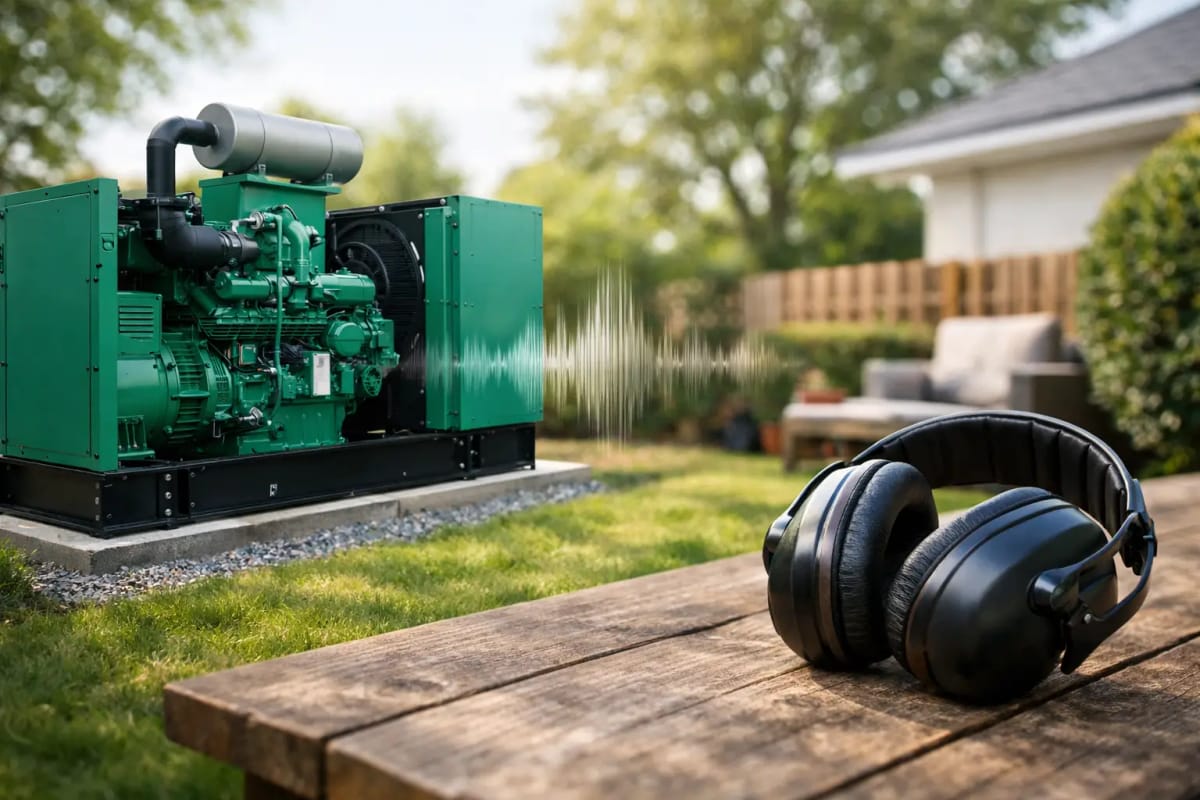
A generator that sounds acceptable on paper can become a serious site issue once it is under load at 7 am beside offices, wards, accommodation or neighbouring units. If you are assessing how to reduce generator noise, the right answer is rarely a single add-on. Noise control is usually a combination of specification, siting, enclosure design, exhaust treatment and routine maintenance.
For commercial and industrial buyers, this is not only about comfort. Excessive generator noise can affect planning compliance, staff welfare, communication on site and operating hours. In some settings, it can also influence whether a unit is suitable at all, particularly where standby equipment is located close to occupied buildings or sensitive boundaries.
Where generator noise actually comes from
Before choosing a fix, it helps to separate the noise sources. Most generator sets produce sound from three main areas: the engine, the cooling system and the exhaust. Mechanical noise comes from combustion, vibration and moving components. Fan noise can be substantial, especially on larger sets with high cooling demand. Exhaust noise is often the sharpest and most noticeable element, particularly during load changes and start-up.
There is also structure-borne noise to consider. Even when the airborne sound level looks manageable, vibration transmitted through a base, slab, frame or wall can create secondary noise inside nearby buildings. This is why two apparently similar installations can perform very differently on the same rated sound level.
Start with the right generator format
The most effective way to reduce noise is often to avoid adding corrective measures later. If quiet operation matters from the outset, enclosure type should be part of the original specification rather than an afterthought.
A silent generator is generally the best starting point for sites where acoustic control is a priority. These sets are supplied in sound-attenuated canopies designed to contain engine noise and manage airflow more effectively than an open set. The difference can be significant, particularly in standby applications at commercial premises, hospitals, telecoms sites and mixed-use developments.
Open generators still have a place. They are often suitable in plant rooms, dedicated compounds or industrial environments where space, ventilation and external acoustic treatment are already planned. However, if you begin with an open set and then need to reach stricter limits, the total installed cost can rise quickly once acoustic housings, barriers and exhaust attenuation are added.
Match the acoustic target to the site
Not every project needs the same noise level. A generator serving a remote industrial yard will have a different acoustic requirement from one located near offices, residential boundaries or healthcare facilities. That is why sound data should be assessed against the site, not viewed in isolation.
Manufacturers commonly state acoustic performance at a defined distance under controlled conditions. Useful as that is, it does not account for walls, reflections, topography, loading pattern or night-time background levels. If the margin is tight, a site-specific acoustic review is usually worth the time.
Siting makes a bigger difference than many buyers expect
If you want to know how to reduce generator noise without immediately changing the equipment itself, start with position. A poorly sited quiet set can cause more nuisance than a well-sited standard set.
Distance remains one of the simplest controls. Moving a generator further from occupied areas or site boundaries can materially reduce perceived noise. Direction also matters. If canopy louvres, radiator discharge or the exhaust outlet face towards sensitive areas, sound will carry more directly.
Hard surfaces can make the problem worse. Sound reflecting from compound walls, service yards and building façades can amplify the effect at particular points. In practice, a unit tucked into the wrong corner of a site may sound louder than the same unit in a more open position.
Use barriers carefully
Acoustic barriers can help, but only when they interrupt the line of sight between source and receiver. A low wall placed beside a tall generator compound may achieve very little. Equally, barriers must not obstruct ventilation or maintenance access.
This is where generator installations become a balance between acoustic performance and operating reliability. Restricting airflow to chase a lower noise level can create overheating risk, especially in prime power or high ambient conditions. Any barrier or screening strategy has to preserve proper air intake and hot air discharge.
Enclosures and acoustic canopies
For many installations, the enclosure does most of the work. A properly engineered canopy uses insulated panels, sealed access points and controlled airflow paths to reduce noise while protecting the set from weather and site conditions.
Not all canopies perform to the same standard. The acoustic result depends on panel construction, internal lining, door seals, intake and discharge attenuation, and how well the enclosure has been designed around the generator rather than adapted loosely to it. Buyers comparing sets on price alone should check whether the declared sound level reflects a genuine acoustic enclosure or a more basic weatherproof package.
For larger industrial applications, a bespoke acoustic enclosure or containerised package may be more appropriate than a standard canopy. This can allow higher attenuation, integrated exhaust treatment and improved control of service access. The trade-off is footprint, cost and sometimes lead time.
Exhaust silencers are often essential
If exhaust noise is dominant, enclosure treatment alone will not solve it. In those cases, the exhaust system needs attention.
Industrial, residential and critical grade silencers are designed for different attenuation levels. The right choice depends on the target sound pressure level, the installation environment and the engine characteristics. A higher performance silencer will usually reduce noise more effectively, but it also introduces additional back pressure. That must remain within the engine manufacturer's allowable limits.
Exhaust routing matters as well. Vertical discharge can be preferable on some sites, while horizontal discharge may suit others depending on nearby receptors and structural constraints. What should be avoided is an arrangement that directs exhaust pulse noise straight towards occupied areas.
Vibration isolation and mounting
Noise is not always only airborne. If a generator is transferring vibration into a slab, steelwork or adjacent structure, the result can be a persistent low-frequency hum that is difficult to manage after installation.
Anti-vibration mounts, flexible connectors and correct baseframe installation help prevent this. The support structure must also be appropriate for the set's operating weight and dynamic behaviour. On roof or mezzanine installations in particular, vibration control needs early engineering input. Waiting until complaints start usually leads to more disruptive remedial work.
Maintenance has a direct acoustic impact
A generator that becomes noticeably louder over time often has a maintenance issue rather than an acoustic design issue. Worn mounts, damaged silencers, loose panels, exhaust leaks and cooling fan problems can all increase sound output.
Routine servicing keeps the unit operating as intended and preserves whatever acoustic performance was originally specified. This is especially relevant for standby sets that may spend long periods idle and then start under urgency. If seals, fixings or exhaust components have deteriorated unnoticed, the first sign may be excessive noise during a test or outage event.
Load and operating condition matter
Generators do not sound identical at all times. Noise can change with load, engine speed, fan demand and ambient temperature. A set that seems acceptable during a short unloaded test may be much more intrusive under full site demand.
For that reason, acoustic assessment should reflect realistic operating conditions. If the generator is intended for extended prime power, the noise control strategy needs to suit sustained operation rather than occasional emergency running.
When retrofitting is realistic and when replacement is better
Existing installations can often be improved. Common retrofit measures include upgrading the silencer, fitting additional acoustic louvres, improving door seals, adding barriers and correcting vibration isolation. Where the base unit is fundamentally sound and the shortfall is modest, this approach can be cost-effective.
However, there are limits. If an ageing open generator is installed in the wrong place beside a sensitive boundary, bringing it to a low-noise standard may be impractical or uneconomic. In those cases, replacing it with a properly specified silent generator can be the better commercial decision, particularly when reliability, fuel efficiency and compliance are considered together.
For buyers managing mission-critical power, the key is to treat acoustics as part of generator selection rather than a separate problem for later. A dependable set should not only meet the electrical load and runtime requirement. It should also suit the physical and acoustic realities of the site.
At Global Generators, that usually means matching enclosure type, silencing level and installation intent before the order is placed, not after the complaints begin. A quieter generator is rarely the result of one product alone. It comes from getting the specification right early, so the set can deliver dependable power without creating a second operational problem nearby.