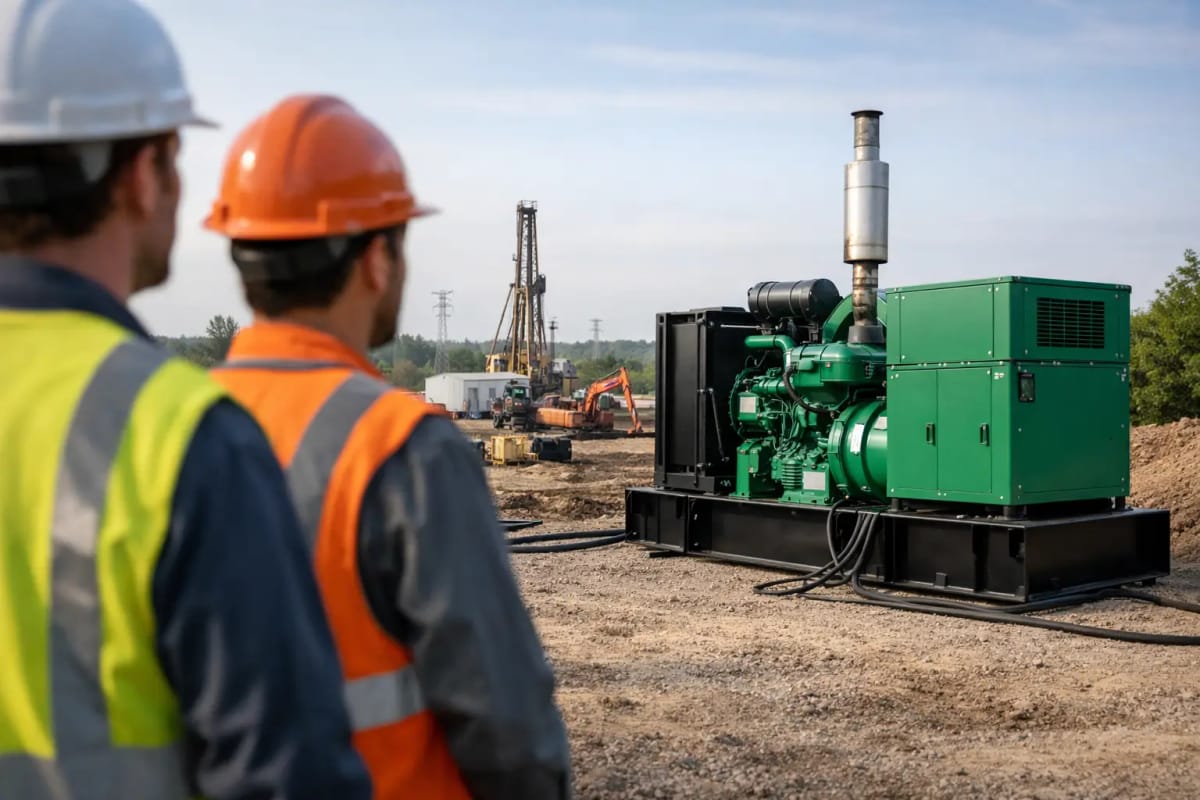
If your site is expected to run for long periods without a reliable mains connection, the question is not whether you need a generator. It is when is prime power used, and whether your duty profile actually calls for a prime-rated set rather than a standby unit. That distinction matters because the wrong rating can shorten engine life, increase fuel costs and leave critical operations exposed.
For procurement teams, facilities managers and project engineers, prime power is not a marketing label. It is a defined operating category used where a generator is expected to act as the main source of electricity over extended periods, often with variable load. In practical terms, prime power is used when the generator is doing real work day after day, not simply waiting for a grid outage.
When is prime power used in practice?
Prime power is used where utility power is unavailable, unreliable or commercially unsuitable for the site. That often includes remote construction compounds, quarry operations, agricultural facilities, temporary infrastructure, telecom installations, off-grid manufacturing processes and export projects in regions with unstable grid supply.
It is also used on sites that have grid access but cannot depend on it consistently enough to protect production, safety systems or service continuity. In those cases, the generator may carry the site for regular scheduled periods rather than occasional emergencies. That operating pattern is fundamentally different from standby duty.
The practical test is straightforward. If the set will be the principal power source, or will run frequently enough that it becomes part of normal operations, prime power is usually the right classification to assess first.
Prime power vs standby power
The confusion usually starts here. Standby generators are designed to support the load during a mains failure. They are there for interruption events. A standby-rated machine can often supply a higher output than the same model at prime rating, but only because that output is intended for limited annual use.
Prime-rated generators are designed for ongoing operation at variable load over unlimited hours, subject to the manufacturer's stated average load conditions and maintenance schedule. They are built and rated with continuous service in mind. That does not mean they should be overloaded indefinitely, but it does mean they are intended to be used as an active part of the site's power strategy.
For a buyer, the trade-off is clear. Standby power may offer a lower upfront route if the generator only runs occasionally. Prime power is the correct specification where runtime, load variation and operating hours are materially higher. Choosing standby equipment for prime duty may look economical at purchase stage, but it usually becomes expensive in service.
Typical applications where prime power is used
On construction sites, prime power is often the default where a grid connection is delayed, unavailable or uneconomic to install for a temporary programme. Site offices, welfare cabins, cranes, hoists, pumps, lighting towers and tools all need a dependable electrical source, and load demand can change significantly across the working day.
In mining, quarrying and remote industrial operations, prime power supports equipment far from established infrastructure. These sites need dependable generation not for backup, but for daily output. Downtime affects extraction, processing and transport schedules immediately.
Prime power is also common in agriculture, particularly at larger or more isolated facilities where operations such as irrigation, grain handling, cold storage or livestock support systems cannot wait for network upgrades. In the telecom sector, prime-rated generators may be used at off-grid towers where continuous service is required.
Temporary events and public infrastructure projects can also need prime power, although runtime profiles vary. If the generator is supplying the main electrical demand over a sustained period, prime rating is the relevant benchmark. If it is retained only for contingency cover, standby may be more appropriate.
What operating pattern calls for prime power?
The strongest indicator is runtime. If a generator is expected to run every day, for extended shifts, or as the main source of power for weeks or months, prime power should be considered. Another indicator is variable load. Prime-rated sets are intended to handle the sort of fluctuating demand seen on active sites, provided those fluctuations sit within the specified load profile.
Load factor matters as much as hours. A site with moderate but persistent demand often suits prime power better than a site with very high output requirements for only rare emergencies. Buyers sometimes focus only on maximum kVA, but duty cycle is just as important. A generator that appears large enough on paper can still be the wrong fit if its rating category does not match the real operating pattern.
This is why application details matter during specification. Daily runtime, starting currents, motor loads, step loading, ambient conditions and future expansion all affect whether a prime-rated unit is the safer commercial choice.
Why rating accuracy matters
Using the correct rating is about reliability, but it is also about cost control. A generator that is underspecified for prime duty will generally experience greater wear, more frequent stress events and a higher risk of nuisance shutdowns. For critical operations, that can mean lost production, failed service levels or contractual penalties.
There is also the issue of maintenance planning. Prime power applications require disciplined servicing because the machine is a working asset, not a rarely used reserve. Oil changes, filter intervals, coolant checks and load management become part of routine operations. If that maintenance regime is not built into the procurement decision, ownership costs can rise quickly.
At the same time, overspecifying has its own downside. An excessively large generator running at very low load can lead to inefficient fuel use and poor engine performance over time. The right answer is not simply buying bigger. It is matching the generator's prime rating to the site's actual demand profile with enough margin for operational stability.
How to assess whether you need prime power
Start with the power source question. Will the generator be the site's main electricity supply? If yes, prime power is likely required. Then review expected hours of operation per day and per year. Frequent, sustained use points away from standby.
Next, look at load behaviour. A site with changing demand across plant, HVAC, pumps, compressors, lighting and process equipment needs a generator rated for that pattern. Motor starting and peak step loads should be considered separately from the running load. This is particularly important on industrial and construction applications where equipment may cycle on and off throughout the shift.
Fuel logistics and enclosure format also matter. A prime power installation for a remote or exposed location may need a larger fuel arrangement, weather protection, acoustic attenuation or a format that suits transport and servicing constraints. Silent and open sets each have their place, depending on environment, access and noise limits.
Finally, consider the business consequence of failure. If downtime creates safety risk, production loss or reputational damage, the power solution should be specified conservatively and supported properly from the outset.
When prime power is not the right choice
Prime power is not automatically the answer for every generator purchase. If the site has a stable mains supply and the generator is only intended for occasional outages, standby rating is usually more appropriate. That is common in commercial buildings, healthcare backup systems, data resilience applications and many industrial facilities where grid power remains the primary source.
It may also be unnecessary on temporary sites with very short operating windows or low annual hours. In those cases, specifying a prime-rated set can add capital cost without delivering proportional benefit. The key is not to assume that a tougher-sounding rating is always better. The best specification is the one that matches how the asset will actually be used.
Choosing the right generator for prime duty
Prime power selection should be led by application, not by headline output alone. Buyers should assess kVA requirement, load profile, voltage, phase, enclosure type, fuel autonomy, site conditions and servicing access together. Engine quality also matters because prime-duty sets need proven performance under sustained use.
For serious applications, it is worth dealing with a supplier that understands both rating definitions and operational consequences. Global Generators works with buyers who need clear technical guidance, fast availability and dependable generator sets matched to real site conditions rather than generic assumptions.
Prime power is used when generation is not an emergency measure but part of normal operations. If your site depends on the set to carry production, support infrastructure or keep a remote project moving, rating that duty correctly at the start is one of the simplest ways to protect uptime later.