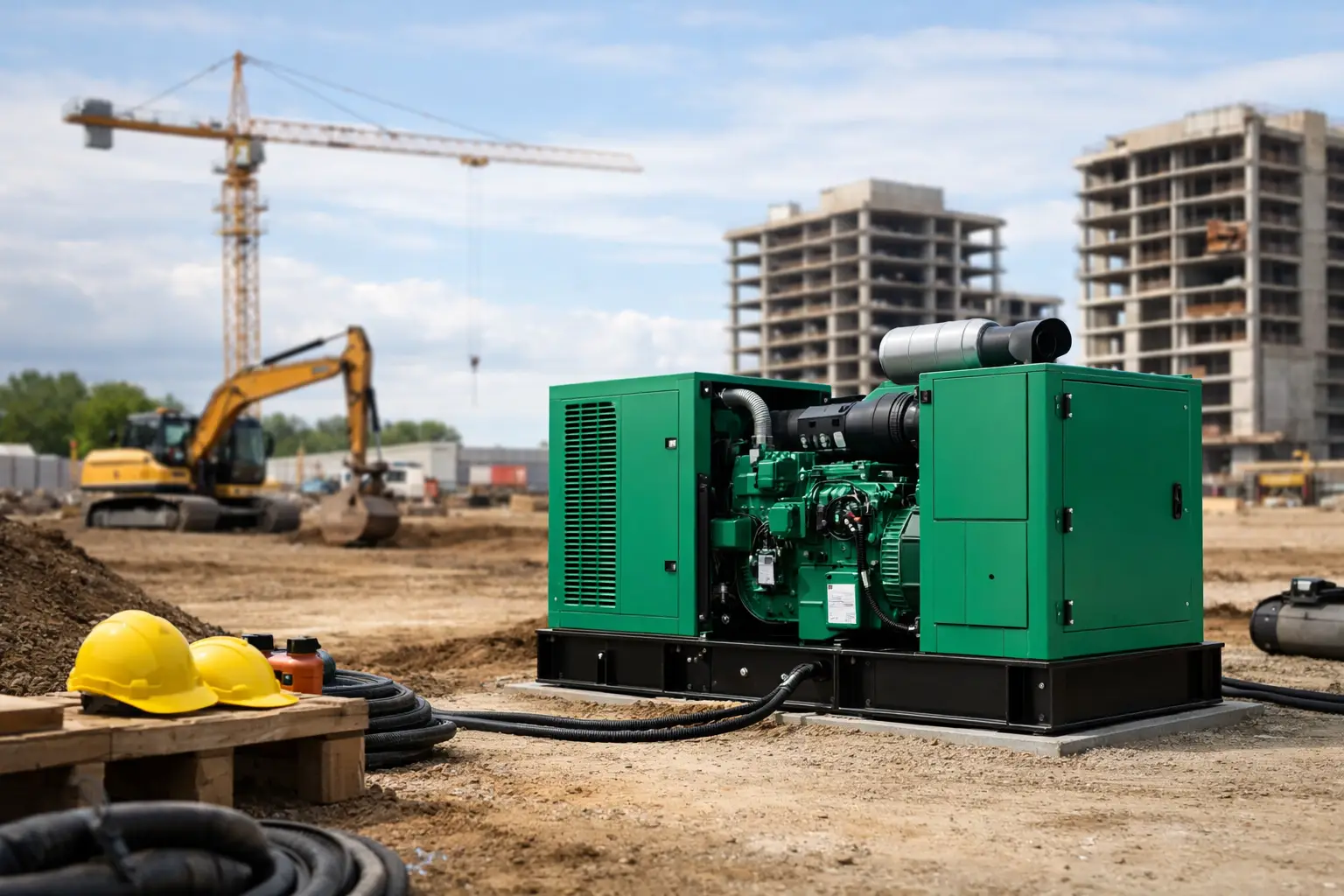
Power failure is rarely just an inconvenience. On a construction site it stops progress. In a hospital or data-led facility it creates immediate operational risk. That is why Diesel Generators remain the default choice for dependable standby and prime power across commercial, industrial and infrastructure environments.
For buyers responsible for uptime, the decision is not simply whether to install a generator. It is which rating, configuration and fuel platform will support the site properly under real operating conditions. A generator that looks adequate on paper can still underperform if the duty profile, starting loads or site layout have been poorly assessed.
Why Diesel Generators remain the standard
Diesel generators continue to lead in critical power applications because they offer a strong balance of fuel efficiency, load response, durability and serviceability. For high-demand environments, that matters more than headline purchase cost alone.
Diesel engines are well suited to carrying variable loads and coping with motor starting demands, which makes them practical for plant, HVAC systems, pumps, compressors and other equipment with high inrush current. They are also widely supported in the market, with proven engine platforms, established parts availability and service familiarity across the UK and export markets.
For many buyers, the real value is predictability. A well-specified diesel set gives clear output data, known runtime characteristics and dependable performance in both standby and prime applications.
Standby or prime power - get the rating right
One of the most common specification errors is treating standby and prime power as interchangeable. They are not.
Standby-rated generators are intended to operate during mains failure. They provide emergency backup power for a limited number of hours each year and are typically selected for facilities where utility supply is the main source of power. This is common in commercial buildings, healthcare sites, telecoms infrastructure and business-critical facilities.
Prime-rated generators are designed for ongoing use where no reliable mains supply exists, or where the generator must operate for extended periods. Construction compounds, remote installations, temporary infrastructure and certain industrial operations often require prime power rather than standby cover.
If the application involves regular long-duration running, specifying a standby set can shorten service life and increase operational risk. The duty cycle should always be matched to the rating.
Choosing the right diesel generator configuration
The right format depends on the site, the acoustic requirement and how the equipment will be installed.
Silent generators are the practical choice where noise control matters. That includes urban construction, public-facing buildings, events infrastructure, hospitals and sites with planning or environmental constraints. The enclosure also provides weather protection, which can simplify outdoor deployment.
Open generators are commonly selected for plant rooms, dedicated service areas or enclosed installations where ventilation and acoustic treatment are already part of the design. They can offer easier maintenance access and may be the better fit for engineered indoor applications.
Phase selection is equally important. Single phase generators are generally suited to smaller loads and certain residential or light commercial applications. Three phase generators are the standard for industrial equipment, larger buildings and sites with mixed mechanical and electrical demand. If the load profile is not balanced correctly across phases, output quality and equipment performance can suffer.
Sizing Diesel Generators properly
Generator sizing should start with the actual site load, not a rough estimate. Total kVA requirement is only one part of the picture. You also need to consider starting current, load sequencing, power factor and future expansion.
Motor-driven loads are often where problems begin. A pump or compressor may have a running load that appears modest, but the startup demand can be several times higher. If the generator is too small, voltage dip becomes an issue and connected equipment may fail to start or operate unreliably.
Oversizing is not always the safe option either. A generator that runs consistently at very low load can develop efficiency and engine performance issues over time. Good specification means finding the correct operating window for the intended duty.
For that reason, serious procurement should be based on application data, not just a target price point.
What commercial buyers should compare
When reviewing generator options, the basic output figure is only the starting point. Buyers should assess the engine brand, alternator quality, control system, enclosure type, fuel tank capacity, voltage, frequency and whether the set is intended for standby or prime duty.
Stock availability also matters. In many sectors, lead time is a commercial issue in its own right. If a project is live or a facility has an identified power continuity gap, waiting months for supply is often not practical. Fast access to recognised power ranges can be the difference between keeping a programme on track and taking an avoidable operational hit.
This is where a specialist supplier adds value. Global Generators supports enquiry-led procurement across a broad 13-3000 kVA range, including silent, open, single phase and 3 phase configurations, with Cummins-powered sets forming a key part of the offer for buyers who prioritise proven performance.
Where Diesel Generators fit best
Diesel remains a strong fit where reliability, output stability and runtime matter more than trend-led technology choices. Manufacturing plants, logistics hubs, healthcare environments, data-reliant operations, utilities, telecoms sites and construction projects all share the same concern: power loss has a cost.
The correct generator is the one that matches the site duty, load behaviour and installation environment with minimum ambiguity. Buyers who focus on rating, configuration and real operating conditions usually make better long-term decisions than those who buy on headline kVA alone.
For critical applications, generator procurement is not about having backup equipment on site. It is about securing power that performs when the mains does not.