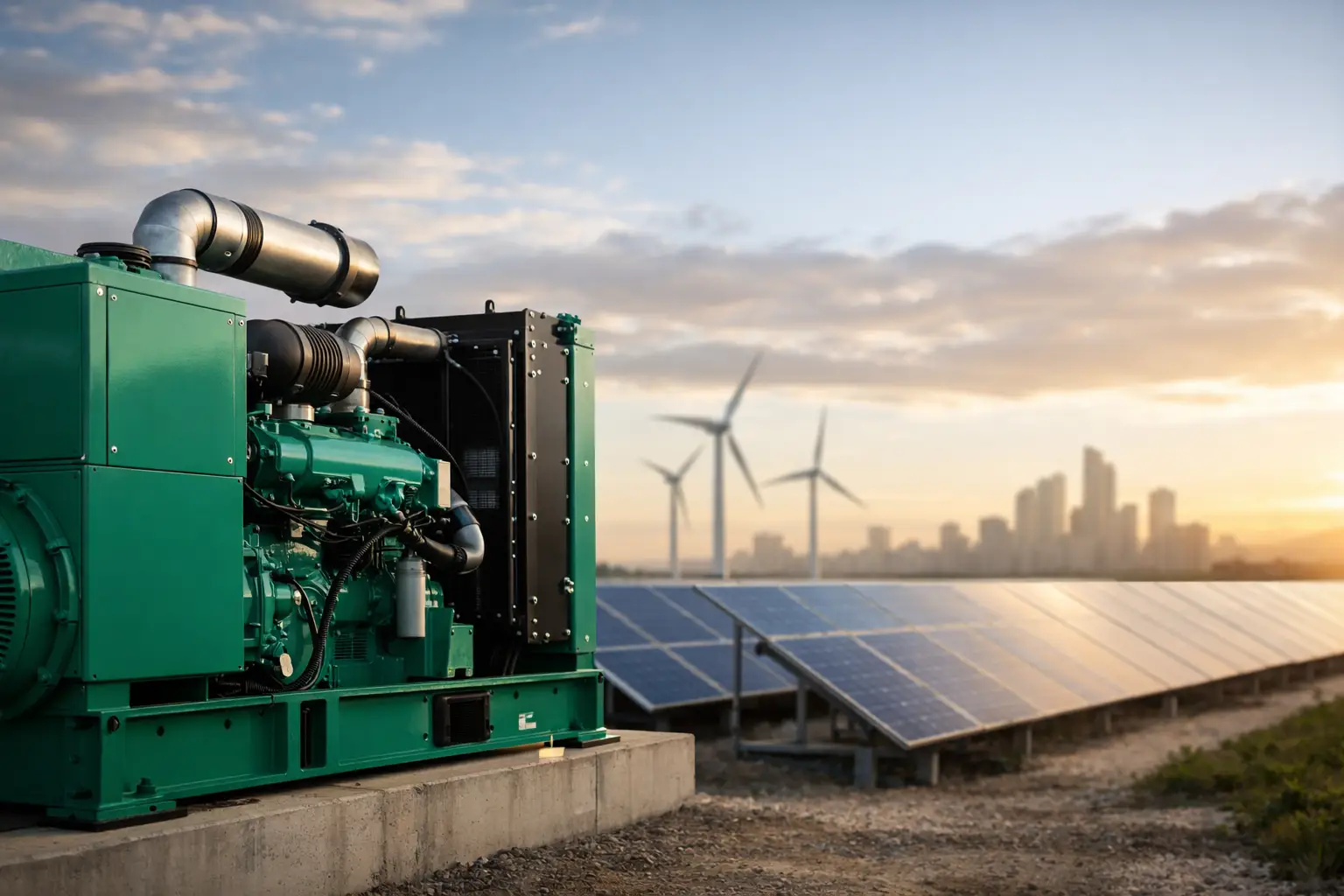
A site can have grid power, battery storage and a long list of efficiency targets, yet the question that still matters when the mains fail is simple: what keeps operations running now? That is why the future of diesel generators remains a serious purchasing question for hospitals, data-led facilities, construction sites, manufacturers and infrastructure operators. Diesel is not disappearing overnight. It is changing under pressure from emissions regulation, fuel costs, decarbonisation policy and higher expectations around control, efficiency and uptime.
Why the future of diesel generators is still commercially relevant
For mission-critical power, diesel retains several advantages that are difficult to replace at scale. It delivers high energy density, established refuelling infrastructure, proven load acceptance and dependable performance in standby and prime power applications. When buyers need a generator that can sit ready for months and then carry a serious load without hesitation, diesel remains a practical answer.
That matters because many sectors are not choosing between diesel and nothing. They are choosing between diesel, gas, battery-supported systems or a hybrid arrangement, and each option carries trade-offs. Gas can suit some fixed installations, but supply security and site connection constraints can limit viability. Battery storage works well for bridging, load levelling and short-duration support, but long outages or remote sites quickly expose its limits. For high-demand applications where runtime, mobility and serviceability matter, diesel continues to hold its position.
The more realistic view is that the market is moving towards cleaner, smarter and more integrated diesel systems rather than away from diesel altogether.
Emissions regulation will shape product design
The biggest force acting on the future of diesel generators is emissions compliance. Across the UK and wider international markets, tighter requirements on nitrogen oxides, particulates and overall environmental performance are influencing engine selection, aftertreatment design and installation planning.
For buyers, this does not simply mean choosing a generator with a compliant engine. It means considering how the unit will be used. A standby generator with infrequent run hours faces a different compliance picture from a prime power machine operating on a daily schedule. The enclosure, exhaust configuration, load profile and local planning conditions can all affect what is suitable.
This is also where application detail starts to matter more than broad claims. Lower-emission diesel generator sets are improving, but added emissions technology can introduce complexity. Maintenance standards become more important, fuel quality matters more, and improper loading can create operational issues over time. Buyers should expect the specification process to become more exact, not less.
Hybrid power systems will expand, not replace diesel outright
One of the clearest trends is the rise of hybrid systems. In practical terms, that means diesel generators working alongside battery storage, renewable inputs or advanced power management controls. This is particularly relevant on sites where the load profile varies sharply, where silent running periods are needed, or where operators want to reduce fuel burn without compromising resilience.
In these systems, the generator is no longer always the sole source of power. Instead, it becomes part of a broader architecture. A battery may cover short-duration demand or absorb transient fluctuations, while the diesel set starts only when required. That reduces unnecessary engine hours, improves fuel efficiency and can support emissions goals.
For many industrial users, this is likely to be the most practical version of progress. It keeps the proven reliability of diesel while addressing some of its operating cost and emissions disadvantages. The result is not a weaker case for generators. It is a stronger case for specifying the right generator within a more intelligent system.
The future of diesel generators will depend on control technology
Modern generator procurement is no longer just about kVA, enclosure type and engine brand, although those remain central. Control technology is becoming a larger part of asset value. Buyers increasingly expect remote monitoring, automated exercise scheduling, fuel level visibility, alarm management and integration with building or site power systems.
This shift is commercially important. Better controls support preventative maintenance, faster fault response and improved fleet oversight across multiple locations. For facilities managers and operations teams, that means less guesswork and fewer surprises during an outage.
There is also a performance benefit. Smarter controls can improve generator sequencing, manage variable loads more efficiently and reduce unnecessary wear. In large or complex installations, that can influence lifecycle cost as much as the engine specification itself.
The practical takeaway is straightforward: future-proofing a diesel generator purchase increasingly involves control capability, not only mechanical performance.
Fuel efficiency and lifecycle cost will drive buying decisions
Capital cost will always matter, but the market is placing greater weight on total cost of ownership. Fuel efficiency, service intervals, parts support and engine durability are all moving higher up the decision criteria. That is especially true for buyers running prime power applications or maintaining large standby fleets across multiple sites.
This trend favours proven generator sets from recognised engine manufacturers with established support networks. It also reinforces the value of matching the generator to the actual site load. Oversizing can look safe on paper, but poor load factor can affect fuel consumption, maintenance performance and long-term operating condition. Undersizing, of course, creates reliability risk and limits headroom.
The future buyer is likely to be more analytical. Instead of asking only, "What is the cheapest available set at this rating?" they are more likely to ask, "What gives us dependable output, manageable service requirements and acceptable operating cost over the next five to ten years?"
Diesel will remain critical in high-consequence sectors
Some sectors may reduce diesel dependence faster than others, but high-consequence applications will continue to rely on it for the foreseeable future. Healthcare, telecoms, utilities, data infrastructure, manufacturing and major commercial estates all require dependable backup when failure is not just inconvenient but operationally damaging.
In these environments, technology choices are judged by proven performance under pressure. Diesel generators have decades of field evidence behind them. Engineers, service teams and site operators understand their behaviour, maintenance profile and deployment requirements. That installed confidence has real value.
This does not mean buyers should ignore alternatives. It means procurement should reflect risk. If a site can tolerate short interruptions or has a highly stable grid supply, a different power strategy may be justified. If the site cannot afford uncertainty, diesel often remains the benchmark against which other options are measured.
Alternative fuels may influence the next phase
Another factor in the future of diesel generators is fuel flexibility. Hydrotreated vegetable oil and other lower-carbon fuel pathways are attracting attention because they offer a route to reduce emissions impact without abandoning diesel generator infrastructure altogether.
This area is promising, but it requires care. Compatibility depends on engine approval, fuel supply quality and operating conditions. Buyers should not assume every set is equally suited, or that switching fuel removes all compliance or performance considerations. Storage stability, cold weather behaviour and supply consistency still need proper review.
Even so, fuel flexibility is likely to become a stronger procurement consideration. For organisations under pressure to cut carbon while retaining standby resilience, this may offer a practical middle ground.
What buyers should do now
The most sensible response is not to delay procurement while waiting for a perfect future solution. It is to specify around real operating need. That means defining standby or prime duty clearly, understanding load growth, reviewing site constraints and considering whether a hybrid arrangement would improve performance or reduce operating cost.
It also means buying from suppliers that understand application fit, stock availability and configuration detail. In a market shaped by compliance, lead times and technical variation, speed without specification discipline creates risk. A dependable generator purchase still comes down to the right rating, the right engine, the right format and the right support behind it.
For many buyers, diesel will remain the correct answer for years to come, particularly where uptime carries financial or safety consequences. The change ahead is not that diesel generators stop mattering. It is that the best diesel solutions will be cleaner, better monitored, more efficiently integrated and more precisely matched to the job.
If you are planning power resilience for a critical site, treat the future as a specification question rather than a headline. The right generator is still the one that starts when required, carries the load it was bought for and protects operations when the grid does not.