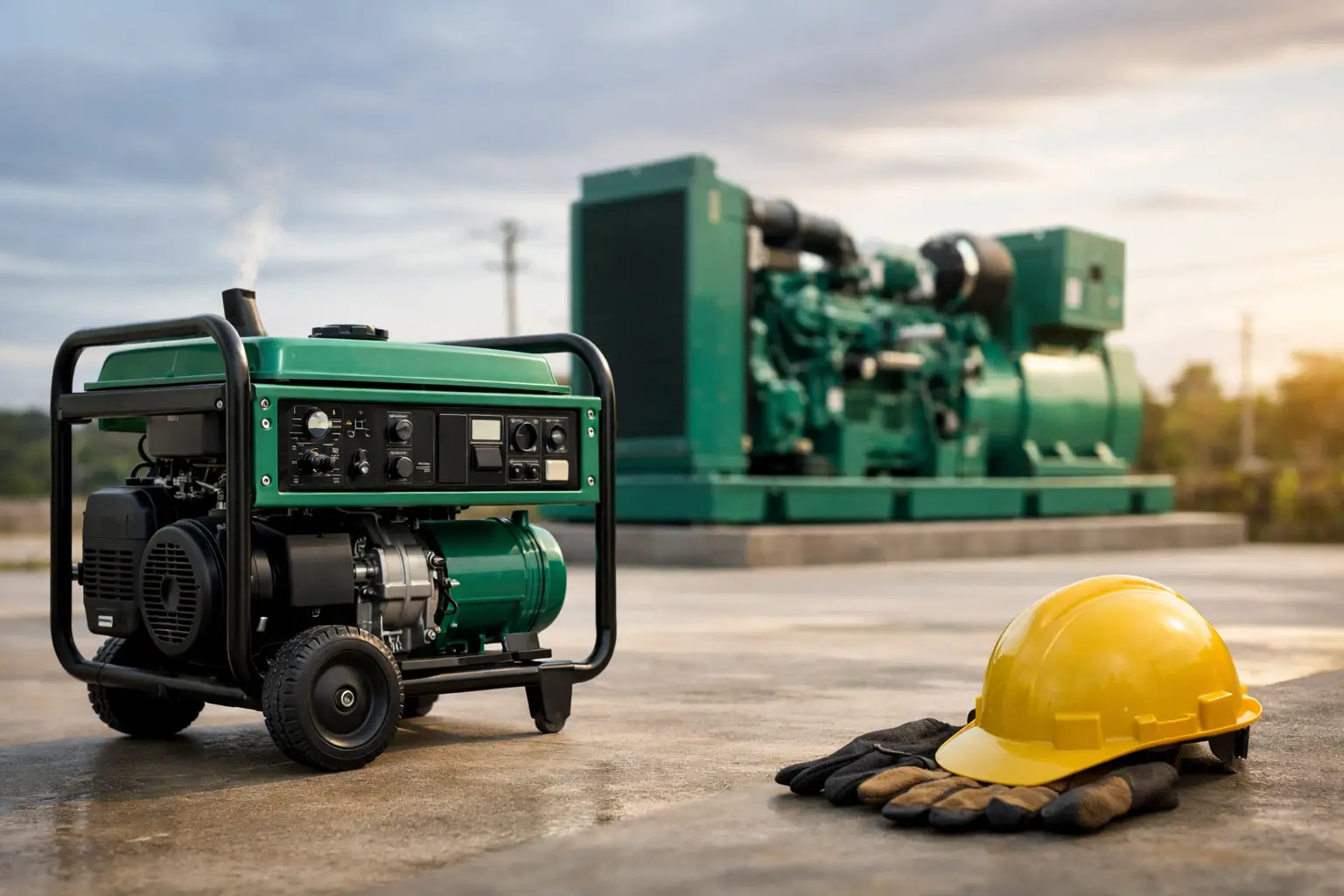
Power failures rarely happen at a convenient moment. When a site depends on lighting, controls, security systems, small plant, refrigeration, or office infrastructure, choosing the right single phase generator becomes a specification issue, not just a purchasing decision. The correct set protects uptime, supports safe operation, and avoids the costly problems that come with underpowered or poorly matched equipment.
What is a single phase generator?
A single phase generator produces single phase electrical output, typically for applications where the load does not require three phase supply. In practical terms, that usually means smaller commercial premises, residential buildings, mobile welfare units, site offices, workshops, telecoms support equipment, and selected standby applications where the connected equipment is designed for single phase operation.
For many buyers, the key point is compatibility. If the building or equipment is set up for single phase power, a three phase set is not automatically the better option. A generator should match the electrical characteristics of the load it is supporting. Where that alignment is wrong, performance, efficiency, and equipment protection can all suffer.
When a single phase generator is the right choice
A single phase generator is often the correct fit where loads are straightforward, distributed across standard single phase circuits, and relatively modest in starting demand. This includes backup for offices, retail units, small depots, gatehouses, domestic properties, welfare cabins, and smaller agricultural or utility installations.
It can also be the practical choice for temporary power. Contractors often need dependable supply for lighting, battery charging, hand tools, pumps, small compressors, and cabin services. In these cases, the priority is often reliable output, fast deployment, and straightforward connection rather than support for large three phase motors.
That said, load profile matters more than site type alone. Some small sites still require three phase power because they run larger plant, lifts, HVAC equipment, or workshop machinery. Others may have mostly single phase loads but need careful planning because of high motor starting currents or future expansion.
Single phase generator vs three phase generator
The difference is not simply about size. It is about the nature of the electrical demand.
A single phase generator is generally suited to sites running standard single phase loads. It is simpler in application when the connected equipment is all designed for single phase supply, and it avoids the complications that can come from trying to balance uneven loads across a three phase set.
A three phase generator is better suited to heavier industrial duties, larger commercial buildings, and applications involving substantial motors or mixed load environments. It offers greater flexibility for industrial distribution, but only where the site infrastructure and equipment actually require it.
The trade-off is straightforward. If your requirement is clearly single phase, specifying a three phase machine may add unnecessary complexity. If your site has any significant three phase demand, or is likely to in the near future, a single phase set can become a limiting factor. Buyers planning around both current use and future load growth usually make better long-term decisions than those buying only to cover the immediate shortfall.
How to size a single phase generator correctly
Incorrect sizing is one of the most common causes of poor generator performance. An undersized unit may struggle with motor starting, voltage stability, and overload events. An oversized unit may still perform well, but the capital cost and operating efficiency may be less favourable than necessary.
The starting point is the total connected load in kilowatts or kVA, but that figure alone is not enough. You also need to understand whether the load is resistive, inductive, or a mixture of both. Lighting and heaters behave differently from motors, pumps, compressors, refrigeration equipment, and air conditioning systems. Some equipment draws a much higher current at start-up than during normal running.
For that reason, the generator should be sized against the actual operating profile, not the nameplate sum of every circuit on site. Standby and prime power ratings also need to be considered correctly. A standby-rated set is designed for backup during mains failure. A prime-rated set is intended for more sustained use where utility power is unavailable or unreliable.
A proper sizing exercise usually includes load assessment, starting sequence review, voltage requirements, and allowance for site expansion. Procurement teams and project engineers will often save time by discussing the intended duty, key loads, and installation conditions before requesting a final recommendation.
Key specifications to check before buying
Voltage and frequency
For UK applications, buyers will typically be looking at 230V single phase output at 50Hz. This should always be confirmed against the site requirement and the connected equipment. Export projects may involve different standards, so specification accuracy matters from the outset.
Standby or prime power rating
This is a commercial and technical distinction. If the generator will operate only during utility failure, standby rating is usually the relevant benchmark. If it will carry regular operational load for extended periods, prime rating is the correct reference point.
Open or silent enclosure
An open set may suit plant rooms, protected compounds, or installations where acoustic control is not a major concern. A silent generator is often preferable where noise restrictions apply, or where the unit will operate near staff, residents, or sensitive neighbouring properties.
Fuel type and engine quality
In this market, diesel remains the standard choice for dependable standby and prime power. Engine quality has a direct effect on reliability, service support, fuel consumption, and long-term ownership cost. Recognised engine platforms matter because buyers are not simply purchasing a box with an alternator - they are investing in an asset expected to perform under pressure.
Physical footprint and installation constraints
Access, ventilation, exhaust routing, fuel storage, and maintenance clearance should all be reviewed before final selection. A set that fits the load but not the site is still the wrong specification.
Applications where specification matters most
In low-risk settings, a short power interruption may be inconvenient. In critical settings, it affects safety, revenue, compliance, or service continuity. That is why specification discipline matters.
A healthcare outbuilding, telecoms installation, transport office, security infrastructure point, or logistics facility may only need single phase supply, but it still needs dependable performance. Likewise, a construction compound can tolerate neither repeated starting issues nor unstable output affecting connected welfare and operational equipment.
For commercial buildings, smaller industrial units, and infrastructure support sites, the best result often comes from matching the generator to the actual load profile rather than assuming bigger is better. Reliability comes from suitability as much as capacity.
Common buying mistakes with a single phase generator
One frequent mistake is choosing purely on headline kVA without reviewing load starting characteristics. Another is ignoring installation conditions such as noise requirements, ambient temperature, or access for service. Some buyers also treat standby and prime ratings as interchangeable, which can create operational issues once the set is in service.
There is also the question of future demand. If the site is likely to add plant, temporary cabins, refrigeration, or upgraded security systems, that should be considered before purchase. A generator that is perfectly adequate on day one may be restrictive within a year.
Supplier support is another factor. For serious buyers, stock availability, lead time, documentation quality, and technical guidance are not minor extras. They are part of procurement risk management. A dependable supplier should be able to clarify ratings, enclosure options, engine platform, and expected application suitability without ambiguity.
What serious buyers should expect from a supplier
A good generator supplier should provide more than a product code and a price. Buyers should expect clear technical data, honest guidance on application fit, and practical support around delivery, configuration, and enquiry handling.
For sites where downtime has operational consequences, availability matters almost as much as specification. Lead times can shape project programmes, planned maintenance windows, and contingency planning. That is one reason many buyers look for stock-backed supply and a supplier that understands both UK delivery requirements and export logistics.
Global Generators operates in that space, with a range built around clear power categories, recognised engine brands, and enquiry-led support for matching equipment to application. For procurement teams and operations managers, that approach is usually more useful than generic online product browsing.
Making the right decision
The right single phase generator is not the cheapest set on paper or the largest unit within budget. It is the machine that matches the site voltage, load profile, duty rating, installation environment, and uptime requirement with the least compromise.
If your site runs standard single phase loads and requires dependable backup or temporary power, a properly specified single phase set can be the most efficient and commercially sensible option. The key is to treat generator selection as an engineering decision first and a purchase second. That usually leads to fewer surprises when the mains fails and the generator has to do the job it was bought for.