Quick Answer
On 16 May 2026, Eskom marked a full year without load shedding for the first time since 2018 - a genuine achievement. But load shedding and power outages are not the same thing. Data from energy company Wetility recorded 91,934 unplanned grid outages across South Africa last year, driven by ageing municipal infrastructure, electricity theft, and illegal connections rather than national supply shortfalls. For businesses, this means the predictable, scheduled blackouts of the load shedding era have been replaced by unpredictable, localised ones — arguably harder to plan around. A correctly sized backup generator with automatic switching remains one of the most reliable ways to stay operational regardless of which kind of outage hits.
For the first time in eight years, South Africa has gone a full year without load shedding. Eskom announced the milestone on 16 May 2026, and it's a legitimate one - three years of a generation recovery plan, billions in diesel savings, and a national grid that's meeting 100% of demand for the first time since before the crisis began.
If you run a business in South Africa, you'd be forgiven for assuming the power problem is behind you. It isn't. It's changed shape.
What "Load Shedding Is Over" Actually Means
Load shedding was a national supply problem: when demand exceeded what Eskom's power stations could generate, the utility deliberately cut power in scheduled rotations to prevent a total grid collapse. Ending it means Eskom's generation fleet is now reliably producing enough electricity to meet the country's needs — a real structural improvement, driven largely by better maintenance and a sharp drop in unplanned breakdowns at power stations.
What it does not mean is that the lights stay on everywhere, all the time.
The Outages the Milestone Doesn't Count
Separately from Eskom's generation performance, data collected by solar energy company Wetility recorded 91,934 grid power outages across South Africa last year - an average of six to nine unplanned outages per household connection point every month, with individual outages depriving households and businesses of power for between 73 and 132 hours in total.
These are not scheduled. They're not announced in advance the way load shedding stages were. They happen at the local distribution level - the wires, substations, and transformers that carry power from Eskom's grid into homes and businesses - rather than at the national generation level Eskom's announcement was about.
Why These Outages Keep Happening
A few structural issues are driving the gap between "the national grid is stable" and "my business still loses power":
Municipal financial distress. South African municipalities collectively owe Eskom for electricity already supplied, and that debt keeps growing. National Treasury's own debt relief programme exists precisely because of this — debt reported at around R94.6 billion by March 2025, up 27% from R70 billion in 2023, increasing by roughly R20 billion a year. Municipalities with strained finances often underinvest in maintaining the local distribution infrastructure that actually reaches your premises, even when Eskom's national supply is stable.
Electricity theft and illegal connections. Illegal connections, particularly in informal and underserved areas, create unpredictable demand spikes that overload local infrastructure and force emergency shutdowns. Theft of cables and vandalism of substations compound the problem, and the resulting losses run into the billions of rand annually.
Ageing local infrastructure. Much of the distribution network — as opposed to Eskom's generation and transmission assets — has not received the same scale of investment as the recent Generation Recovery Plan, leaving it more prone to faults, especially under storm conditions or during periods of heavy demand.
Rising tariffs adding financial pressure. Electricity prices have climbed sharply, with tariff increases running close to 9% a year in recent years. That raises the cost of every outage a business does absorb, and increases pressure on already indebted municipalities in a cycle that's difficult to break.
Why This Matters More for Businesses, Not Less
It's tempting to read "load shedding is over" as good news and stop planning for outages altogether. For most businesses, that would be a mistake, and here's the practical reason why: predictable outages are easier to manage than unpredictable ones.
During load shedding, businesses could check a schedule and know, days in advance, exactly when power would be cut and for how long. Operations, staffing, and backup power could be planned around it. Unplanned local outages offer no such warning. A fault at a substation, a theft-related shutdown, or an overloaded transformer can take your premises offline with zero notice — during a critical production run, a client meeting, a point-of-sale rush, or a server backup window.
For sectors where downtime has a direct cost — manufacturing, cold storage, healthcare, hospitality, data-dependent services, retail — this shift from scheduled to random outages is arguably a bigger operational risk than load shedding ever was, even though the headlines have moved on.
How to Protect Your Business From Unplanned Outages
The good news is that the practical response to unplanned local outages is the same discipline that got businesses through load shedding — it just needs to run continuously rather than to a published schedule.
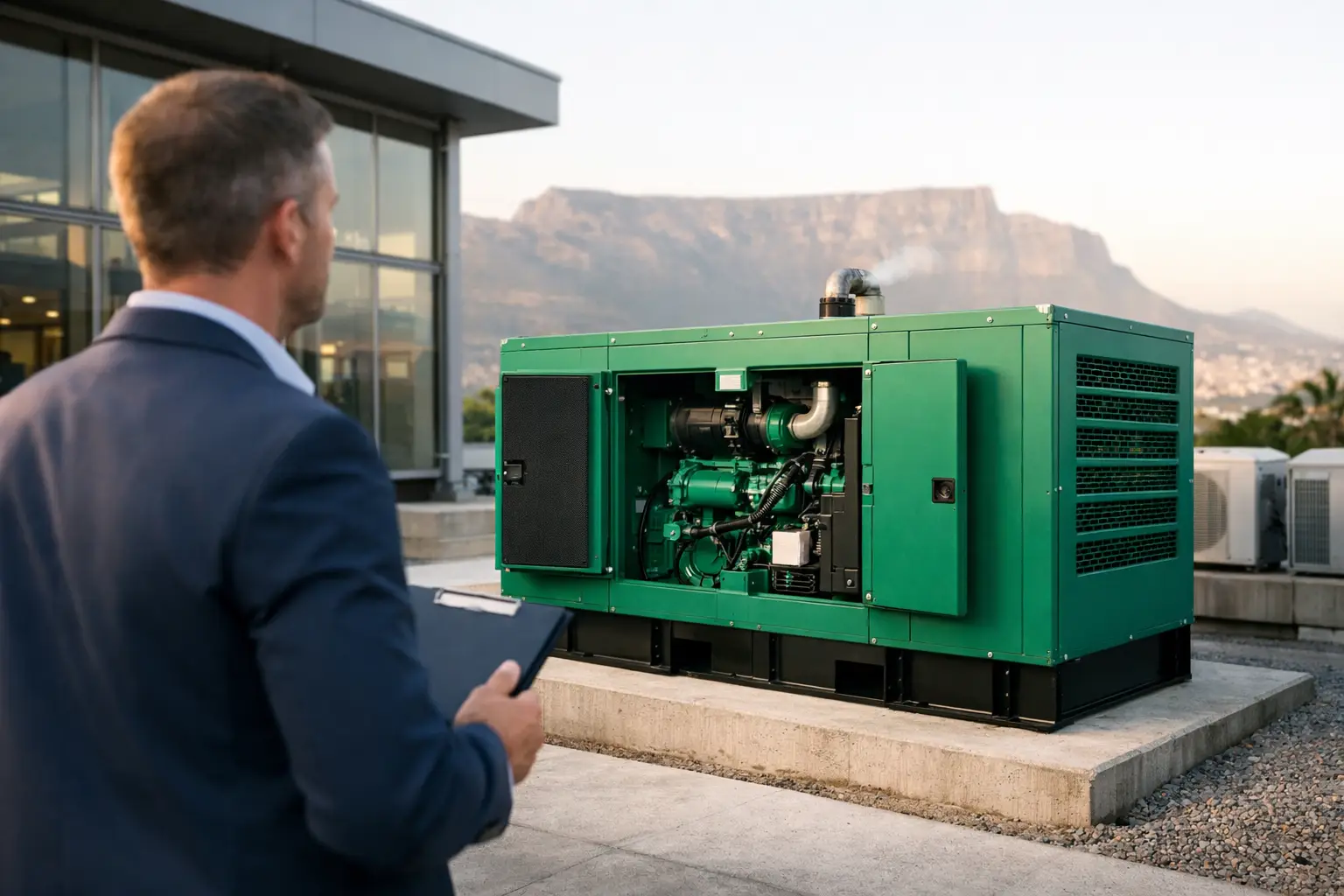
- Size backup power to your real peak load, not your average load. Many businesses undersize their backup generator based on typical daily consumption, then find it trips or fails to start critical equipment during the surge that comes from motors, compressors, or HVAC systems restarting simultaneously after an outage. A proper load assessment — including starting (surge) loads, not just running loads — is the foundation of a system that actually works when you need it.
- Install an automatic transfer switch (ATS). An ATS detects grid failure and switches your premises to generator power automatically, typically within seconds, rather than relying on someone being on-site to start the generator manually. For unpredictable outages that can hit at any hour, this is the difference between minutes of disruption and an entire shift lost.
- Match the generator to your duty cycle. A business exposed to frequent short unplanned outages has different requirements from one that occasionally needs extended standby power. Standby-rated diesel generators are built for intermittent backup use; businesses with more constant exposure to outages may need a genset specified for longer or more frequent duty cycles, with a maintenance plan to match.
- Don't neglect fuel and maintenance planning. A generator is only as reliable as its fuel supply and its service history. Businesses in areas with frequent outages should hold sufficient fuel reserves and keep to a proactive maintenance schedule — reactive maintenance, done only after a failure, is a common reason backup systems fail at the worst possible moment.
- Reassess your risk periodically, not just once. Municipal infrastructure conditions, tariff structures, and local outage frequency all shift over time. What was adequate backup provision two years ago during load shedding may not match today's unplanned-outage risk profile, particularly for businesses that have grown or added equipment since their last power audit.
The Bottom Line
South Africa's grid genuinely is more stable than it has been in years, and that improvement deserves recognition. But "no load shedding" and "no power cuts" are two different claims, and conflating them is where businesses get caught out. With close to 92,000 unplanned outages recorded in a single year, the practical reality for most South African businesses hasn't changed as much as the headlines suggest - reliable backup power is still a core part of business continuity planning, not a relic of the load shedding era.
The businesses that stay resilient through this next phase won't be the ones that assumed the crisis ended in May 2026. They'll be the ones that treated Eskom's milestone as a good reason to update their backup power plan - not a reason to retire it.