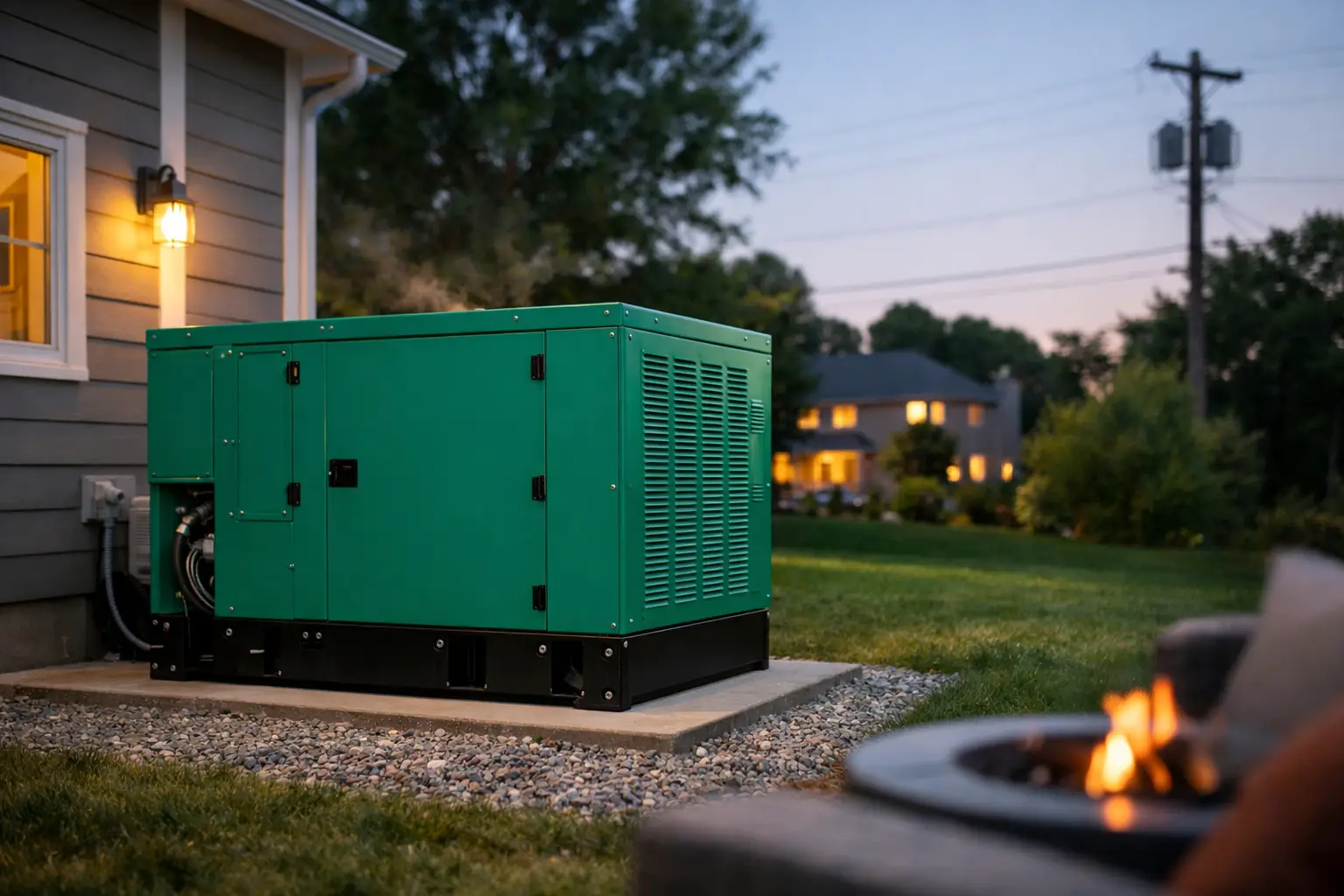
A mains failure rarely affects only the lights. On a working site, it can stop production lines mid-cycle, take critical IT systems offline, interrupt refrigeration, compromise security, and leave staff without safe access to essential equipment. The advantages of having a standby generator are therefore measured in protected uptime, controlled recovery and reduced exposure to the cost of an unplanned outage.
For facilities managers, plant operators and procurement teams, standby power is not simply an insurance purchase. It is part of operational resilience. A correctly specified generator set starts automatically when the utility supply fails, supports agreed essential loads and allows the site to continue operating, or to shut down in a controlled manner, until mains power returns.
Why the advantages of having a standby generator matter
The main advantage is continuity. A standby generator provides an independent source of electrical power when the normal supply is unavailable. Connected through an automatic transfer switch, the set can detect a loss of mains power, start the engine and transfer selected loads without requiring an operator to intervene.
The precise transfer time and load acceptance capability depend on the generator, alternator, control system and site design. For many commercial and industrial applications, however, this automatic response prevents a short network fault becoming a prolonged operational incident.
Protecting revenue and productivity
Downtime carries different costs across different sectors, but the principle is the same. A manufacturing facility may lose output, raw materials and production time. A distribution centre may be unable to process stock or dispatch vehicles. A commercial building can lose access control, lifts, lighting and communications. For a data-dependent operation, an outage can halt transactions and leave systems unavailable to customers and staff.
A standby set gives the operation time and capacity to continue critical activity. It can support the whole site where the generator is sized accordingly, although more often it is designed around essential loads. This may include safety systems, server rooms, pumps, cold storage, process controls, selected machinery and communications infrastructure.
That distinction is commercially important. Designing for essential loads rather than every connected load can reduce the required kVA rating, fuel consumption and capital cost without weakening the site’s recovery plan.
Maintaining safety and compliance
Power loss can create a direct safety issue. Emergency lighting, fire systems, extraction equipment, alarms, security controls and critical pumps may all require a dependable backup supply. In healthcare, care settings, utilities and public buildings, loss of power can have wider consequences for patients, residents, customers and the public.
A standby generator does not remove the need for a properly engineered electrical installation, maintenance plan or risk assessment. It does provide a controlled source of power for systems that cannot simply stop. For sites with regulated duties or high safety exposure, this makes standby power a practical component of business continuity planning.
Preventing data loss and uncontrolled shutdowns
IT equipment, building management systems and automated machinery are vulnerable to sudden power loss. An unplanned shutdown can corrupt data, interrupt control sequences and require lengthy restart procedures. In some industrial processes, restarting safely is more complex than simply restoring a supply.
Uninterruptible power supplies are often used to bridge the first seconds or minutes of an outage, keeping sensitive equipment live while a standby generator starts and stabilises. Together, a UPS and generator arrangement can protect data and provide a smoother transition to backup power. The right arrangement depends on the criticality of the load, its tolerance for interruption and the required duration of support.
Standby generator advantages depend on correct specification
A generator only delivers these benefits if it is correctly matched to the application. Buying on headline kVA alone can lead to poor load performance, excessive fuel use or inadequate capacity when the site needs it most.
The starting point is a load study. This identifies the essential equipment, its running load, starting current, power factor and the order in which loads will be restored. Motor-driven equipment such as pumps, compressors and fans can demand high current during starting. Large nonlinear loads, variable-speed drives and sensitive electronics also need consideration when selecting the alternator and control configuration.
Standby power ratings should not be confused with prime power ratings. A standby-rated generator is intended for emergency use during utility failure, typically with variable load and limited annual operating hours under recognised rating conditions. A prime-rated set is designed for longer or continuous operation where mains power is unavailable or unreliable. Sites expecting frequent or extended outages should assess the expected duty carefully rather than assuming a standby rating is suitable for every scenario.
Choosing the right generator format
The operating environment shapes the generator specification. A silent generator with an acoustic enclosure is usually appropriate near offices, hospitals, residential areas or public-facing premises where noise control matters. An open generator may suit a protected plant room or an engineered containerised installation, provided ventilation, exhaust routing and noise requirements are addressed.
Single phase generators can support smaller applications, while three phase generators are generally required for larger commercial, industrial and infrastructure loads. Voltage, frequency, earthing arrangement, fuel tank capacity, access for service and local emissions requirements should all be established before procurement.
For critical locations, the engine and control platform matter as much as the output rating. Proven diesel engine brands, quality alternators and accessible service parts support dependable operation over the equipment’s working life. A set should also have suitable controls for monitoring alarms, battery condition, fuel level, running hours and automatic start signals.
Better outage planning and faster recovery
One of the less visible advantages of a standby generator is the discipline it brings to outage planning. Once a site identifies which loads must remain live, it gains a clearer view of operational priorities. This can improve emergency procedures, electrical drawings, shutdown protocols and responsibilities across engineering, operations and facilities teams.
A properly commissioned system should be tested under load, not merely started and left running without a meaningful electrical demand. Regular exercise confirms that the engine starts, the automatic transfer switch operates, batteries are healthy and the generator can accept the intended load. Load-bank testing can be valuable where the normal site load is insufficient to test the set adequately.
Fuel management is equally important. Diesel fuel can degrade over time, particularly in systems that are rarely called upon. Storage conditions, water contamination, fuel polishing requirements and tank capacity should be considered as part of the resilience plan. A generator with insufficient clean fuel is not a dependable backup asset, regardless of its kVA rating.
Fuel quality, maintenance planning, and testing all play a major role in long-term reliability. Our industrial generator buying guide explains the key factors every buyer should evaluate before choosing a generator.
Controlling the financial impact of an outage
The commercial case for standby power should account for more than lost turnover. Costs may include spoiled stock, overtime, emergency call-outs, missed delivery slots, contractual penalties, equipment damage, reputational harm and the time needed to restore systems. In some cases, one serious outage can exceed the installed cost of a properly specified generator.
There are trade-offs. A larger generator, extended fuel tank, remote monitoring package or acoustic enclosure increases the initial investment. Yet undersizing the equipment, overlooking future load growth or selecting a set with poor access for maintenance can create more expensive problems later. The most economical option is usually the one that meets the actual duty, critical load and operating environment without unnecessary complexity.
Remote monitoring can strengthen the business case for distributed or lightly staffed sites. It allows operators to view generator status, alarms and operating data without waiting for a local inspection. It is particularly useful for telecoms, utilities, logistics facilities and other locations where a delayed response can extend the impact of a fault.
Procurement questions that prevent costly gaps
Before selecting a standby generator, decision-makers should establish the essential load in kW and kVA, starting demands, required operating duration, installation location and acceptable noise level. They should also confirm whether automatic transfer is required, whether a UPS is already installed and whether the site needs single phase or three phase output.
Future capacity deserves attention. A generator may be in service for many years, and a modest increase in plant, refrigeration, server capacity or production equipment can quickly consume unused headroom. Allowing sensible capacity margin is prudent, but excessive oversizing is not always beneficial because diesel generators perform best when operated within an appropriate load range.
Availability also matters when an outage risk is immediate. Global Generators supplies diesel generator sets across a broad kVA range, with silent and open configurations for standby and prime power applications. Fast access to correctly specified equipment can be decisive where a site is operating without adequate backup power.
The practical next step is to treat standby generation as an engineered continuity measure, not a catalogue purchase. Confirm the loads that cannot fail, define the runtime required and make sure the generator, transfer equipment, fuel system and maintenance regime are designed to work together when the mains supply does not.