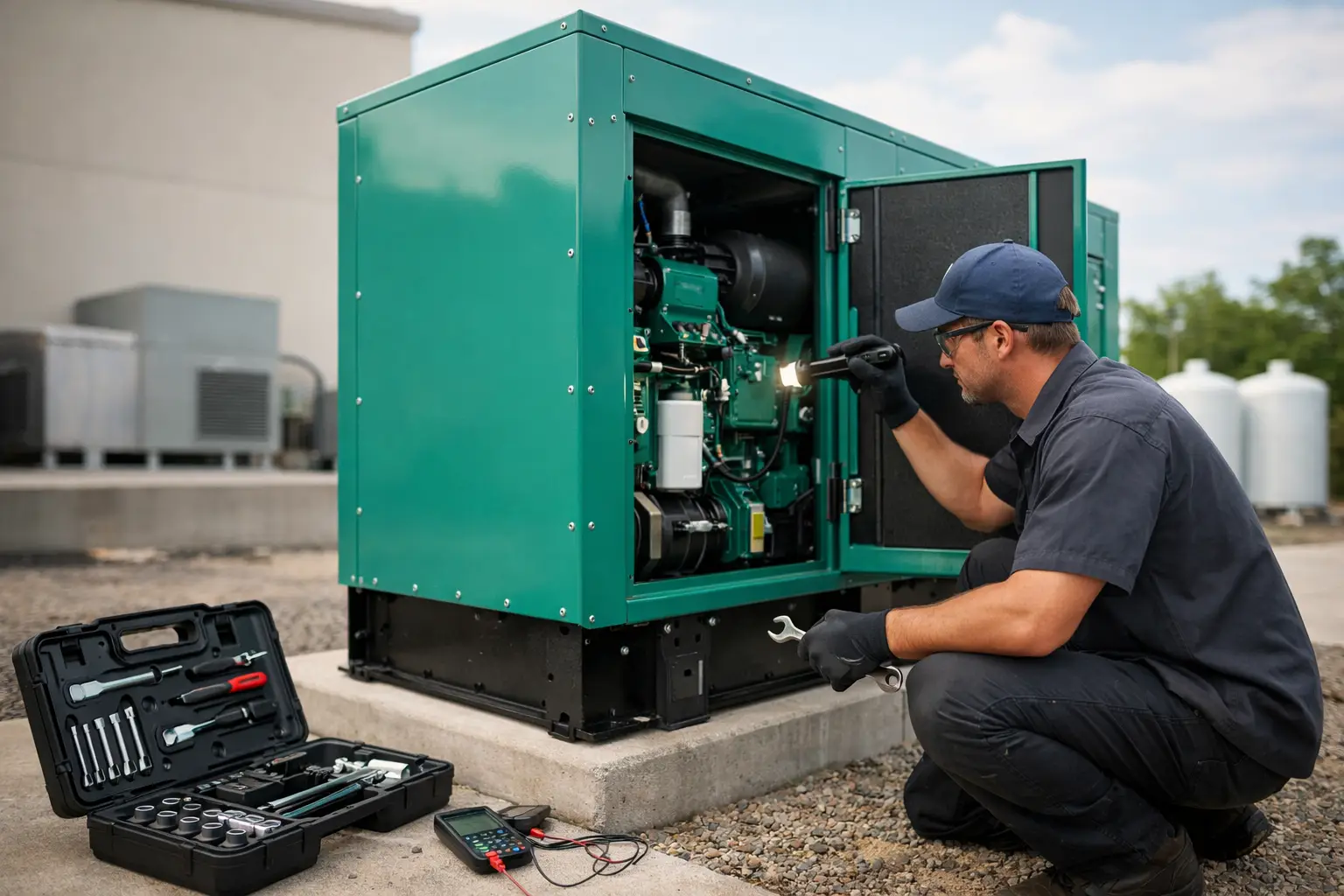
A generator rarely fails without warning. More often, the warning is missed because the service interval was treated as flexible, the running hours were not tracked properly, or the set was only viewed as backup equipment and not as a working asset. When do generators need servicing? For most commercial and industrial operators, the answer depends on hours run, operating conditions, load profile and the criticality of the site.
For a mission-critical installation, servicing should never be left to guesswork. A diesel generator supporting a hospital wing, telecoms site, manufacturing line or temporary construction compound faces very different demands from a lightly used standby set at a small commercial premises. The right service schedule protects uptime, controls lifecycle cost and reduces the chance of avoidable failure when the mains supply drops.
When do generators need servicing in practice?
The most reliable approach is to base servicing on both time and engine hours. As a general rule, industrial diesel generators should be inspected routinely, serviced at planned hour intervals, and checked more frequently if they operate in harsh environments or under prime power duty.
A standby generator that runs only for testing and occasional outages may require a calendar-based service every 6 to 12 months, even if it has logged relatively few hours. Fluids degrade over time, batteries sulphate, belts age and fuel quality can deteriorate in storage. Low usage does not remove the need for maintenance.
A prime power generator usually needs more frequent attention because service intervals are driven heavily by runtime. In many cases, minor servicing falls around every 250 to 500 hours, with more substantial servicing at longer intervals according to the engine manufacturer’s specification. Exact figures vary by engine, alternator package, site conditions and duty cycle, so the equipment manual should always take precedence.
This is where operators can make an expensive mistake. They assume one service schedule suits every set. It does not. A 3 phase generator running a variable industrial load in dusty conditions will usually need closer attention than a silent standby set in a cleaner, controlled environment.
The four factors that set the service interval
1. Running hours
Hours run are usually the clearest indicator. Engine oil, filters and consumables have a practical working life, not just a date on a planner. If a set has reached its scheduled service hour point, delaying maintenance because the generator still appears to be performing normally introduces unnecessary risk.
For sites with frequent outages or regular load support, hour accumulation can happen faster than expected. This is particularly common where a generator is used to cover grid instability, support peak shaving, or act as temporary prime power during expansion works.
2. Type of duty
Standby and prime power applications should not be treated in the same way. A standby generator may spend most of its life waiting, but it still needs to start instantly and accept load. A prime power set is a production asset and experiences more consistent wear.
Prime duty usually means shorter intervals between oil and filter changes, more regular coolant checks, and tighter oversight of injectors, belts and air intake components. The more demanding the duty, the less room there is for broad assumptions.
3. Environment
Site conditions matter. Heat, dust, moisture, coastal air, poor ventilation and fuel contamination all shorten service life. Construction sites, quarries, agricultural settings and exposed utility locations often require more frequent checks than enclosed commercial installations.
Dust loading is a common issue. Restricted airflow affects combustion, cooling and engine efficiency. In practice, this can bring forward air filter changes and increase inspection frequency even if the generator has not yet reached the next full service milestone.
4. Load profile
Generators perform best within an appropriate load range. Persistent low-load operation can cause wet stacking in diesel sets, while erratic or excessive loading increases thermal and mechanical stress. If the site’s actual demand is poorly matched to the generator rating, servicing may need to be more proactive.
That is one reason correct specification at procurement stage matters. An oversized or undersized set can create ongoing maintenance consequences, not just operational inefficiency.
Signs a generator needs servicing sooner
A scheduled service plan is essential, but condition-based warning signs should never be ignored between intervals. If a generator becomes harder to start, smokes excessively, consumes more fuel than expected, shows unstable voltage, runs hotter, or produces unusual vibration or noise, it needs attention.
Alarm history also matters. Repeated low coolant, low oil pressure, battery charge or overspeed alerts may point to a developing fault rather than an isolated event. Even if the generator is still operational, these signs often indicate that servicing is overdue or a component is deteriorating.
For critical facilities, visible fuel issues should be treated seriously. Water ingress, microbial growth and degraded stored diesel can undermine reliability quickly. In many standby applications, the fuel system is as important as the engine service itself.
What a proper generator service should cover
A service is more than an oil change. On industrial generator sets, maintenance should cover the engine, alternator, control system and supporting components that affect start-up and load acceptance.
A typical planned service may include oil and filter replacement, fuel filter replacement, air filter inspection or change, coolant level and condition checks, battery testing, belt inspection, hose inspection, leak checks, alternator checks and control panel diagnostics. The condition of the starter system, charging system and exhaust components should also be reviewed.
Load testing has a place as well. A generator that starts on no-load test but struggles under real site demand is not service-ready in any meaningful sense. On standby systems especially, regular exercising under suitable load helps verify that the set can perform when required.
The exact scope depends on the generator size, engine brand, enclosure type and application. A large industrial open set serving a processing plant will not be maintained in precisely the same way as a smaller silent generator covering a commercial building. The principle is the same, but the maintenance regime should reflect the operational role of the asset.
Why low-use standby sets still need planned servicing
One of the most common procurement and maintenance misconceptions is that a standby generator with low hours can wait indefinitely. In reality, low-use sets often develop issues linked to inactivity rather than overuse.
Battery condition is a frequent weakness. So is stale fuel, condensation in tanks, seal degradation and reduced confidence in automatic start performance. A generator that sits idle for months without proper inspection can fail at the exact moment it is needed most.
This is especially relevant for healthcare, data, logistics and building services environments where outage tolerance is minimal. If the cost of failure is high, servicing should be conservative rather than minimal.
Matching servicing to specification and site risk
There is no commercially sensible reason to apply the same maintenance logic to every generator estate. A single phase standby set at a low-demand site can often follow a lighter service pattern than a high-capacity 3 phase unit supporting production, life safety systems or infrastructure continuity.
What matters is aligning maintenance with consequence of failure. If a generator protects refrigeration stock, telecoms uptime, site security, pumping systems or a live industrial process, missed servicing is not a minor admin issue. It is an operational risk.
For buyers evaluating new equipment, service planning should form part of the specification decision from the start. Engine platform, parts availability, enclosure layout, access for routine maintenance and expected duty all affect the long-term supportability of the set. This is one reason many professional buyers prefer recognised engine platforms with established service frameworks and clear maintenance guidance.
A practical service planning approach
The strongest approach is simple. Set a maintenance schedule based on manufacturer guidance, record actual engine hours accurately, review alarm and fault history, and adjust interval frequency where site conditions demand it. Do not rely on a generic annual visit if the runtime profile or environment clearly justifies more attention.
For mixed estates, separate standby and prime power assets in your maintenance planning. For critical locations, build in regular test runs and documented inspections between full services. If there is any doubt about whether the current schedule is enough, it usually is not.
Well-maintained generators are not just more reliable. They are easier to diagnose, cheaper to own over time and more predictable under load. That matters whether you are running one set or managing power resilience across multiple sites.
If your operation depends on backup or continuous onsite power, servicing should be treated as part of the equipment specification, not an afterthought. The right interval is the one that reflects how the generator is actually used, where it is installed and what failure would cost your business.