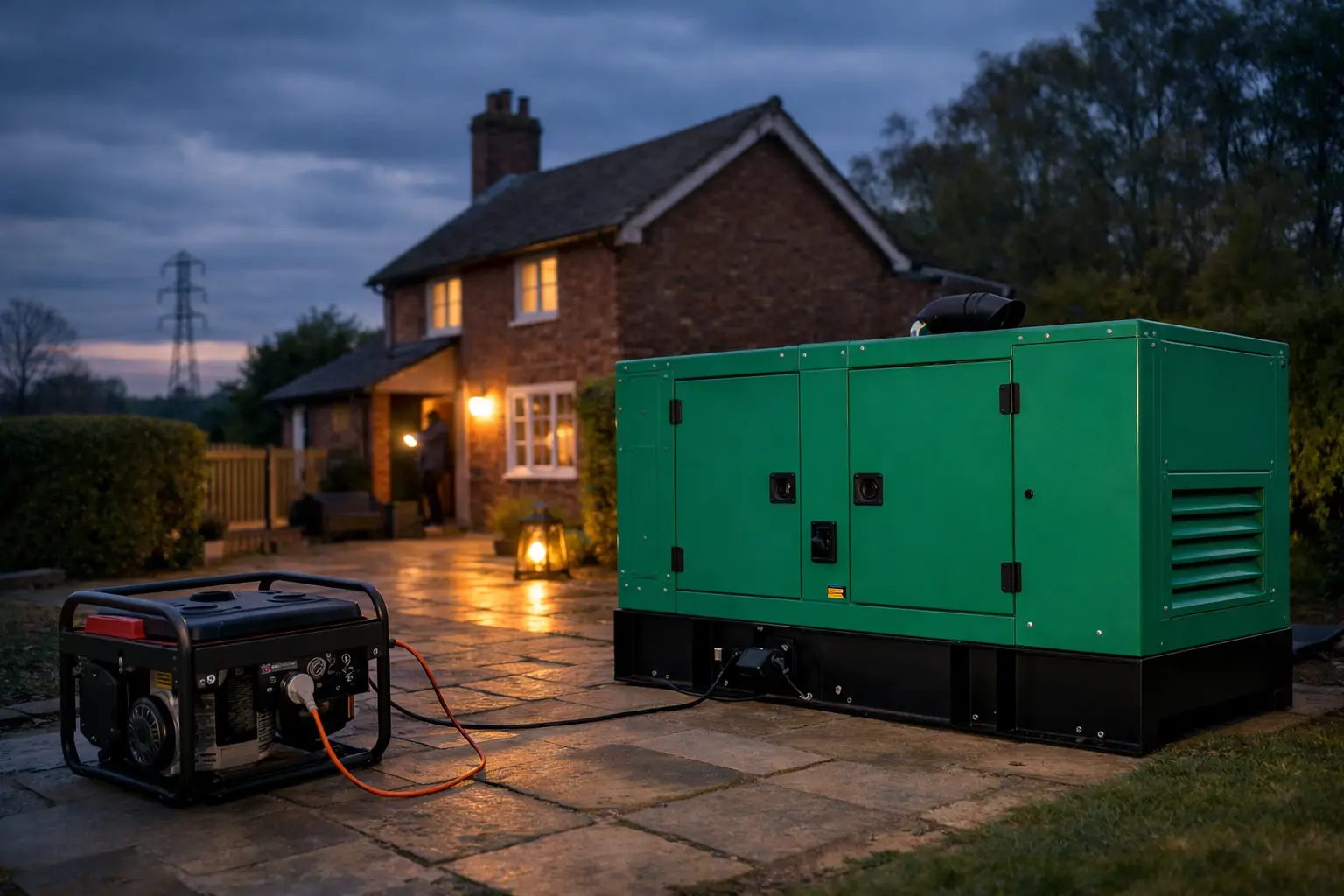
When a site loses mains power at 04:30, the wrong generator choice shows itself very quickly. Voltage instability, under-sized output, excessive noise, poor fuel autonomy, or an enclosure that does not suit the environment can all turn a power cut into an operational failure. For buyers assessing the best generator for power cuts in the UK, the right answer is rarely the cheapest set on paper. It is the unit that matches the load profile, site conditions, and continuity risk.
For commercial and industrial users, generator selection should start with consequence, not convenience. A small office with basic lighting and IT resilience has a very different requirement from a warehouse with electric doors, a healthcare facility with life-safety loads, or a manufacturing plant with motors and compressors. Power cuts in the UK may be intermittent, but the cost of getting backup power wrong is consistent.
What makes the best generator for power cuts UK sites can trust?
The best generator is one that starts reliably, carries the required load without strain, and remains stable for the duration of the outage. That means looking beyond headline kVA and checking the complete operating specification.
Standby rating matters first. Many buyers only need the generator to run during occasional mains failures, so a standby-rated diesel generator is often the correct fit. If the set may operate for extended periods or support more regular off-grid use, prime power capability becomes more relevant. Confusing these two duties can lead to overloading, reduced engine life, and poor long-term value.
Fuel type is another practical dividing line. In serious backup applications, diesel remains the standard choice because it offers dependable starting, strong load acceptance, and better suitability for higher-demand sites. Petrol portable sets have a place in domestic or very light commercial use, but they are not usually the right answer where uptime is critical.
Then there is electrical configuration. A single phase generator may be suitable for lighter property loads, small shops, or straightforward backup circuits. A 3-phase generator is often essential for commercial buildings, plant, workshops, lifts, pumps, HVAC equipment, and many pieces of industrial machinery. Choosing the wrong phase is not a minor issue - it can make the generator unusable for the load it is meant to protect.
Start with the load, not the catalogue
The most common purchasing error is buying on nominal size alone. A site may estimate its demand based on a few major items, then overlook motor starting currents, refrigeration cycling, battery charger demand, or the cumulative effect of systems coming back online together.
A proper sizing exercise should consider running load and starting load. Motors, compressors, pumps and air conditioning systems can draw significantly more power at startup than during steady operation. If that surge is not accounted for, the generator may dip in frequency or voltage, trip protection, or fail to start critical equipment.
Load prioritisation also matters. Not every circuit needs to be backed up. In many cases, the best commercial decision is to support only essential loads such as fire systems, emergency lighting, security, refrigeration, control systems, server rooms, telecoms, or production lines where interruption is costly. This can reduce capital cost while improving reliability, because the generator is sized around real operational priorities rather than the entire building.
For this reason, the best generator for power cuts for UK buyers is usually the one specified against a clear load schedule, not guessed from floor area or previous invoices.
Silent or open generator - which is right?
This is often a site-driven decision rather than a budget one. A silent generator in an acoustic enclosure is typically the better option for populated areas, commercial premises, public-facing sites, healthcare settings, schools, and installations with local noise constraints. It offers weather protection as well as reduced sound output, which simplifies deployment outdoors.
An open generator can still be the correct choice in plant rooms, controlled compounds, or industrial environments where noise is less restrictive and where a bespoke enclosure or containerised arrangement forms part of the project. Open sets can make servicing access straightforward, but they are not automatically suitable for every site.
The trade-off is simple. Silent sets are more versatile for general standby use, while open sets suit engineered installations where the environment is already managed.
Fuel autonomy and runtime are operational issues
During a short outage, almost any adequately sized generator may appear sufficient. During a prolonged disruption, tank capacity and consumption rate become central to performance. Buyers should assess how long the set must run without refuelling and whether the site has a safe, compliant fuel strategy.
For some locations, an integrated base tank with several hours of runtime is enough. For others, especially in infrastructure, logistics, healthcare, or remote operations, extended runtime and external bulk storage may be necessary. Refuelling access during severe weather or grid events should not be treated as an afterthought.
It is also worth considering how often the generator will be tested. Regular exercise under load is part of dependable standby planning, and fuel management should reflect that ongoing duty.
Automatic starting and transfer equipment
If the generator only works when someone is on site to start it, it is not delivering full resilience. In most critical applications, the generator should be paired with an automatic transfer switch so that mains failure triggers startup and load transfer without manual intervention.
This is especially important for unmanned sites, overnight operations, data and telecoms infrastructure, refrigeration, and any environment where even a short interruption has operational or safety consequences. The generator itself is only one part of the backup system. Controls, transfer equipment, protection settings, and commissioning standards all influence whether the installation performs when required.
Portable versus fixed standby sets
For very light-duty use, portable generators can provide temporary support during power cuts. They are useful for isolated tools, temporary lighting, or limited backup on small sites. However, for facilities with fixed loads, portable units quickly show their limitations in runtime, output stability, weather protection, and safe integration.
A fixed diesel standby generator is generally the more appropriate solution where the expectation is repeatable, dependable backup power. It can be integrated properly with the site electrical system, housed securely, and maintained as part of an asset management plan. Serious buyers should treat portable equipment as temporary support unless the load profile is genuinely small and non-critical.
Brand, engine platform and parts support
Engine quality is not a branding exercise. It affects starting performance, service intervals, parts availability, and long-term operating confidence. Recognised engine platforms are often preferred because buyers need assurance that maintenance support and spares will remain available across the equipment life cycle.
That matters even more in the UK market, where many buyers are balancing immediate availability with long-term asset performance. A well-supported diesel generator from an established engine manufacturer can reduce downtime risk well beyond the first installation. For this reason, specification-led suppliers such as Global Generators focus on proven generator sets with clear ratings, known engine platforms, and practical UK availability.
What different UK buyers should prioritise
A facilities manager responsible for a commercial building will usually focus on standby reliability, noise level, automatic transfer, and the ability to support lifts, fire systems, lighting, and landlord services. A contractor may place greater weight on availability, transportability, enclosure format, and straightforward commissioning. An operations director in manufacturing is more likely to prioritise motor starting capability, 3-phase output, fuel autonomy, and load step performance.
Healthcare and telecoms buyers will often have even tighter requirements around response time, resilience, redundancy, and maintenance regimes. In those cases, the best generator is not just correctly sized. It is part of a wider continuity plan.
Avoid the cheapest answer to a costly problem
Low-cost sets can look attractive when compared on kVA alone, but backup power should be judged on whole-life suitability. Questions worth asking include whether the set is rated correctly for standby duty, whether the alternator and engine are matched properly, whether the controls are fit for automatic operation, and whether the supplier can support commissioning, servicing, and future parts.
The right procurement decision is usually the one that reduces operational exposure, not simply purchase price. If the load is business-critical, the generator should be treated as infrastructure, not a convenience item.
For UK buyers, the best approach is specification first, then availability, then price within the correct technical bracket. That leads to a generator that can be trusted when the mains fails, not one that creates a second problem.
If you are selecting backup power for a site where downtime carries real cost, start by defining the load, the runtime, the phase requirement, the noise constraints, and the transfer method. Once those are clear, the right generator becomes far easier to identify - and far more likely to perform when the next power cut arrives.