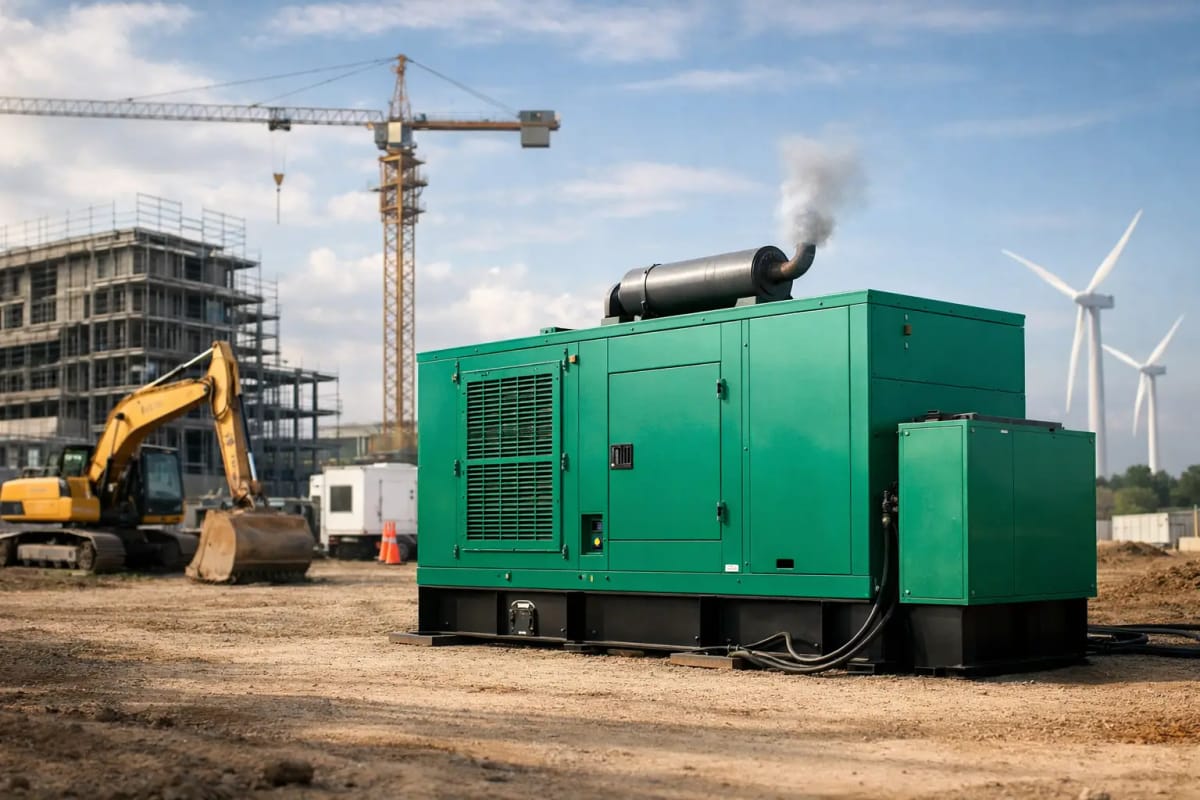
When a site cannot afford a failed start, fuel inefficiency or poor load acceptance, Cummins generators are usually on the shortlist for good reason. Across standby and prime power applications, they are specified because buyers need predictable performance, broad power coverage and an engine platform with a long track record in demanding operating conditions.
For procurement teams, facilities managers and project engineers, the question is rarely whether a generator is needed. The real question is whether the set will match the duty, arrive on time and continue to perform when the mains supply does not. That is where specification matters more than marketing.
Why Cummins generators remain a serious choice
Cummins has long held a strong position in industrial power because the brand is associated with dependable diesel engine performance, established parts support and a range that spans smaller commercial requirements through to heavy industrial demand. That breadth matters when buyers need consistency across multiple sites or want a standardised engine platform within a wider fleet.
The practical advantage is not just the badge on the canopy. It is the combination of engine quality, alternator pairing, controller integration and tested package design. In a mission-critical setting, those elements need to work together under load, during transient events and across long operating hours. A generator that looks competitive on paper but performs poorly on start-up or struggles with changing load profiles can create expensive problems very quickly.
For many buyers, Cummins generators also offer confidence at the approval stage. Internal stakeholders tend to be more comfortable signing off on a recognised power brand when the application is tied to uptime, compliance and operational risk.
Standby or prime power - the rating changes the decision
One of the most common specification errors is choosing a set around nominal output alone. A generator should be selected against the actual duty profile, not just the largest number in the brochure.
Standby-rated units are designed to support the site during utility outages. That suits hospitals, commercial buildings, telecom facilities, warehouses and other operations where the generator runs intermittently but must start immediately and carry the essential load without hesitation. In this role, reliability on demand is everything.
Prime-rated sets are intended for regular or continuous use where utility power is unavailable or unstable. Construction compounds, remote infrastructure projects, temporary works and certain industrial operations often fall into this category. Here, the generator is not just backup equipment. It is part of the operating plant, which means fuel consumption, servicing intervals and sustained performance become central to the buying decision.
A Cummins-powered unit can be suitable in either scenario, but the right rating, cooling arrangement and tank configuration must be aligned with the job. Oversizing can reduce efficiency at low load. Undersizing can lead to nuisance trips, overheating and accelerated wear.
Sizing Cummins generators correctly
Generator sizing is where technical clarity saves time and cost. Buyers should start with the actual electrical demand, including starting currents, motor loads, step loading and any non-linear equipment on site. The target is not simply to cover peak demand. It is to ensure the set can accept the load in a stable and controlled way.
In practical terms, this means looking at kVA requirements, power factor, voltage, frequency and whether the site is single phase or three phase. If the installation includes large motors, pumps, compressors, HVAC plant or lifting equipment, starting performance becomes particularly important. The generator must handle those transient demands without unacceptable voltage dip.
This is also where application context matters. A factory with fixed process equipment will usually have a clearer demand profile than a construction site with changing temporary loads. A data-led assessment is always preferable to a broad estimate.
For buyers comparing Cummins generators across different outputs, it helps to think in terms of operational headroom rather than buying as close as possible to current demand. Some reserve capacity is sensible, especially where future expansion, seasonal load change or additional services are likely. Too much headroom, however, can be inefficient. There is always a balance.
Open or silent sets - format should follow the environment
The enclosure decision is not cosmetic. It affects noise management, installation approach, access for maintenance and overall suitability for the site.
Open generators are often selected for plant rooms, service yards with acoustic treatment, containerised systems or controlled industrial environments where external noise attenuation is not the main issue. They can be practical where service access is prioritised and the installation design already addresses weather protection and ventilation.
Silent generators are more suitable where the unit sits outdoors or close to occupied buildings, public-facing facilities or residential boundaries. For hospitals, logistics hubs, offices, schools and mixed-use developments, acoustic performance can be a planning and operational requirement rather than a preference.
Neither format is automatically better. A silent set may be the obvious answer for an urban site, but an open set can be the right commercial choice inside a properly engineered generator room. The key is to specify the package around the operating environment, not simply choose the lowest upfront price.
What commercial buyers should look for in the package
The engine is critical, but it is only one part of the procurement decision. A dependable generator set should be judged as a complete system.
Control capability matters because alarm visibility, remote monitoring and automatic mains failure operation can directly affect response time during a power event. Fuel tank sizing matters because runtime expectations differ significantly between emergency standby and remote prime power operation. Cooling performance matters because ambient conditions, installation layout and airflow restrictions can alter real-world output.
Buyers should also pay attention to alternator quality, circuit protection, synchronisation requirements and site-specific accessories such as changeover panels, bunded tanks or extended fuel arrangements. If the set is intended for critical infrastructure, acceptance testing and documentation are not add-ons. They are part of the risk management process.
This is why enquiry-led procurement remains valuable. A unit that looks correct by headline kVA can still be wrong for the application if fuel autonomy, starting sequence, access constraints or compliance needs have not been considered.
Cummins generators in typical operating environments
Cummins generators are commonly specified across sectors where downtime carries operational or financial consequences. In manufacturing, they protect production continuity and reduce exposure to unplanned outages. In healthcare and care settings, they support essential systems where loss of power has immediate implications. In telecom and utilities, they provide resilience to distributed infrastructure where grid conditions may be variable.
Construction is another major use case, particularly for prime power and temporary site services. Here, durability and serviceability are as important as headline output. Logistics sites, data-heavy commercial premises and larger estates also rely on diesel standby systems to maintain continuity for security, refrigeration, IT systems and core operations.
The common theme is straightforward. These sites do not buy generators as optional equipment. They buy them because interruption has a cost.
Availability, lead time and the cost of waiting
In generator procurement, the best specification is not always the best outcome if the lead time does not match the project. This is especially relevant where replacement of a failed asset, programme deadlines or regulatory requirements leave little margin for delay.
Stock availability can therefore be as important as technical suitability. A supplier with access to key power sizes, clear product segmentation and fast UK delivery can reduce procurement risk significantly. That matters for contractors working to programme, facilities teams facing compliance deadlines and operations managers dealing with ageing standby equipment.
For international projects, export capability also becomes relevant. Packaging, documentation and responsive pre-sale support can affect whether a project moves cleanly or becomes delayed by avoidable specification issues.
Global Generators operates in this part of the market - enquiry-driven, specification-led and focused on supplying generator sets for uptime-critical applications where buyers need clarity on rating, format, pricing and availability.
How to approach the buying decision
The most effective buying process starts with the application, not the product code. Define whether the generator is for standby or prime power, confirm the load profile, identify any site constraints and then narrow the options by output, phase, enclosure type and control requirement.
From there, the commercial questions become simpler. Is the set available in the required timeframe? Does the package reflect the runtime and acoustic needs of the site? Is there enough technical detail to support approval, installation and handover? If those answers are clear, procurement moves faster and with less risk.
Cummins generators continue to be specified because they address a practical requirement in the market: dependable power from a recognised engine platform across a wide range of outputs and use cases. The real value, however, comes from matching the right set to the right duty. Get that right, and the generator becomes what it should be - a dependable asset that is ready when the site needs it most.
If you are evaluating options now, the sensible next step is to work from the load, the duty and the timeline, then source a set that meets all three without compromise.