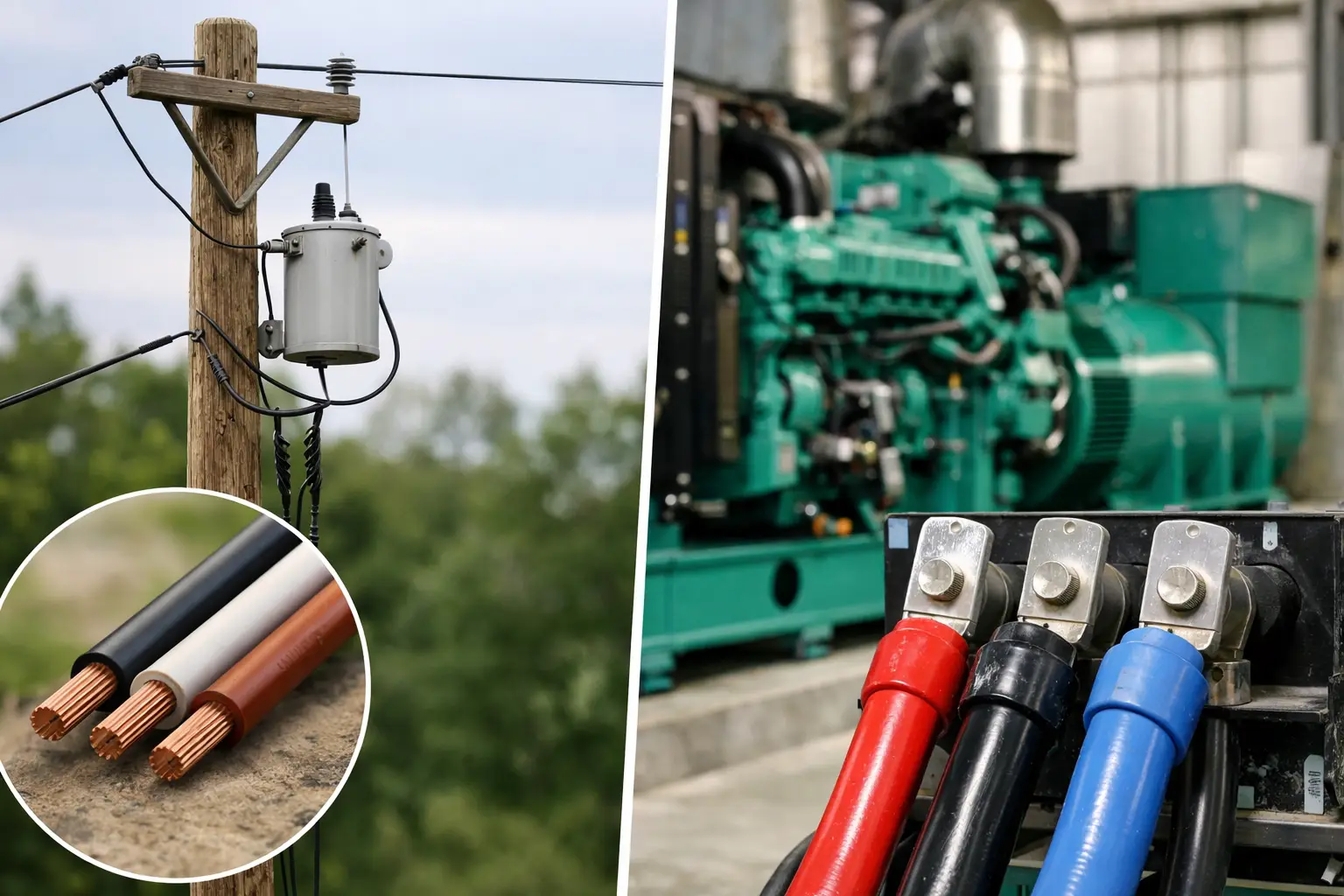
If you are specifying backup or prime power for a site, the single biggest mistake is choosing the wrong output configuration before you have properly assessed the load. The question of single phase vs three phase is not academic. It affects what equipment you can run, how evenly power is delivered, how motors start, and whether the generator set is suitable for the application at all.
For residential properties and some light commercial sites, single phase may be perfectly adequate. For industrial facilities, larger commercial buildings, construction sites and operations with motor-driven plant, three phase is usually the correct choice. The right answer depends on the load profile, the nature of the equipment being powered and whether the generator is for standby or continuous duty.
Single phase vs three phase: what is the difference?
Single phase power delivers electricity through one alternating voltage waveform. It is commonly used for smaller loads and general-purpose applications such as lighting, small appliances, offices and domestic properties. In practical terms, it suits equipment that does not require large motor starting capacity or heavy-duty continuous power.
Three phase power uses three alternating waveforms offset from one another. This creates a more consistent power delivery and allows the system to support larger, more demanding loads more efficiently. Three phase supplies are standard across many commercial and industrial environments because they are better suited to machinery, pumps, compressors, HVAC systems and other equipment with significant starting or running current demands.
From a generator buying perspective, this difference matters immediately. A generator must match the site supply and the connected equipment. If the site infrastructure or key loads are three phase, a single phase generator is not an appropriate substitute.
Why three phase is standard in commercial and industrial settings
Three phase power is generally preferred where uptime and load stability matter. The output is smoother, which helps with the operation of larger motors and reduces the stress associated with uneven power delivery. It also supports more efficient transmission of power for higher-demand applications.
That does not mean three phase is always better in every situation. It means it is better where the load justifies it. A small office cabin, gatehouse or residential dwelling may not gain any real operational benefit from a three phase set if the actual power requirement is modest and the connected loads are single phase.
For a plant room, workshop, distribution centre or healthcare setting, the picture changes. These environments often carry a mix of lighting, control systems, refrigeration, pumps and mechanical services. In that context, three phase gives you broader compatibility and more headroom for load variation.
Load type matters more than headline kVA
Buyers often focus first on generator size, but output type should be decided alongside sizing. A relatively modest three phase load can still require a three phase generator if the connected equipment includes motors or plant designed for three phase input. Conversely, a larger single phase demand in a residential or small-site setting may still point to a single phase generator if all critical circuits are single phase.
This is where specification discipline matters. You are not just buying kVA. You are buying the correct electrical configuration for the duty.
Single phase generators: where they fit best
Single phase generators are typically suitable for homes, small offices, retail units, workshops with limited equipment, and temporary applications with straightforward load requirements. They are often chosen where the supply requirement is simple and the connected loads are mainly lighting, heating controls, sockets, small tools or light-duty appliances.
They can also be a practical option where budget, footprint and installation simplicity are priorities. In smaller ratings, a single phase set may represent a sensible and cost-effective choice without overcomplicating the installation.
The limitation is clear. Single phase is not intended for substantial motor loads or more complex site infrastructure. If the load grows over time, or if future expansion is likely to introduce three phase plant, a short-term saving can become a specification problem later.
Three phase generators: where they make sense
Three phase generators are designed for heavier commercial and industrial demand. They are commonly specified for manufacturing facilities, construction compounds, logistics operations, telecoms infrastructure, hospitals, agricultural sites and larger commercial premises.
Their strength lies in handling mixed and dynamic loads more effectively. They are better suited to motors, lifts, pumps, compressors and air conditioning systems. They also provide the flexibility needed on sites where multiple load types operate simultaneously and where stable power delivery is essential.
For standby applications, that can mean better support during transfer to generator power and improved performance under sudden demand. For prime power applications, it means the generator is better aligned with sustained operational loading.
Can a three phase generator power single phase loads?
Yes, but with conditions. A three phase generator can supply single phase loads, provided those loads are balanced correctly across the phases and the generator is sized accordingly. Poor load distribution can create phase imbalance, which reduces performance and may lead to operational issues.
This is one reason load assessment should be handled carefully. A site with mostly single phase consumption may still be better served by a single phase set, even if a three phase unit appears more flexible on paper. Flexibility is useful, but only if the installation and load management support it properly.
Efficiency, motor starting and power quality
Three phase systems generally offer better efficiency for larger loads. They transmit power more evenly and are more capable when dealing with equipment that has high inrush current at start-up. That is particularly relevant for pumps, compressors, fans and industrial machinery.
Single phase systems are simpler, but they are less capable in these conditions. If your generator needs to start or sustain motor-driven equipment, the difference between single phase and three phase becomes operational rather than theoretical.
Power quality also matters. Sensitive equipment, control systems and site-critical services benefit from a stable and correctly matched supply. The generator, alternator performance, voltage regulation and site load characteristics all play a part, but the choice between single phase and three phase sits at the foundation of that decision.
How to decide between single phase and three phase
Start with the existing site supply. If the building or facility is designed around three phase infrastructure, your generator specification should reflect that. Next, review the critical loads rather than the whole building load in broad terms. Standby systems are often sized around essential services only, while prime power sets may need to support the full operational requirement.
Then assess the type of equipment involved. Lighting and small socket loads point one way. Mechanical services and plant point another. Motor starting requirements, load sequencing and future expansion should all be considered before finalising the generator output.
It is also worth checking whether the apparent simplicity of a single phase set may create restrictions later. If a site is likely to add heavier equipment, upgrading from a single phase generator can be more disruptive than specifying correctly from the outset.
Common buying errors
One frequent error is assuming single phase is enough because the total load figure looks modest. Another is selecting three phase without considering whether the actual loads are unevenly distributed single phase circuits. A third is treating generator choice as a standalone product decision rather than part of a wider electrical system.
In each case, the risk is avoidable. The generator should be matched to the site, the duty and the load profile, not selected on price alone or on a broad assumption about application type.
Single phase vs three phase for standby and prime power
For standby power, the decision is driven by the circuits that must remain live when mains power fails. A single phase standby generator may be entirely suitable for a house, small office or light commercial unit. A three phase standby generator is more appropriate where building services, plant or operational equipment require that supply format.
For prime power, the threshold is usually higher. If the generator is supporting day-to-day operations for extended periods, three phase is often the stronger option because of its suitability for larger and more variable loads. Prime-rated applications place more emphasis on durability, load handling and system compatibility.
This is where a specification-led supplier adds value. Buyers need clarity on standby rating, prime rating, voltage, enclosure type and engine platform, but the first question is still whether the site requires single phase or three phase output.
A dependable generator is not just the one that starts. It is the one that fits the electrical reality of the site, carries the load without compromise and leaves room for the application to operate as intended. If you are weighing single phase vs three phase, treat it as an engineering decision first and a purchasing decision second.