Quick answer
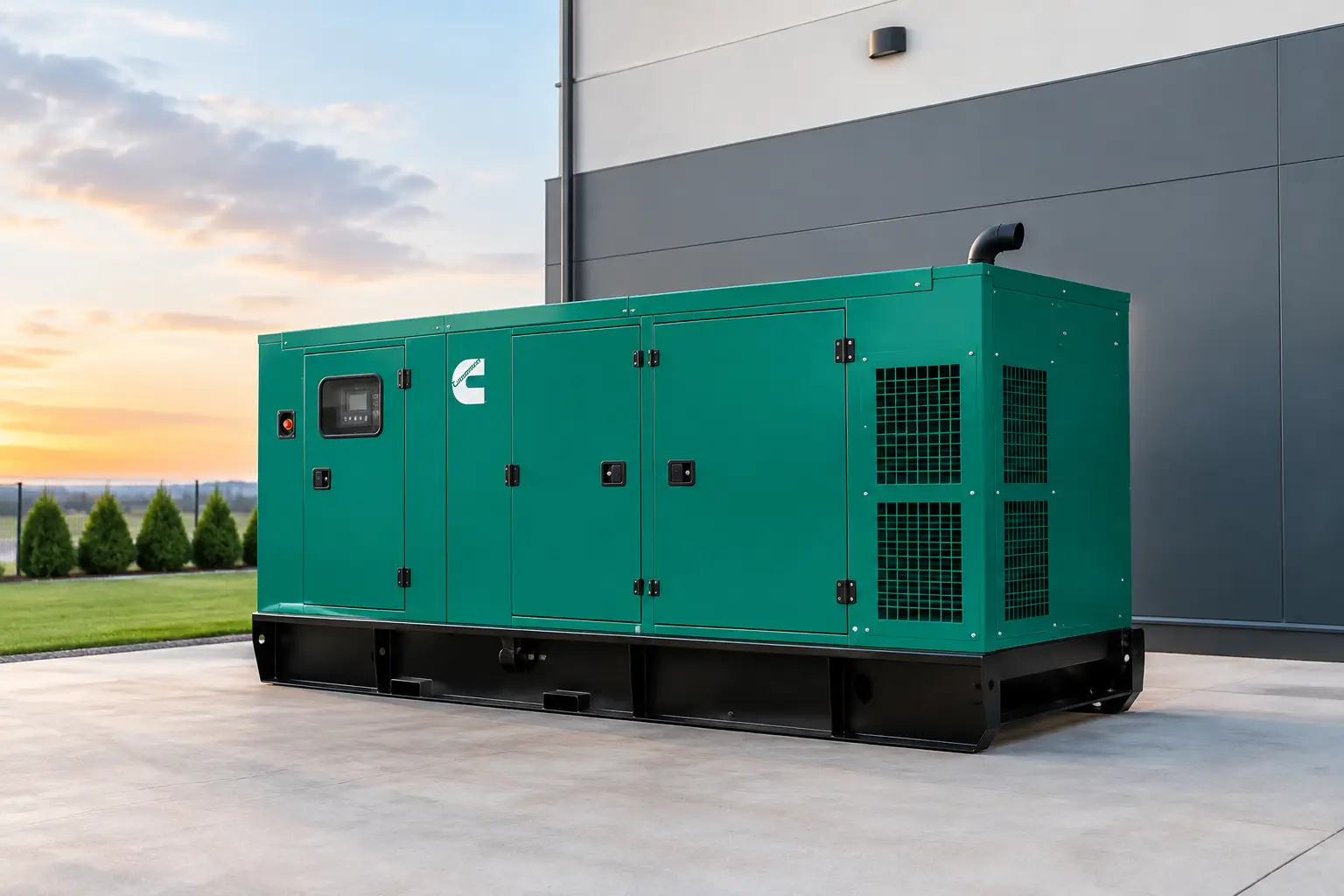
A "500 kVA generator" can mean two different machines. On the Cummins C500D5, 500 kVA (400 kW) is the standby rating and the prime rating is 455 kVA (364 kW), about 9% lower. Standby is for emergency use during a mains failure, with up to 200 running hours a year under ISO 8528-1. Prime is for regular or continuous running with a variable load. Choose by how many hours the generator will run, not by the headline kVA.
This guide explains the difference using real datasheet figures from the 500 kVA generators in our range. It covers what the ratings mean under ISO 8528-1, what changes between them on the same machine, how fuel use compares, and how to pick the right one for your site.
What do standby and prime ratings mean?
The international standard ISO 8528-1 defines generator set ratings by how the generator will be used. Cummins' own datasheet for the C500D5 describes the two ratings it publishes in the following terms:
- Emergency standby power (ESP) supplies a varying electrical load for the duration of a power interruption on a reliable utility supply.
- Prime power (PRP) supplies a varying electrical load for unlimited hours.
The standard sets limits that go with each rating:
| | Standby (ESP) | Prime (PRP) | |---|---|---| | Typical use | Backup during mains failure, plus testing | Main power source, or where the grid is absent or unreliable | | Running hours | Up to 200 hours a year | Unlimited | | Average load over 24 hours | Not more than 70% of the rating | Not more than 70% of the rating | | Overload | None stated | 10% overload capability noted on the C500D5 datasheet |
ISO 8528-1 also defines continuous power (for constant loads) and limited-time running power (up to 500 hours a year). The C500D5 datasheet publishes standby and prime ratings only, so those are the two to compare.
> Expert tip: Hours matter more than the label. The 200 hours for standby include testing and maintenance runs, not only mains failures. If you expect to run beyond that, size on the prime rating.
For the fundamentals that apply to every size, see our general guide to prime versus standby power.
What does "500 kVA" mean in our range?
Large generators are often named after the standby figure, but not always. Our three 500 kVA-class Cummins models show both conventions:
| Model | Standby rating | Prime rating | |---|---|---| | Cummins C500D5 | 500 kVA / 400 kW | 455 kVA / 364 kW | | Cummins C550D5QB | 550 kVA / 440 kW | 500 kVA / 400 kW | | Cummins C550D5 | 550 kVA / 440 kW | 500 kVA / 400 kW |
So the C500D5 is "500 kVA" on its standby rating, while the C550D5QB and C550D5 are "500 kVA" on their prime rating. The kW figures follow from a 0.8 power factor: 500 kVA × 0.8 = 400 kW. If you need a generator that can run for long periods at 400 kW, the C550-class sets match that on the prime rating and the C500D5 does not.
The same logic applies to neighbouring sizes, so it is worth checking the rating on any set you compare. If you are weighing options, you can also look at the 400 kVA and 600 kVA pages.
The Cummins C500D5 side by side
The table below compares the two ratings on the same machine, using the Cummins data sheet and the product page.
| Specification | Standby rating | Prime rating | |---|---|---| | Output | 500 kVA / 400 kW | 455 kVA / 364 kW | | Full-load current per phase at 400 V | 723 A | About 658 A (calculated) | | Gross engine power | 470 kWm | 411 kWm | | Fuel at full load | 107.1 litres per hour | 93.2 litres per hour | | Combustion air | 35.5 m³/min | 33.9 m³/min | | Exhaust gas temperature | 523 °C | 485 °C | | Total heat rejection | 16,700 Btu/min | 13,700 Btu/min | | Warranty | 2 years or 500 hours | 1 year, unlimited hours |
The 658 A figure uses the data sheet's own formula (kW × 1000 ÷ voltage × 1.73 × 0.8). The warranty terms are those published on our C500D5 page. Standby cover runs for two years or 500 hours and prime cover for one year with unlimited hours, so the rating you buy for also sets the warranty basis.
The same engine runs harder at the standby rating. Higher output means more fuel, more combustion air, hotter exhaust and more heat to reject, which is why the standby rating is limited to occasional use. Your installer needs these figures to plan ventilation, exhaust routing and cabling for the rating you will run at.
How fuel use compares
Fuel consumption on the data sheet is given at quarter, half, three-quarter and full load for each rating. The C500D5 has a 645-litre tank, so run time is straightforward to work out.
| Load | Prime output | Prime fuel use | Prime tank run time | |---|---|---|---| | 25% | 91 kW | 29.2 litres per hour | About 22.1 hours | | 50% | 182 kW | 49.0 litres per hour | About 13.2 hours | | 75% | 273 kW | 69.9 litres per hour | About 9.2 hours | | 100% | 364 kW | 93.2 litres per hour | About 6.9 hours |
| Load | Standby output | Standby fuel use | Standby tank run time | |---|---|---|---| | 25% | 100 kW | 34.8 litres per hour | About 18.5 hours | | 50% | 200 kW | 55.6 litres per hour | About 11.6 hours | | 75% | 300 kW | 78.5 litres per hour | About 8.2 hours | | 100% | 400 kW | 107.1 litres per hour | About 6.0 hours |
Run times use the full nominal tank capacity, so allow a reserve in practice. The 6.9 hours at full prime load matches the autonomy on the product page. If your site needs longer, plan for an extended tank or a fuel supply arrangement. For ways to run generators efficiently, see our guide to optimising generator load profiles.
Which rating do you need?
Choose the standby rating if
- The generator is backup for a reliable mains supply, as in hospitals, data rooms, commercial buildings and factories.
- Total running time, including monthly testing, stays well under 200 hours a year.
- The average load over any 24 hours stays below 70% of the standby rating.
Choose the prime rating if
- The generator is the main power source, as on remote sites, quarries, construction projects and events.
- The mains is unreliable and the generator may run for long periods.
- You expect to run beyond about 200 hours a year.
A worked example
Take a remote plant with a peak load of 330 kW and an average load of 270 kW over 24 hours.
- The C500D5 prime rating is 364 kW, so the peak fits at about 91%. But 70% of 364 kW is about 255 kW, and the 270 kW average is above that.
- A 550 kVA-class set has a prime rating of 400 kW. Its 70% figure is 280 kW, which accommodates the 270 kW average.
The peak load alone would not have flagged the problem. This is why you should check the average, and confirm with the manufacturer if your average sits close to the limit. Our guide to sizing a generator around critical loads walks through how to build the load list.
> Not sure which rating fits your site? Send us your peak load, typical load and expected running hours, and we will match them to a set from stock. Use the contact page or call +44 1302 700200.
Common mistakes
- Comparing a 500 kVA standby set with a 500 kVA prime set as though they were equal. They are not.
- Sizing a prime application on the standby figure. The standby rating is not intended for regular running.
- Forgetting testing hours. Monthly on-load tests count towards the 200 hours.
- Ignoring the 70% average. A generator can have enough peak capacity and still be too small for the average load.
- Sizing cables and breakers on the wrong figure. Full-load current differs between ratings, so size distribution for the rating you will run at.
- Overlooking warranty terms. Standby and prime cover are not the same, so check the basis before you buy.
Installation and permit checks at this size
At 500 kVA, a few practical points need early attention:
- Size and weight. The enclosed C500D5 measures 5,095 mm long, 1,564 mm wide and 2,441 mm high, with a dry weight of 5,035 kg. Check the access route, base and lifting plan before delivery.
- Noise. The canopy is rated at 80 dB(A) at 1 m on the product page. If neighbours or staff are close by, see our range of silent generators and check the datasheet noise figures.
- Three-phase supply. The set produces 400 V, 50 Hz, three-phase power, so the distribution has to suit a 3 phase generator.
- Environmental permits. This is the check people miss. In England, specified generator controls apply, unless excluded, to generators with a rated thermal input between 1 MWth and 50 MWth, and generators on the same site are aggregated. A 500 kVA diesel set is close to that threshold. As a rough estimate, the data sheet fuel figures of 93.2 and 107.1 litres per hour at about 10 kWh of energy per litre give around 0.9 MW and 1.1 MW. The legal figure is the generator's rated thermal input, so confirm it with the manufacturer and read the GOV.UK guidance on when you need a specified generator permit. The wider rules are explained in the guidance on medium combustion plant and specified generators. For the wider picture on permitting, testing and maintenance, see our generator emissions compliance guide for UK sites.
Frequently asked questions
Is a 500 kVA standby generator the same as a 500 kVA prime generator?
No. On the Cummins C500D5, 500 kVA is the standby rating and the prime rating is 455 kVA. A set sold as 500 kVA prime, such as the C550D5QB, has a standby rating of 550 kVA.
How many kW is a 500 kVA generator?
At a 0.8 power factor, 500 kVA is 400 kW. On the C500D5 that is the standby rating, and the prime rating is 364 kW.
Can I run a standby-rated 500 kVA generator continuously?
Not on the standby rating. ISO 8528-1 limits emergency standby power to 200 hours a year. For long periods of running, use and size the set on its prime rating, and check the manufacturer's guidance and warranty terms.
What is the 70% rule for generator ratings?
ISO 8528-1 says the permissible average power over 24 hours should not exceed 70% of the rating, for both standby and prime. A generator can reach its full rating briefly but should not average more than that over a day.
How much fuel does a 500 kVA generator use per hour?
On the Cummins C500D5 data sheet, prime fuel use is 29.2 litres per hour at quarter load rising to 93.2 at full load. At the standby rating it is 34.8 rising to 107.1 litres per hour.
Do I need an environmental permit for a 500 kVA generator?
It depends on the rated thermal input and on how many generators are on your site, because they are aggregated. A single 500 kVA diesel set sits close to the 1 MWth threshold for specified generator controls, so check the GOV.UK guidance and confirm the rated thermal input with the manufacturer.
Conclusion
On a 500 kVA generator, the standby and prime ratings are two different limits on the same machine. The C500D5 gives 400 kW on standby and 364 kW on prime, with different running hours, different fuel use and different warranty terms. Decide how many hours the generator will run, check your average load against the 70% guide, and match the rating to the job.
> Talk to a real person: Global Generators is an authorised Cummins reseller and an authorised Grupel and Pramac dealer, with new diesel generators in stock for UK delivery and export. Browse our full 500 kVA generator range or the stock list, then contact our team on +44 1302 700200 or at enquiries@global-generators.com and we will help you choose the right rating.