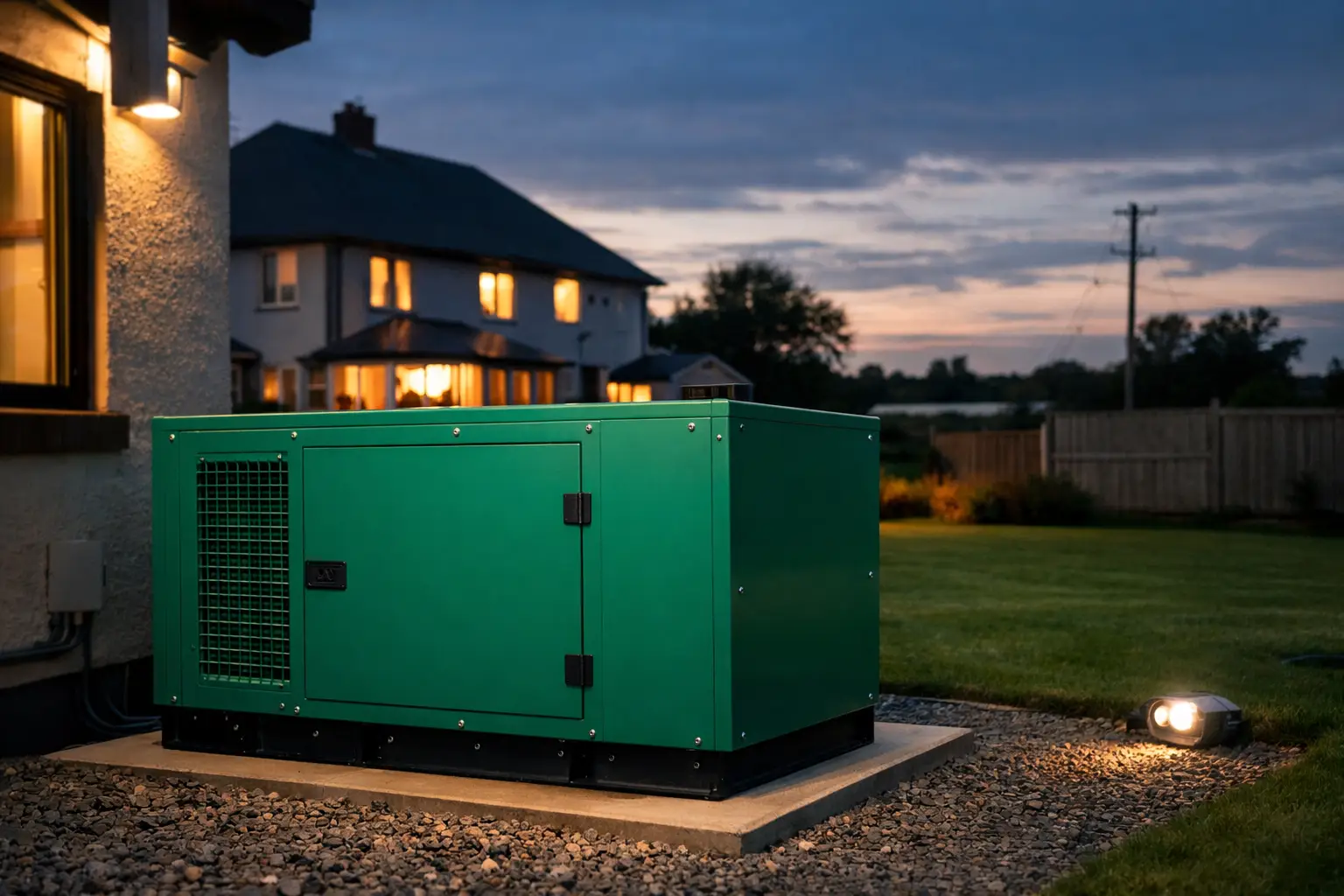
A power cut at home is inconvenient until it stops the boiler, the fridge, the alarm system and the broadband at the same time. When that happens, the search for the best generator for home backup becomes less about browsing options and more about securing reliable standby power that works when the mains does not.
For most buyers, the right answer is not a single model. It depends on what must stay live, how long outages typically last, whether noise is a constraint, and whether the generator is expected to support a house, an outbuilding, or a mixed domestic and light commercial load. The best buying decisions start with load, application and installation requirements, not headline price.
What makes the best generator for home backup?
The best unit for home backup is one that starts reliably, carries the required load without strain, and integrates properly with the property’s electrical system. That sounds obvious, but many sets are chosen too small, too noisy or without proper switching arrangements.
A standby generator for home use needs enough capacity to absorb starting currents from motors and compressors. A fridge, freezer, well pump or air conditioning system can demand significantly more power at start-up than during normal running. If the generator is only sized to the running load, voltage drop and nuisance trips become likely.
Fuel type matters as well. Diesel generators remain a strong option where dependable long-duration backup is the priority. They are widely chosen for critical standby applications because they offer good fuel efficiency, stable performance under load and solid longevity when correctly maintained. Petrol sets can suit occasional light-duty domestic use, but they are rarely the first choice where uptime matters and outage duration is uncertain.
Enclosure type is another practical consideration. A silent or canopied generator is generally the better fit for residential settings because it reduces noise and offers weather protection. Open sets can be suitable where the generator is installed within a dedicated plant area, but they are less convenient for most homes.
Start with load, not product range
If you are trying to identify the best generator for home backup, begin with a realistic load schedule. List the equipment that genuinely needs to run during an outage. In most cases that includes lighting circuits, refrigeration, heating controls, selected sockets, gate motors, security systems and communications equipment. Some households will also need to cover pumps, workshop loads or EV charging on a limited basis.
There is a difference between whole-house backup and essential-circuit backup. Whole-house coverage demands substantially more capacity and usually a more sophisticated installation. Essential-circuit backup is more efficient and more economical because it prioritises the loads that protect safety, comfort and continuity.
Single phase homes usually require a single phase generator, but larger properties or sites with workshops, agricultural buildings or commercial attachments may require 3 phase supply. That point needs checking early. Specifying the wrong output configuration creates avoidable installation issues and may leave key equipment unsupported.
A competent sizing exercise should account for running load, starting load, future expansion and acceptable load step performance. Buying with no margin is rarely wise. Buying with excessive margin is not ideal either, because lightly loaded generators can operate inefficiently and add unnecessary capital cost.
Diesel, petrol or something else?
For serious standby duty, diesel deserves close attention. It is commonly specified for backup applications where reliability is non-negotiable. Diesel sets are generally better suited to prolonged outages than small portable alternatives, and the fuel is safer to store and manage at site than petrol in many cases.
That does not mean every home needs a diesel generator. A small domestic property that only needs occasional emergency support for a few circuits may be well served by a lower-output set, provided it is installed correctly and matched to the load profile. The trade-off is endurance, operating confidence and scalability. Once the requirement moves beyond very light use, diesel often becomes the more credible long-term answer.
Gas generators can also be considered where a stable fuel connection is available, but availability, installation conditions and service support will shape whether that route is practical. In the UK market, diesel remains a familiar and dependable standby choice for buyers who prioritise proven backup performance.
Noise, location and enclosure choice
Noise is where many home backup projects become more complex than expected. A generator may be technically suitable on output, but poorly suited to its surroundings. In residential environments, a silent generator is typically the preferred option because it helps manage disturbance to occupants and neighbours.
Location also affects performance. The generator needs suitable ventilation, safe exhaust routing, secure placement and practical service access. It should not be squeezed into a position that compromises cooling airflow or makes maintenance difficult. If the unit is outdoors, weather protection and base construction need proper consideration.
For buyers comparing open and silent sets, the choice is usually straightforward. Open generators make sense where there is an established plant room or acoustic housing strategy already in place. For most homes, a factory-enclosed silent set is the simpler and more appropriate solution.
The generator is only part of the system
A standby generator does not work properly as a home backup solution without the right switching arrangement. In practice, that means using a transfer switch so the property can be safely isolated from the grid and supplied by the generator when required. This is not optional. It is essential for safety, compliance and reliable operation.
Automatic transfer switching is particularly useful where continuity matters and occupants may not be on site when an outage occurs. It allows the generator to start and assume load automatically. Manual transfer can reduce initial cost, but it depends on someone being present and able to operate the system correctly. For homes with freezers, security systems, remote monitoring or vulnerable occupants, automation often justifies the additional investment.
Battery charging, control systems and routine test cycles should also be considered. A generator that sits idle for long periods without a proper maintenance regime is a risk, not a backup plan. The best installations are designed as complete standby systems rather than treated as a box in the corner that might start when needed.
Common mistakes when choosing the best generator for home backup
The most common error is undersizing. A generator that struggles on motor starts or peak demand will not provide dependable backup. Close behind that is over-reliance on portable sets for applications that really need fixed standby equipment.
Another frequent mistake is focusing solely on purchase price. Lower-cost equipment can appear attractive, but if support, parts availability and engine quality are weak, the true cost of failure during an outage is far higher. Backup power should be judged on starting reliability, engine pedigree, specification clarity and serviceability.
Noise is often underestimated. So is fuel autonomy. A generator that can only run for a short period before refuelling may be acceptable for brief interruptions, but less so during extended network faults or severe weather events. Buyers should also avoid vague assumptions about what can be run simultaneously. Load prioritisation should be decided before the order is placed, not after the first outage.
Buying on specification rather than guesswork
If you are selecting the best generator for home backup, the useful questions are straightforward. What is the required standby load in kVA or kW? Is the property single phase or 3 phase? Does the site require a silent canopy? Is automatic transfer necessary? How much runtime is required before refuelling? What are the installation constraints?
From there, the shortlist becomes clearer. A small portable unit may cover a limited domestic requirement, but a fixed diesel standby generator is usually the stronger fit where uptime, longer runtime and proper integration matter. Buyers with larger homes, estates or mixed residential and operational loads should treat the decision with the same discipline used on light commercial standby projects.
At that point, supplier capability matters. Stock availability, clear technical data, and support with sizing and configuration are more valuable than generic product claims. Global Generators, for example, operates in a specification-led way that suits buyers who need practical guidance on output, enclosure format and standby duty rather than broad marketing language.
The right generator should feel uneventful when the power fails. It should start, transfer load, and keep essential systems running without drama. That is the standard worth buying for, because home backup only proves its value on the day everything else stops.