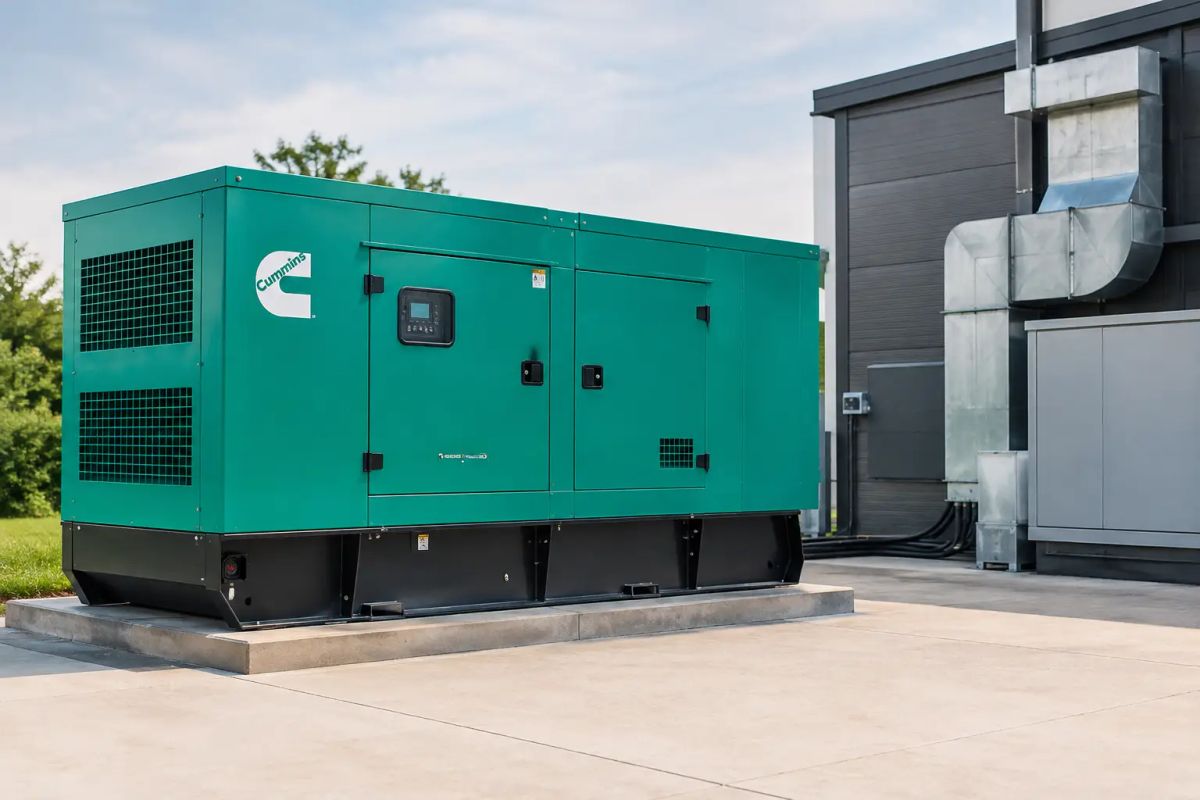
A generator is only valuable when it carries the load without hesitation. Cummins generator performance is therefore assessed less by brochure headline figures than by what happens when mains power fails, a large motor starts, ambient temperature rises or a site moves from light demand to sustained production. For facilities where interruption has operational, financial or safety consequences, the correct engine, alternator, control system and rating must work together.
Cummins-powered generator sets are widely specified across industrial, commercial and infrastructure applications because the platform is proven across a broad power range. However, the best result still depends on matching the set to the duty, load profile and installation conditions. A correctly specified 500 kVA set will protect uptime far more effectively than an oversized or undersized unit selected on a single headline number.
What Determines Cummins Generator Performance?
Generator performance is the combined result of engine output, alternator capability, governing accuracy, control logic and the way the set is installed. Cummins engines are designed to provide dependable mechanical power, while the alternator converts that power into stable electrical output. The controller monitors and manages the system, including start sequence, voltage, frequency, alarms and shutdown protection.
The required performance standard changes according to the application. A standby generator may operate only during a grid outage, but it must start automatically and accept priority loads quickly. A prime power set may run for extended periods where utility supply is unavailable or unreliable. In that case, continuous fuel consumption, service access, cooling capacity and loading discipline become central to the purchase decision.
Standby and Prime Ratings Are Not Interchangeable
Standby power is intended for emergency use during utility failure. It permits higher output for limited operating periods and is appropriate for applications such as office buildings, retail sites, data rooms, healthcare facilities and critical building services with a reliable mains connection.
Prime power supports variable load for an unrestricted number of operating hours within the manufacturer’s stated conditions. It is normally specified for construction compounds, remote industrial sites, temporary utilities, mining operations and locations with weak or unavailable grid supply. Selecting a standby-rated set for a prime-duty requirement can lead to excessive wear, restricted operating capability and avoidable risk to availability.
When comparing options, procurement teams should confirm both the standby and prime kVA ratings, rather than treating the larger number as the standard operating output. The distinction affects the engine duty cycle, service requirements and long-term operating cost.
Load Acceptance and Motor Starting Matter
A generator can appear suitable on paper yet struggle if the site includes high inrush loads. Pumps, compressors, lifts, cranes, refrigeration plant and large ventilation motors can demand several times their normal running current during starting. This momentary demand can cause voltage and frequency dip if the generator is not selected with sufficient capacity and the correct control configuration.
Cummins generator performance under these conditions depends on engine response and alternator characteristics, but also on the sequence of connected loads. Staged loading can reduce the initial demand placed on the set. Variable speed drives, soft starters and sensible control programming may also reduce starting current, although they can introduce harmonic considerations that need assessment.
For a site with large motors, a simple total of nameplate kW is not enough. The specification should account for the largest individual start, the number of motors likely to start together, existing running load and the acceptable voltage dip for sensitive equipment. This is particularly relevant where a generator supports process controls, IT systems or medical equipment alongside mechanical plant.
Sizing for Reliable Cummins Generator Performance
Correct sizing starts with a realistic load schedule. Record continuous demand, anticipated peak demand, motor starting requirements, power factor, future expansion and any non-linear loads. Where actual load data is unavailable, a site survey and review of distribution boards, plant schedules and operating patterns provide a stronger basis than assumptions.
Running a diesel generator consistently at very low load is also undesirable. Light loading can contribute to inefficient operation and, over time, deposits within the engine and exhaust system. Conversely, a unit operated near its maximum rating for prolonged periods may have insufficient reserve for load steps, elevated ambient conditions or future site changes. The appropriate operating range depends on the individual set and duty, but the aim is a properly loaded machine with sensible headroom rather than capacity selected for appearance.
Power factor must be treated carefully. Generator ratings are commonly stated in kVA, while site equipment may be described in kW. At a typical 0.8 power factor, a 500 kVA generator provides 400 kW. If the site’s power factor differs, or if load is highly non-linear, the available capacity and alternator selection require review. A high kVA figure does not automatically mean the set is suitable for every 400 kW load profile.
Frequency is another practical consideration. Most UK industrial installations require 50 Hz, three-phase output at 400/230 V. Export projects may require different voltages and frequencies. Specifying the correct electrical format from the outset avoids derating, unsuitable equipment interfaces and costly changes during commissioning.
Installation Conditions Can Reduce Available Output
Published generator ratings are based on defined ambient and altitude conditions. High site temperatures, restricted airflow and elevation can reduce engine output. An enclosure installed too close to a wall, recirculating its own hot discharge air, may overheat even where the generator itself is correctly rated.
Silent generators are often the preferred choice where noise control, weather protection and public-facing locations are factors. Their acoustic enclosures provide practical protection, but they must still have clear air paths and suitable exhaust routing. Open generators can be appropriate within a purpose-built plant room or containerised installation, where ventilation, attenuation and access are engineered around the set.
Fuel storage requires the same level of planning. The tank must support the required runtime at the expected load, not merely at an optimistic light-load fuel figure. Consider refuelling access, fuel polishing where diesel is stored for long periods, bunding requirements, cold-weather operation and day tank arrangements for extended-run installations. Fuel contamination is a common and preventable cause of poor starting and unreliable operation.
Controls, Transfer Equipment and Electrical Integration
The generator is only one part of the standby power system. Automatic mains failure controls and an automatic transfer switch determine how quickly the site detects utility loss, starts the generator and transfers the load. The system must be configured to suit the operational priority of the installation.
For some facilities, all loads transfer together. For others, life-safety circuits, essential process equipment and communications are prioritised, with non-essential load added later or excluded altogether. This approach can reduce the generator size required and improve starting stability during an outage.
Protection settings also require coordination with the existing electrical installation. Circuit breakers must discriminate correctly, fault levels must be understood and earthing arrangements must be designed for generator operation as well as normal mains supply. These details are often overlooked during early procurement, yet they determine whether the set can support the site safely under fault conditions.
Maintenance Preserves Performance Between Outages
Standby generators can fail precisely because they are used infrequently. A formal maintenance programme should include regular exercise under meaningful load, inspection of coolant, oil, belts, hoses and batteries, fuel checks, control-panel alarm review and periodic load-bank testing where the site cannot provide adequate test load.
Testing without transferring the building load proves that the engine starts, but it does not fully validate the transfer switch, distribution path and real load response. Scheduled tests should reflect the site’s risk level and be recorded, with faults investigated rather than reset and ignored.
Service intervals must follow the manufacturer’s requirements and operating environment. Dusty construction sites, coastal locations, high ambient plant rooms and prime-power applications demand closer attention than a clean, lightly used standby installation. Genuine service parts and trained inspection reduce the risk of an avoidable failure when utility supply is lost.
For buyers comparing available sets, the practical questions are clear: what rating is required, what will the generator start, how long must it run, where will it be installed and how will it be maintained? Global Generators can support this process with Cummins-powered options across key kVA sizes, including silent and open configurations for UK delivery and export projects.
The right generator should leave the site with more than enough capacity on a data sheet. It should have a defined duty rating, verified load acceptance, suitable installation provision and a testing plan that gives operators confidence before the next outage does.