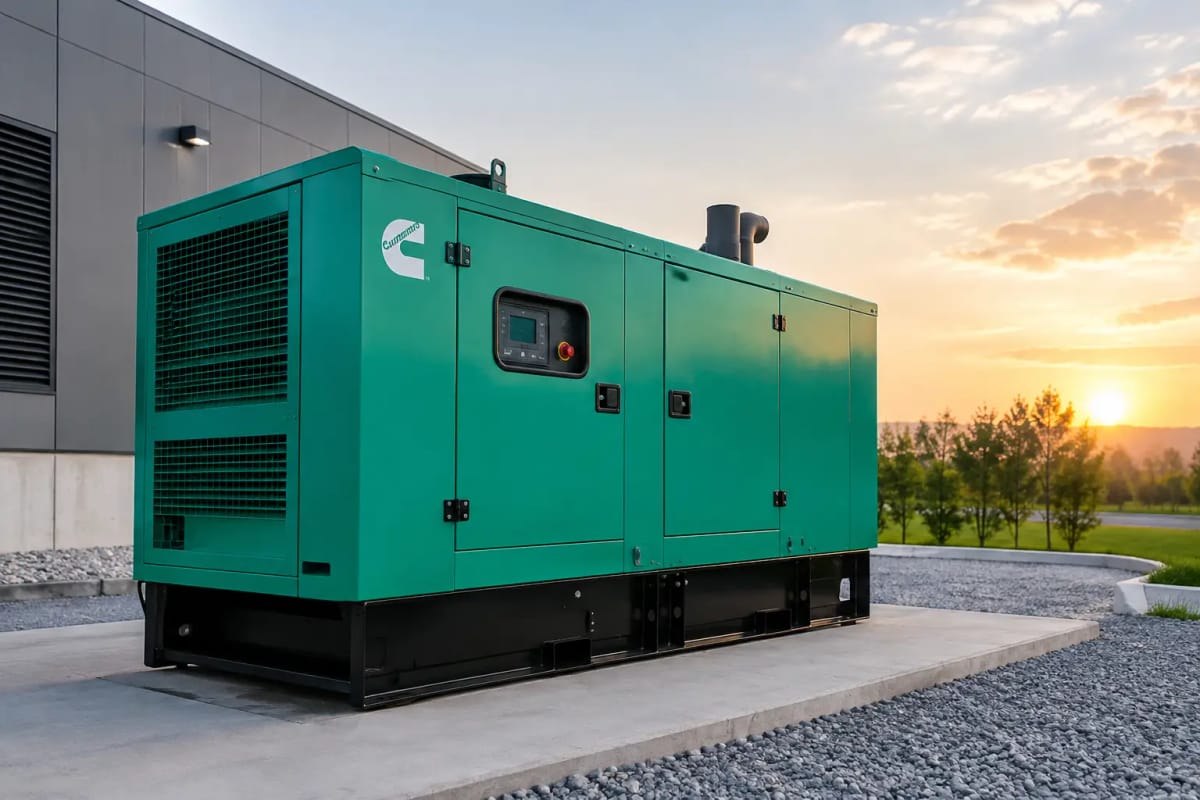
A generator is only valuable when it starts, accepts load and continues operating through the duration of an outage. The essential generator reliability features are therefore not limited to the engine badge or headline kVA rating. They include the complete system: alternator, controls, fuel supply, cooling, protection, enclosure and the ability to maintain the set properly over its working life.
For facilities managers, engineers and procurement teams, the right specification reduces the risk of avoidable downtime. It also prevents a common and costly error: buying a generator that is adequate on paper but unsuitable for the site’s actual load profile, environment or operating duty.
Essential Generator Reliability Features for Critical Sites
A correctly matched engine and duty rating
The engine is central to generator dependability, but engine capacity must be matched to the intended application. A standby-rated generator is designed for emergency operation during mains failure. A prime-rated generator is intended for variable-load operation where utility power is unavailable or unreliable for extended periods.
Using a standby set as a regular power source can shorten service intervals, increase wear and compromise availability when a genuine emergency occurs. Conversely, specifying a prime-rated set for occasional standby duty may add unnecessary capital cost. The correct choice depends on anticipated annual running hours, load variation and the consequences of an interruption.
Established engine platforms, including Cummins-powered generator sets, are valued because parts availability, service knowledge and proven operating performance support long-term ownership. However, the engine should not be considered in isolation. Its governing response, cooling arrangement and fuel system must all support the required load acceptance.
Alternator capacity and load-step performance
The alternator determines how well the set maintains voltage when loads are applied or removed. This matters particularly where a site has motors, pumps, compressors, lifts, refrigeration plant, UPS systems or other equipment with high starting currents.
A set sized only for the running load may experience excessive voltage dip when a large motor starts. The result can be control faults, contactor drop-out or failure of sensitive equipment to restart. Alternator design, excitation system and voltage regulation should therefore be assessed against the largest expected load step, not just the total connected load.
For three-phase installations, confirm voltage, frequency, phase arrangement and whether the generator must support uneven phase loading. Single-phase sets can suit smaller premises and specific equipment, but they are not a substitute for a properly specified three-phase supply on industrial sites. A reliable installation begins with an accurate load schedule that identifies starting method, harmonic content and future expansion.
Automatic controls and transfer equipment
A dependable generator must detect a mains failure, start without delay and transfer the load safely. The generator controller and automatic transfer switch are responsible for this sequence. They must be specified as one coordinated system rather than purchased as unrelated components.
A quality controller provides clear operating status, alarms, event history and adjustable protection settings. It should monitor key conditions such as low oil pressure, high coolant temperature, overspeed, battery voltage, low fuel level and abnormal mains supply. Remote monitoring can add operational value for unmanned sites, allowing teams to identify alarms before they become an outage.
The transfer switch requires equal attention. Its current rating, switching duty and interlocking must suit the installation. Critical facilities may need a bypass arrangement or planned maintenance strategy so that transfer equipment can be inspected without creating unnecessary risk. For sites with more than one generator or more than one utility source, synchronisation and load-sharing controls may be required.
Fuel storage that matches the runtime requirement
Fuel is often the limiting factor in a prolonged outage. An integrated base tank may provide several hours of operation, which can be appropriate for short-term standby use. It may be insufficient for healthcare, telecoms, logistics, utilities or remote industrial locations where refuelling could be delayed by weather, access restrictions or wider infrastructure disruption.
The required runtime should be calculated at the realistic site load, not simply at a lightly loaded test condition. Allow for usable tank capacity, generator fuel consumption, reserve margin and the practical time needed to arrange deliveries. Where extended autonomy is required, bulk storage and automatic fuel transfer arrangements may be more suitable.
Fuel quality also affects reliability. Diesel can degrade during long storage periods, while water contamination and microbial growth can block filters and damage components. A fuel maintenance plan should include periodic testing, filtration where appropriate and tank inspection. A generator with a full tank of poor-quality fuel is not ready for service.
Cooling, enclosure and site conditions
Generator output is affected by the environment in which the equipment operates. High ambient temperatures, restricted airflow, dust, salt-laden air and high altitude can all influence engine and alternator performance. Plant room layouts must provide sufficient ventilation, cooling-air flow and safe discharge of hot air. Recirculating hot air back into the radiator can quickly cause overheating under load.
The choice between an open set and a silent canopy should reflect the installation. Open generators are commonly used in protected plant rooms or within purpose-built acoustic enclosures. Silent generators are often better suited to external locations where noise control, weather protection and security are priorities. Neither format removes the need for correct access, ventilation and exhaust design.
Acoustic limits should be checked at the relevant site boundary, not only against a published sound-pressure figure measured under controlled conditions. Exhaust silencers, ducting, barriers and the surrounding building fabric can materially change the final result.
Protection that prevents minor faults becoming major failures
Protective shutdowns are sometimes viewed as an inconvenience, especially when a site is under pressure to maintain power. In practice, correctly configured protection preserves the generator for the next demand. Low oil pressure, high coolant temperature, overcrank, overspeed and electrical fault protection can prevent serious engine or alternator damage.
Settings must be appropriate for the application. Overly sensitive alarms can create nuisance shutdowns; settings that are too permissive can allow damaging conditions to continue. Critical loads may justify differentiated alarm and shutdown logic, but this should be engineered and documented rather than adjusted casually after installation.
Battery charging deserves particular focus. Starting batteries are a frequent cause of generator failure, despite being relatively inexpensive to maintain. A reliable system includes a correctly rated charger, battery condition checks, clean terminals and periodic replacement based on condition and age.
Maintainability Is a Reliability Feature
A generator that cannot be serviced efficiently is less likely to be ready when needed. Routine access to filters, belts, coolant points, batteries and control panels should influence the equipment choice and its position on site. Tight clearances may appear acceptable at installation but can add time, cost and risk to every future service visit.
Commissioning should establish a baseline for operation under load. This includes verifying automatic start, transfer sequence, alarms, battery charging, fuel supply, voltage and frequency stability. A no-load start test is useful, but it does not prove the set will support the building when the load is applied.
Planned exercise under meaningful load helps identify faults in fuel systems, cooling, controls and transfer equipment before a mains failure does. The testing frequency and load-bank requirement depend on the application, generator duty and site risk assessment. What matters is a recorded regime that proves the system, not simply an engine run with no operational demand.
Specify the Generator Around the Site, Not the Brochure
The most dependable generator is the one specified around the site’s actual requirements. That means confirming the required kVA at the intended duty rating, starting currents, voltage, phase configuration, runtime, installation environment, sound constraints and transfer arrangement. It also means allowing capacity for realistic future growth without running a diesel generator persistently at an unsuitable load level.
For high-consequence applications, procurement should ask how the set will be maintained, refuelled and tested after delivery. Fast availability matters, but a quick purchase must still result in a technically correct installation. Global Generators can assist buyers in matching standby or prime power requirements with the appropriate engine, enclosure and power rating.
When power loss carries operational, financial or safety consequences, treat generator reliability as an engineered outcome. The right specification gives the site a better chance of carrying on when the mains supply does not.