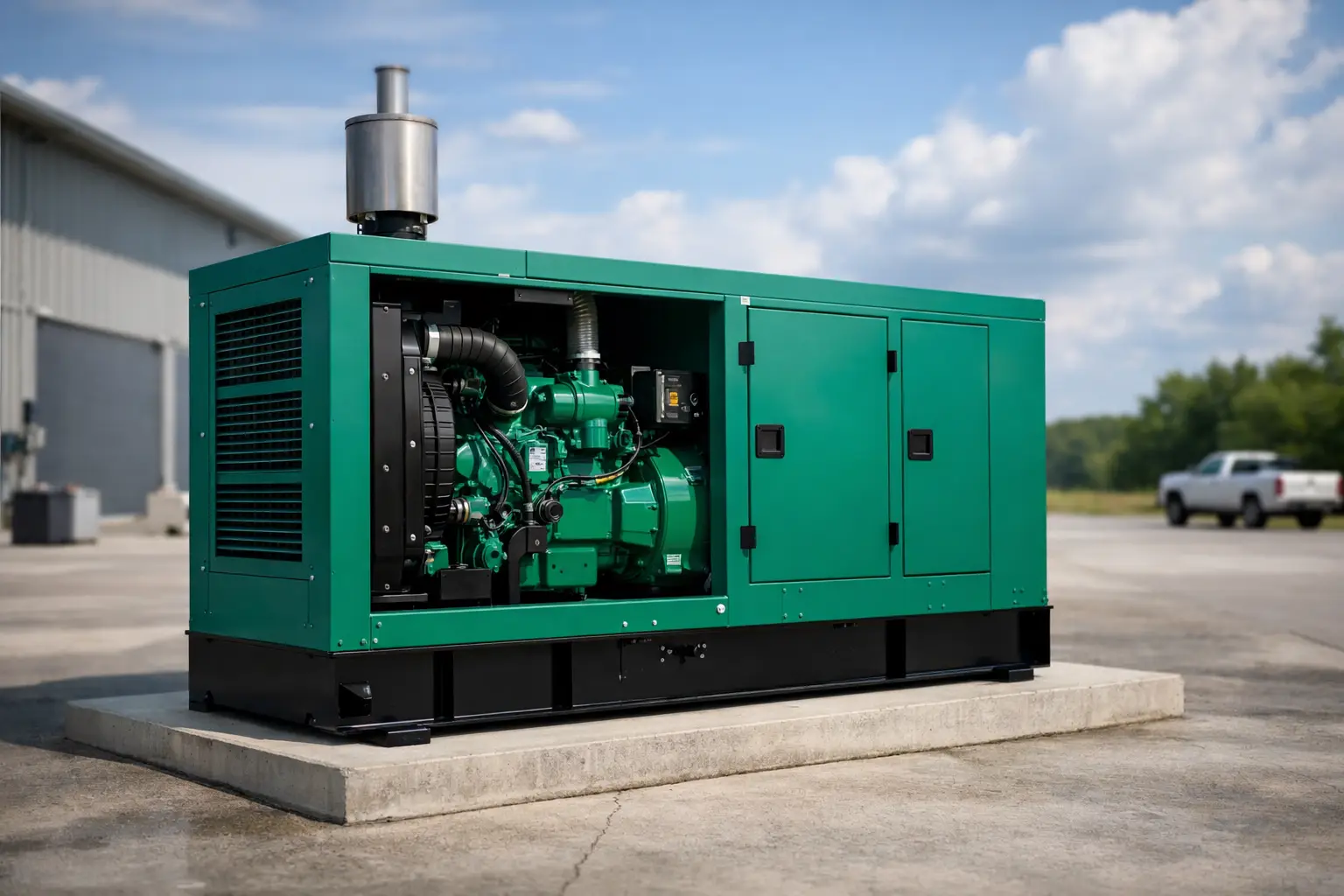
Power failure is rarely a minor inconvenience on a live site. For facilities teams, contractors and procurement buyers, it can mean halted operations, compliance risk, lost revenue and immediate pressure to restore service. That is why the Cummins C22D5Q from Global Generators Ltd is relevant to buyers who need a compact, dependable diesel generator set from a recognised engine platform.
This model sits in a practical part of the market. It is well suited to smaller commercial sites, infrastructure support applications, temporary power planning and standby duties where reliability matters more than unnecessary complexity. For buyers comparing units in this output range, the key question is not simply headline kVA. It is whether the generator can deliver stable performance, straightforward installation and long-term service confidence.
Why the Cummins C22D5Q fits critical standby duties
The Cummins C22D5Q is typically considered by organisations that need proven standby support rather than an over-specified package. In real purchasing terms, that makes it relevant for telecoms assets, small industrial units, site offices, healthcare support functions, commercial buildings and essential services with modest load profiles.
Cummins generators remain a strong choice in the genset market because buyers understand the value of established engine engineering, predictable parts support and known performance characteristics. When downtime carries a direct operational cost, recognised engine quality is not a branding exercise. It is part of risk control.
The C22D5Q also appeals because it offers a sensible balance between footprint and output. On constrained sites, especially where plant space is limited, that balance matters. A set that is too large can complicate positioning, fuel planning and access. A set that is too small creates load stress and leaves no margin for operational change.
Cummins C22D5Q specification points that matter
When assessing the Cummins C22D5Q, serious buyers will look beyond brochure-level claims. Standby rating, prime rating, phase configuration, voltage compatibility, enclosure format and acoustic performance all affect whether the unit is right for the job.
For standby applications, the first consideration is how the generator will support the actual site load during a mains failure. That means reviewing starting currents, not just running demand. Loads with motors, pumps or HVAC equipment can produce different generator sizing outcomes compared with lighting, IT or general building services.
Enclosure type is another practical factor. If the unit is supplied in a silent or canopied format, it may be better suited to commercial premises, public-facing locations or sites with tighter noise restrictions. If the application is plant-room based or part of a larger engineered package, an open set may be more appropriate. There is no single correct answer. The right format depends on the operating environment, access conditions and project scope.
Control system quality also matters more than many buyers expect. A generator in this class must be easy to monitor, test and maintain. Clear control access supports faster fault finding and more efficient service routines, particularly where planned testing is part of site compliance.
Buying the right generator is about load, not guesswork
One of the most common mistakes in generator procurement is selecting a unit purely by nominal output. The better approach is to match the generator to the real operating profile of the site. That includes load steps, starting demands, future expansion and the frequency of use.
For example, a standby set covering emergency lighting and essential controls has a very different duty pattern from a generator supporting refrigeration, pumps and building services during prolonged outages. In both cases, the same model may be considered, but the decision should come from load analysis rather than assumption.
This is where an enquiry-led buying process has value. A unit such as the Cummins C22D5Q may be technically suitable, but the final recommendation should still take account of application details, site constraints and delivery requirements. Fast availability is important, but correct specification is what protects uptime after installation.
Cummins C22D5Q From Global Generators Ltd for UK buyers
For UK buyers, lead time and stock position are often as important as the equipment itself. Projects move quickly, and emergency replacement scenarios move even faster. A supplier that understands generator classifications, application fit and dispatch timing adds practical value to the procurement process.
The Cummins C22D5Q From Global Generators Ltd is therefore best viewed as more than a product listing. It is part of a broader critical power offering aimed at customers who need dependable equipment, clear specifications and responsive supply. That matters whether the requirement is a planned installation, a contractor-led project or a time-sensitive replacement.
Price will always be part of the conversation, but experienced buyers know that lowest initial cost is not the same as best commercial outcome. Reliability, supportability, fuel efficiency in service, and suitability for the application will have a greater effect on whole-life value than a marginal saving at purchase.
For organisations securing standby power in this range, the right next step is to assess the actual load, define whether the duty is standby or prime, and confirm the preferred format for the site. Once those points are clear, a model like the Cummins C22D5Q becomes much easier to evaluate with confidence.