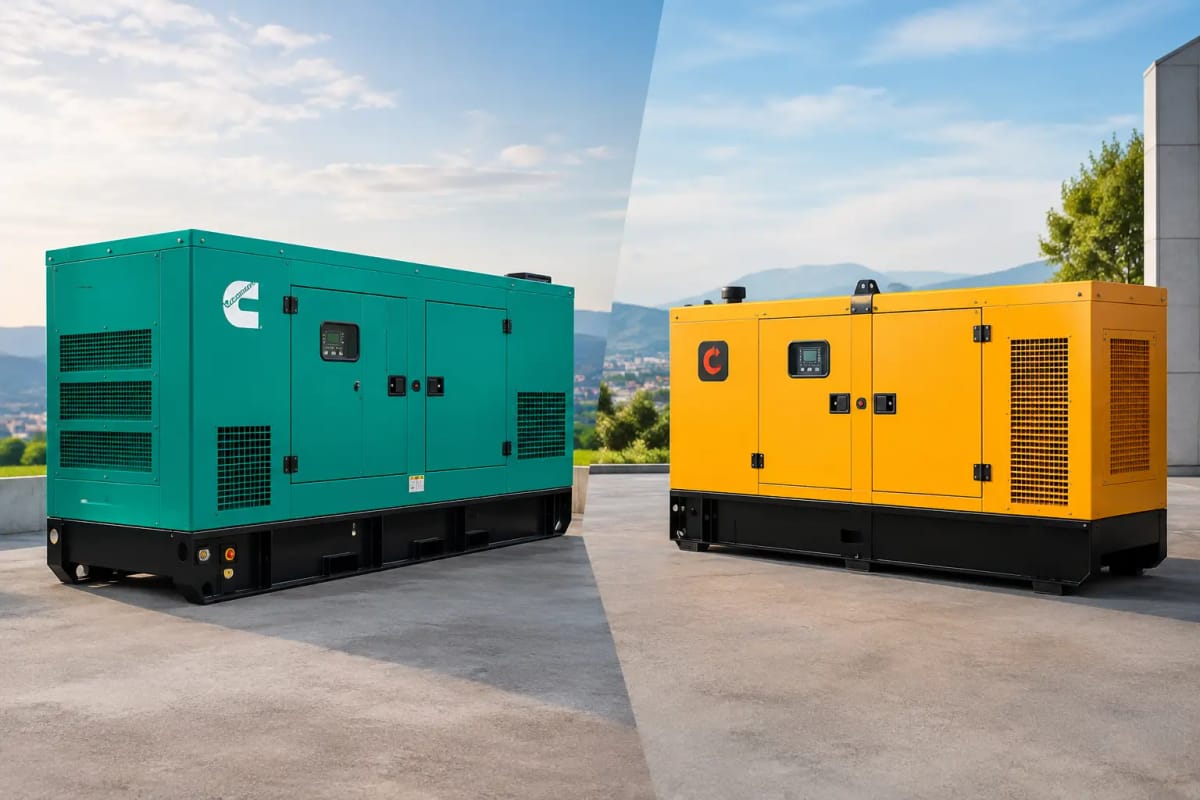
A generator choice can decide whether a site continues operating through a grid failure or faces a costly shutdown. When assessing diesel versus gas generators, the right answer is rarely based on fuel price alone. Load profile, required runtime, fuel security, starting performance, emissions requirements and the consequences of interruption all need to be considered before a set is specified.
For many commercial and industrial applications, diesel remains the established choice for dependable standby and prime power. Gas generation can be highly effective where a reliable gas connection, suitable operating profile and emissions strategy are in place. The decision should follow the duty of the generator, not a generic preference for one fuel type.
Diesel versus gas generators for critical power
Diesel generator sets use a compression-ignition engine supplied from an on-site fuel tank. Gas generators generally operate on natural gas from the mains network, although LPG, biogas and other gaseous fuels may be used in suitable applications. This difference in fuel supply has a direct effect on resilience.
A diesel set stores its fuel at the point of use. With correctly sized and maintained bulk storage, a site can maintain power independently of the gas network for a defined period. This matters to hospitals, data and telecoms facilities, logistics operations, factories and remote construction sites where an extended outage must be planned for, rather than assumed to be brief.
A mains gas generator avoids on-site diesel storage and refuelling arrangements, but it depends on the integrity and availability of the gas supply. During some major incidents, gas network pressure or supply may be affected. Gas may also be restricted under emergency demand-management arrangements. For a site where the generator is the final line of defence, that dependency requires careful risk assessment.
Starting and load acceptance
Diesel generators are well suited to standby applications because they start quickly and handle step loads effectively when correctly matched to the installation. This is particularly relevant where an automatic transfer switch must restore essential services after a mains failure, or where large motor loads, pumps, compressors and lifts are present.
Gas engines can also provide reliable automatic standby power, but their response to sudden load changes must be assessed against the actual load profile. A generator serving a stable building load has different demands from one supporting a process plant with frequent motor starts. The engine, alternator, control system and fuel supply pressure must work as a complete system.
Neither fuel type should be selected by kVA alone. Load studies should identify running load, maximum demand, starting current, power factor, harmonic content and the sequence in which critical equipment reconnects. An undersized set may struggle to accept load. An oversized set may spend too much time operating at low load, which is especially undesirable for diesel engines and can contribute to wet stacking and poor combustion performance.
Runtime and fuel logistics
Runtime is often the deciding factor in the diesel versus gas generators comparison. A diesel generator’s autonomy depends on tank capacity and actual fuel consumption at the expected load. Consumption is not a fixed number. A set running at 50% load will use significantly less fuel than one operating near its prime rating, so runtime calculations must use the manufacturer’s fuel figures at realistic duty points.
For standby installations, the required fuel reserve should reflect the site’s risk profile, local refuelling capability and likely duration of a grid interruption. A warehouse with non-critical operations may accept a shorter reserve than a healthcare or utility site where loss of power creates safety and service risks. Fuel quality management also matters. Stored diesel should be tested, kept free from water contamination and maintained to prevent microbial growth.
Gas generators can run for long periods without tanker deliveries where the gas connection remains available and adequately sized. That can be commercially attractive for continuous or high-hour operation, particularly in locations with a stable gas supply. However, the connection must be capable of supporting full generator demand while maintaining the required inlet pressure. Existing gas infrastructure is often designed for heating loads, not for a high-output generator operating at full capacity.
LPG provides an alternative where mains gas is unavailable, but it reintroduces the need for on-site fuel storage and delivery planning. It should therefore be assessed separately from a mains natural gas solution.
Cost should be measured across the operating life
Purchase price is only one part of the decision. Diesel generator sets are widely available across a broad range of ratings, from smaller single-phase backup units through to large three-phase industrial packages. Their established position in standby power means there is strong availability of engines, service capability and enclosure options.
Gas sets may offer favourable fuel costs in some operating conditions, especially for planned, higher-hour generation. Yet the overall project cost can increase if a gas main needs upgrading, pressure regulation is required, emissions treatment is specified, or the installation needs additional acoustic and ventilation engineering.
Diesel installations also carry costs beyond the generator itself. These include bulk fuel tanks, bunding, pipework, fuel polishing where required, periodic testing and refuelling contracts. For a standby set that operates only during tests and outages, these costs are often justified by the assurance of on-site fuel. For a generator intended to run regularly as prime power, fuel consumption and servicing intervals deserve much greater weight in the financial model.
The most useful comparison is total cost of ownership over the intended operating period. Include capital equipment, civils, electrical installation, fuel infrastructure, maintenance, compliance, testing and the financial impact of an unplanned interruption. A lower fuel rate does not compensate for a design that fails to support the site when required.
Emissions, noise and planning requirements
Gas combustion typically produces lower particulate emissions and lower nitrogen oxide emissions than conventional diesel combustion, which can be helpful where local air-quality limits are stringent. It is not, however, a simple zero-impact option. Methane is a potent greenhouse gas, and the environmental performance of a gas installation depends on fuel source, engine efficiency, operating hours and methane leakage across the supply chain.
Modern diesel engines can be specified with emissions-control equipment where required, but this can affect capital cost, maintenance requirements and space planning. The applicable requirements will depend on the generator rating, operating duty, location and whether the set is used for emergency standby, demand response or regular prime power. Planning and environmental requirements should be confirmed early, before equipment is ordered.
Noise must be considered in the same way. A silent, weatherproof canopy is usually the practical choice for commercial sites, populated areas and installations with defined noise limits. An open generator may suit a dedicated plantroom or temporary project where an enclosure is provided separately. Acoustic performance should be assessed at the site boundary, not only by the quoted sound pressure figure at a set distance.
Match the generator rating to the duty
Standby and prime power ratings are not interchangeable. A standby-rated generator is intended for emergency use during a mains failure, subject to the manufacturer’s operating limits. A prime-rated generator is designed for variable load over extended hours where grid power is unavailable or unreliable. Selecting a standby set for continuous duty can reduce reliability, invalidate expectations around performance and shorten service life.
The electrical configuration is equally significant. Three-phase sets are commonly specified for industrial machinery, larger buildings and balanced commercial loads. Single-phase generators may suit smaller premises or specific equipment, but should not be used as a shortcut where the wider installation requires three-phase distribution. Voltage, frequency, earthing arrangement, alternator capability and control integration all need checking against the site design.
For projects with high availability requirements, the generator should be considered alongside the transfer system, switchgear, distribution, fuel system, ventilation and maintenance access. A high-quality engine cannot compensate for a restricted exhaust route, inadequate airflow or an automatic transfer arrangement that has not been properly commissioned.
What to establish before requesting a generator quotation
A meaningful quotation starts with accurate operational information. State the required standby or prime rating, voltage and phase, expected load profile, maximum motor starting demand, preferred enclosure type, installation location and required runtime. If the site is replacing an existing generator, provide the current set’s rating and any known performance issues rather than assuming the same kVA remains appropriate.
Also confirm whether the generator will support a whole site, life-safety systems only, or a defined critical-load board. This affects sizing, transfer arrangements and the practical fuel reserve. For gas solutions, provide the confirmed gas type, available pressure and connection capacity. For diesel, identify tank location, refill access and any requirement for extended autonomy.
Global Generators supplies diesel generator sets across a wide capacity range, including silent and open configurations for standby and prime power applications. A properly defined enquiry allows the set, enclosure, controls and fuel arrangement to be matched to the actual operational risk.
The most dependable choice is the one that remains available when the site needs it most. Specify the generator around the load, the fuel security and the required duty, then test the complete installation as if the mains supply has already failed.