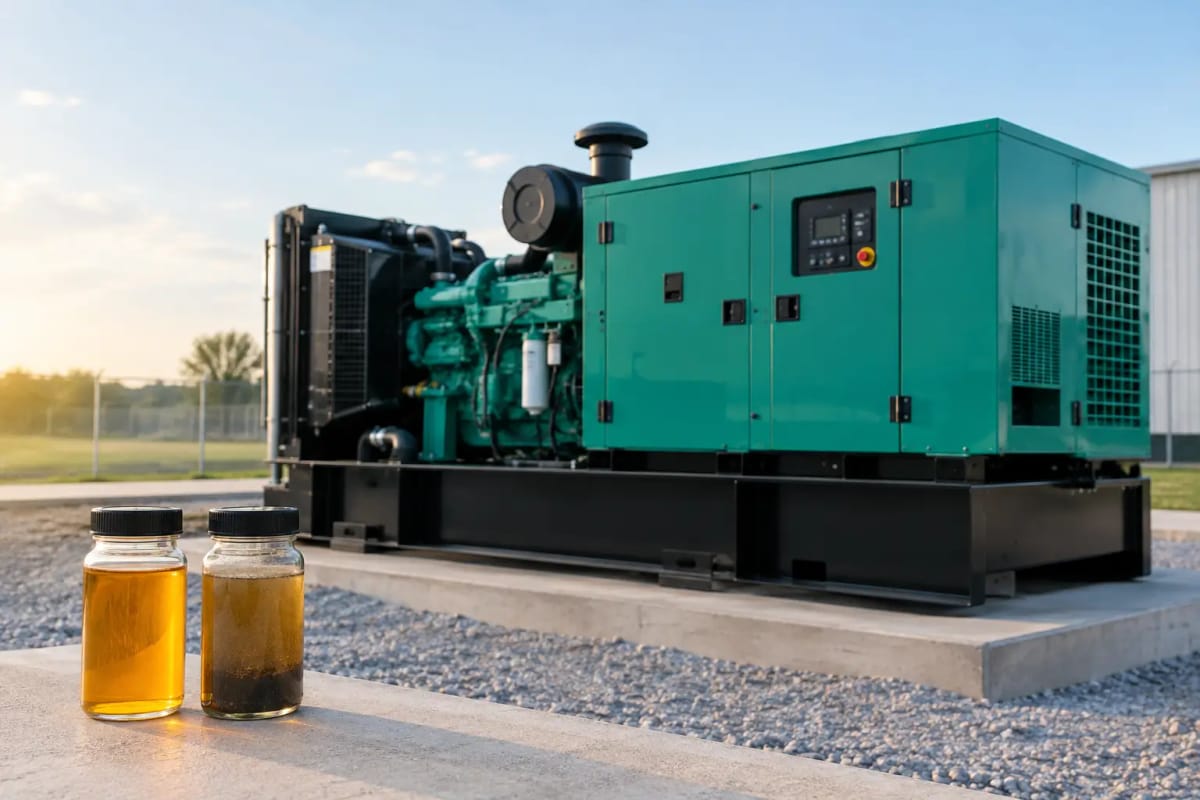
A standby generator can be correctly sized, professionally installed and routinely exercised, yet still fail at the point of demand because of generator fuel contamination. For sites relying on diesel backup power, fuel is not simply a consumable. It is a stored operating asset that must remain clean, dry and stable throughout its storage life.
This matters most where a generator may run only during test periods for months or years, then be expected to assume a full critical load without warning. Hospitals, logistics facilities, telecoms sites, manufacturing plants and major commercial buildings cannot rely on an engine that starts but cannot sustain output. Fuel quality directly affects starting, load acceptance, injector condition and long-term engine reliability.
What generator fuel contamination looks like
Contamination is any condition that prevents diesel from meeting the cleanliness and quality required by the engine and fuel system. Water, particulate matter, microbial growth and degraded fuel are the principal concerns. They frequently occur together rather than in isolation.
Water commonly enters through tank breathing, poor fill-point sealing, damaged caps, leaking bunds or deliveries made in poor conditions. Temperature changes create condensation inside partly filled tanks. As water settles at the base of the tank, it creates an environment where bacteria and fungi can grow at the fuel-water interface.
Particulate contamination includes rust, scale, dust, sediment and material dislodged from ageing tanks or pipework. Even fine particles can block filters, damage fuel pumps and affect the close tolerances of modern common-rail injection equipment. A blocked filter may not be apparent during a brief no-load test, but it can restrict flow when the generator is required to accept a substantial load.
Fuel degradation is less visible. Diesel changes during prolonged storage through oxidation and chemical instability, particularly where it is exposed to heat, air or unsuitable storage conditions. It can form gums, resins and sediment that reduce combustion quality and foul the fuel system. The risk depends on fuel type, additive package, storage duration, tank condition and site environment.
Why fuel contamination threatens generator uptime
The first failure point is often fuel filtration. A contaminated tank can repeatedly block filters after they have been changed, because the underlying source remains in the tank. Restriction reduces available fuel flow, causing hard starting, unstable running, low power, alarms or an engine shutdown under load.
Water presents a different but equally serious risk. It promotes corrosion in tanks, transfer systems and injectors. It also reduces lubricity, increasing wear in pumps and precision components. In a standby application, corrosion may progress unnoticed between maintenance visits.
Microbial contamination, often described as diesel bug, produces sludge and acidic by-products. The sludge blocks strainers and filters, while the acids can damage the tank and associated fuel infrastructure. A biocide may form part of a treatment plan, but it is not a substitute for removing water, cleaning the tank and dealing with accumulated debris.
For prime power sets, contamination can quickly become an operating issue because fuel turnover is high and filter restriction is more likely to be detected in normal service. Standby systems have a different exposure: the fuel may remain static for long periods, so deterioration and water accumulation can develop quietly. Neither duty profile removes the need for fuel management.
The most common causes on operating sites
Poor tank housekeeping is a frequent cause. A tank that is rarely inspected, drained or sampled can conceal water and sediment for years. External fuel tanks are particularly exposed to changing weather, while indoor tanks may still suffer from condensation and unsuitable delivery practices.
Fuel deliveries also need control. The supplier, delivery vehicle and transfer process should be appropriate for the fuel specification and storage arrangement. A delivery should not be treated as proof that fuel entering the tank is clean. Cross-contamination, disturbed tank sediment and water ingress can occur during transfer.
Ageing infrastructure is another concern. Corroded tank interiors, deteriorated seals, obsolete pipework and poorly located vents can introduce or retain contaminants. Where a generator has been upgraded but its existing day tank or bulk tank retained, confirm that the fuel system is suitable for the new engine's filtration and injection requirements.
Low fuel levels can increase condensation risk by leaving more air space inside the tank. However, keeping a tank full at all times is not the only control measure. The correct approach depends on the tank design, its location, expected run hours, fuel rotation plan and the site's emergency autonomy requirement.
Detecting generator fuel contamination before an outage
Visual checks are useful but limited. A sample should be drawn from a point that represents the lower section of the tank, where free water and sediment settle. Clear, bright fuel is encouraging, but it does not confirm that the fuel is suitable for a critical generator.
Laboratory testing provides a more dependable assessment. Depending on the site risk profile, testing can identify water content, particulate cleanliness, microbial activity, fuel stability and other indicators of degradation. A planned sampling programme is particularly justified for large bulk tanks, critical standby systems and installations with low annual run hours.
Operational warning signs should be investigated rather than managed through repeated filter changes. These include frequent filter blockage, dark or hazy fuel, visible sediment, fuel odour changes, water separator alerts, unstable engine speed, difficult starting and unexplained loss of power. A generator that runs acceptably at no load may still have an underlying fuel supply problem.
Fuel records matter. Log delivery dates, volumes, fuel treatments, sample results, tank drains, filter changes and any contamination event. This creates a clear history for facilities teams and helps identify whether the issue is recurring after a specific delivery, seasonal temperature change or maintenance activity.
Controlling contamination in stored diesel
A practical fuel management plan starts with the tank. Keep fill points, vents and access covers secure and weatherproof. Inspect the tank, bund and associated pipework for leaks, corrosion and damaged seals. Drain water from designated low points where the tank design permits, following site procedures for safe disposal.
Filtration should be matched to the generator and fuel system. Primary filtration protects against larger debris and water, while the engine's own filtration protects sensitive components. Filters are not a permanent cure for dirty fuel. If contamination is persistent, arrange tank inspection, fuel polishing or cleaning as appropriate.
Fuel polishing circulates diesel through specialist filtration equipment to remove water and particulate matter. It can be an effective preventative measure for stored fuel, but its suitability depends on the nature of the contamination. Where microbial growth, severe sediment or internal tank corrosion is present, cleaning and remediation may be required alongside polishing.
Additives should be used deliberately. Stabiliser may help preserve fuel quality during storage, while a biocide may be required following confirmed microbial activity. Treatment must be compatible with the diesel specification, engine manufacturer's requirements and any previous products in the tank. Adding chemicals without diagnosing the condition of the fuel can complicate the problem.
For higher-risk sites, consider fuel rotation. Using older stored fuel in suitable equipment and replenishing the tank with fresh stock can reduce prolonged storage exposure. This needs planning around minimum emergency fuel reserves, local compliance requirements and the actual consumption profile of the generator.
Match fuel management to the generator specification
Fuel quality controls should be set alongside generator selection, not added as an afterthought. A 13 kVA standby set serving a small commercial premises has different storage demands from a multi-megawatt installation supporting a data-intensive facility or industrial process. The consequence of failure, expected runtime and fuel volume should determine the monitoring and maintenance regime.
Engine design also matters. Cummins-powered generator sets and other modern diesel systems depend on clean fuel reaching the engine at the correct flow and pressure. Check the specified fuel standard, permitted biodiesel content, filtration requirements and maintenance intervals for the selected model. Do not assume a legacy tank and fuel procedure are automatically acceptable for a new generator.
Load-bank testing is valuable because it tests more than the starting circuit. A properly planned test can reveal fuel starvation, restriction and unstable operation that a short unloaded exercise may not expose. It should, however, be carried out with appropriate controls, suitable load duration and a review of fuel consumption against the available reserve.
When to take corrective action
If water, sediment or microbial growth is found, avoid treating the issue as routine servicing. Establish the extent of contamination first. Inspect the tank and fuel lines, sample the fuel, assess filter condition and identify how contamination entered the system. The remedy may range from draining water and replacing filters to fuel polishing, tank cleaning and replacement of damaged components.
Where the generator supports life safety, essential operations or contractual uptime commitments, arrange an engineered response before relying on the set again. Temporary fuel supply may be appropriate while remediation is completed, but it must be clean, correctly stored and connected in a manner that does not introduce a new failure risk.
A dependable generator begins with the right kVA rating, enclosure, engine and control system, but it remains dependent on the condition of the fuel it receives. Build fuel inspection, testing and treatment into the same maintenance discipline as battery checks, coolant levels and load testing. For critical installations, that discipline protects the investment and gives the generator a better chance of delivering power when the mains supply does not.