Cummins C55D5EQ
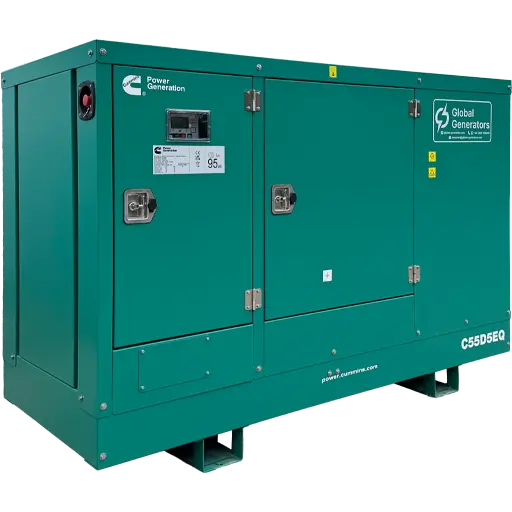
Cummins C55D5EQ
Standby55 kVA
Prime50 kVA
EngineCummins
TypeSilent
Voltage400V
Made InEurope
Convert kilowatts (kW) to kilovolt-amperes (kVA) in seconds. Enter your load in kW and the power factor to see the kVA, a recommended generator size and the closest generators to match.
kVA = kW ÷ PF
Where: kVA = apparent power in kilovolt-amperes · kW = real power in kilowatts · PF = power factor (0.8 for diesel generators)
Example: 50 kW ÷ 0.8 = 62.5 kVA
Diesel generators are rated at 0.8 PF. Use 1.0 for purely resistive loads such as heaters.
Apparent power
62.5 kVA
50 kW ÷ 0.8 = 62.5 kVA
80 kVA Generators covers 62.5 kVA withheadroom
Headroom covers motor start-up surges and future load growth. 20-25% is typical.
Most electrical equipment is labelled in kilowatts: heaters, motors, chillers, welders, IT equipment. Your electricity bill's demand figures are often in kW too. Generators, though, are usually sold by their kVA rating. Converting kilowatts to kVA bridges that gap, so you can match the load you need to power to the right size of generator.
| kW | Power factor | Calculation | kVA |
|---|---|---|---|
| 1 kW | 0.8 | 1 ÷ 0.8 | 1.25 kVA |
| 50 kW | 0.8 | 50 ÷ 0.8 | 62.5 kVA |
| 100 kW | 0.8 | 100 ÷ 0.8 | 125 kVA |
| 200 kW | 0.8 | 200 ÷ 0.8 | 250 kVA |
So a 200 kW load needs at least a 250 kVA generator at 0.8 PF. With 25% headroom you'd look at around 312.5 kVA, which puts a 350 kVA generator on the shortlist.
The power factor depends on the type of load. These are typical values. For an accurate figure, check the data plate on the equipment or ask your electrician.
| Load type | Typical power factor |
|---|---|
| Resistive heating, kettles, immersion heaters | 1.0 |
| Modern IT and LED lighting with power factor correction | 0.9-0.99 |
| Mixed commercial and site loads | 0.8-0.9 |
| Induction motors at full load | 0.8-0.9 |
| Lightly loaded motors, welders | Lower than 0.8 |
If you're not sure, 0.8 is the safe choice: it's the figure generators are rated at, so your kVA result will line up with generator ratings.
At a power factor of 0.8, 1 kW = 1.25 kVA. At a power factor of 1.0, 1 kW = 1 kVA.
100 kW ÷ 0.8 = 125 kVA. Add 25% headroom and you'd be looking at a generator of around 156 kVA or larger, such as a 200 kVA generator.
The chart is exact for the power factor you select. If your real load has a different power factor, change the power factor box above the chart and every value updates.
Both. Make sure your total kW is within the generator's kW rating and your total kVA is within its kVA rating. At 0.8 PF, matching the kVA covers both.
Kilowatts measure real power, the energy actually used. Kilovolt-amperes measure apparent power, the total the generator has to supply including reactive power. See our kVA to kW calculator for the reverse conversion.
Tell us what you need to power and our team will recommend the right generator, with prices up front.
Cummins C55D5EQ
Cummins C55D5EQ
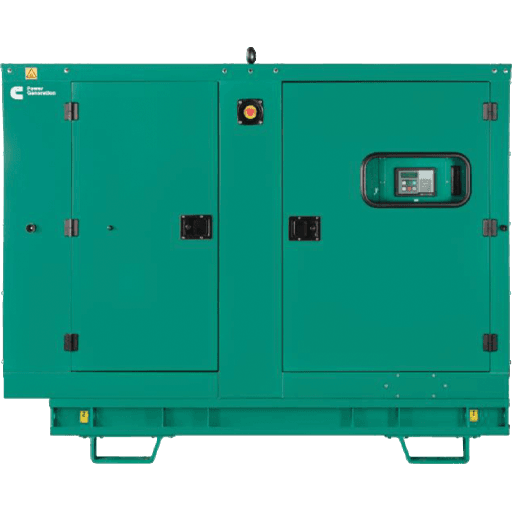
Cummins C55D5e
Cummins C55D5e
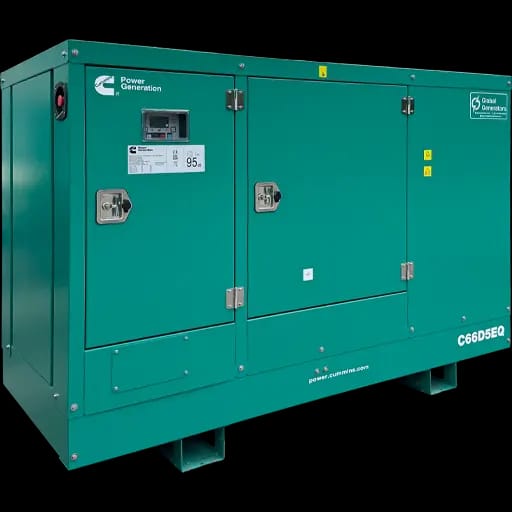
Cummins C66D5EQ
Cummins C66D5EQ
Cummins C66D5e
Cummins C66D5e