Cummins C90D5
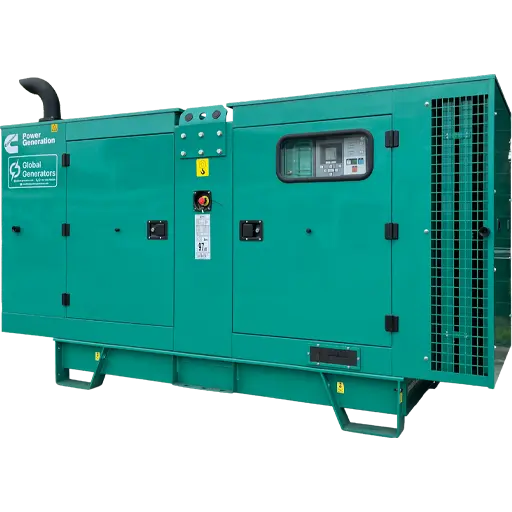
Cummins C90D5
Standby72 kW
Prime65.6 kW
EngineCummins
TypeSilent
Voltage400V
Made InIndia
Convert kilovolt-amperes (kVA) to kilowatts (kW) instantly. Enter the kVA and power factor below. The result updates as you type, along with the generators closest to your kW figure.
kW = kVA × PF
Where: kW = real power in kilowatts · kVA = apparent power in kilovolt-amperes · PF = power factor (0.8 for diesel generators)
Example: 100 kVA × 0.8 = 80 kW
Diesel generators are rated at 0.8 PF. Use 1.0 for purely resistive loads such as heaters.
Real power
80 kW
100 kVA × 0.8 = 80 kW
Nearest generator size: 80 kW Generators
Recommended withheadroom (100 kW): 100 kW Generators
Headroom covers motor start-up surges and future load growth. 20-25% is typical.
| kVA | kW |
|---|---|
| 1 kVA | 0.8 |
| 2 kVA | 1.6 |
| 3 kVA | 2.4 |
| 5 kVA | 4 |
| 7.5 kVA | 6 |
| 10 kVA | 8 |
| 15 kVA | 12 |
| 20 kVA | 16 |
| 25 kVA | 20 |
| 30 kVA | 24 |
| 40 kVA | 32 |
| 50 kVA | 40 |
| 60 kVA | 48 |
| 80 kVA | 64 |
| 90 kVA | 72 |
| 100 kVA | 80 |
| 150 kVA | 120 |
| 200 kVA | 160 |
| 250 kVA | 200 |
| 300 kVA | 240 |
| 400 kVA | 320 |
| 500 kVA | 400 |
| 600 kVA | 480 |
| 700 kVA | 560 |
| 800 kVA | 640 |
| 900 kVA | 720 |
| 1000 kVA | 800 |
| 1250 kVA | 1000 |
| 1500 kVA | 1200 |
| 2000 kVA | 1600 |
| 2500 kVA | 2000 |
| 3000 kVA | 2400 |
kVA (kilovolt-amperes) is apparent power: the total power a generator or supply delivers, calculated simply as voltage × current. kW (kilowatts) is real power: the part of that total that does useful work, such as turning a motor, heating an element or lighting a building.
The gap between the two comes from the power factor (PF) of the load. Inductive equipment such as motors, pumps, compressors and transformers draws current that isn't all turned into useful work, so the kW figure is lower than the kVA figure. For a purely resistive load, like an electric heater, kVA and kW are the same.
That's why converting kilovolt-amperes to kilowatts always needs a power factor. Without one there's no single answer.
| kVA | Power factor | Calculation | kW |
|---|---|---|---|
| 30 kVA | 0.8 | 30 × 0.8 | 24 kW |
| 100 kVA | 0.8 | 100 × 0.8 | 80 kW |
| 500 kVA | 0.8 | 500 × 0.8 | 400 kW |
| 100 kVA | 1.0 | 100 × 1.0 | 100 kW |
So a 100 kVA generator delivers 80 kW of real power at 0.8 PF, and a 500 kVA generator delivers 400 kW. If you'd rather search by real power, browse 80 kW generators or 400 kW generators instead.
Generator manufacturers rate their sets at 0.8 power factor (lagging) as an industry standard. The engine produces the kW, the real mechanical power. The alternator is sized to carry the full kVA, including the extra current drawn by motors and other inductive loads. Rating at 0.8 PF means the alternator can supply typical mixed site, commercial and industrial loads without overheating.
In short, kVA tells you the alternator's capacity and kW tells you the engine's capacity. Both matter when you're choosing a diesel generator.
No. kVA is apparent power (voltage × current) and kW is real power, the portion that does useful work. They're only equal when the power factor is 1.0, which happens with purely resistive loads such as heaters.
At the standard generator power factor of 0.8, 100 kVA = 80 kW. At a power factor of 1.0 it would be 100 kW.
Use 0.8 for generators and for typical mixed loads with motors, lighting and electronics. Use 1.0 only if the load is purely resistive. If you can, check the equipment's data plate for its actual power factor.
The kVA rating describes what the alternator can deliver and the kW rating describes what the engine can deliver. At 0.8 PF the kW figure is 80% of the kVA figure.
No. Power factor can't be higher than 1, so kW is always equal to or lower than kVA.
Divide by the power factor: kVA = kW ÷ PF. Use our kW to kVA calculator.
Tell us what you need to power and our team will recommend the right generator, with prices up front.
Cummins C90D5
Cummins C90D5
Grupel PL110D5
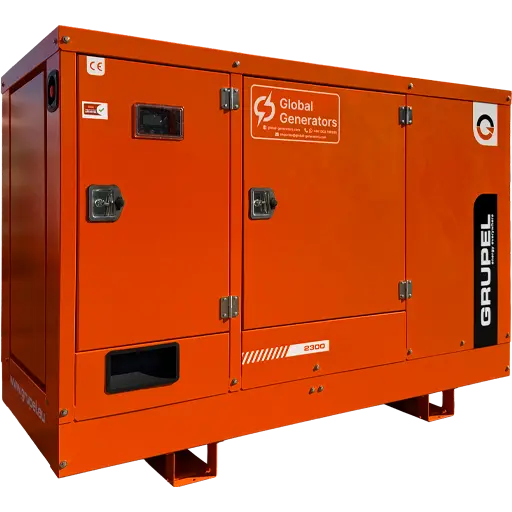
Grupel PL110D5
Cummins C110D5Q

Cummins C110D5Q
Cummins C110D5
Cummins C110D5