Cummins C90D5
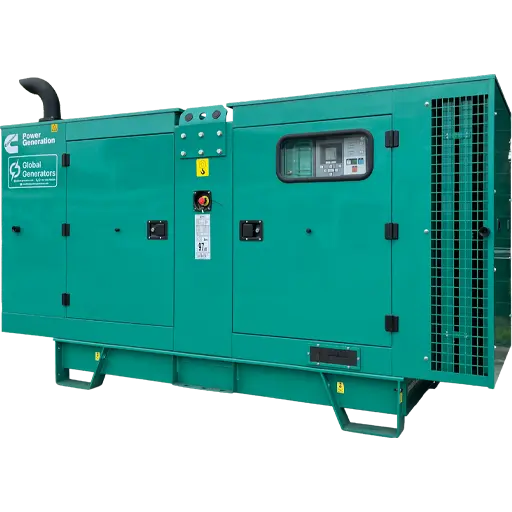
Cummins C90D5
Standby90 kVA
Prime82 kVA
EngineCummins
TypeSilent
Voltage400V
Made InIndia
kVA measures power and kWh measures energy, so converting between them needs a run time. Enter the generator size, load and hours to find the energy produced. Or switch direction to find the kVA you need for a given amount of energy.
kWh = kVA × PF × load % × hours
kVA = kWh ÷ (hours × PF × load %)
Where: kWh = energy in kilowatt-hours · kVA = generator rating · PF = power factor (0.8 for diesel generators) · load % = average loading of the generator · hours = run time
Examples:
Diesel generators are rated at 0.8 PF. Use 1.0 for purely resistive loads such as heaters.
Energy
480 kWh
Average output: 60 kW
100 kVA × 0.8 × 75% × 8 h = 480 kWh
Browse generators around 100 kVA: 100 kVA Generators
| kVA | kW at load | kWh per hour | kWh per 8 hours | kWh per 24 hours |
|---|---|---|---|---|
| 10 kVA | 6 | 6 | 48 | 144 |
| 15 kVA | 9 | 9 | 72 | 216 |
| 20 kVA | 12 | 12 | 96 | 288 |
| 25 kVA | 15 | 15 | 120 | 360 |
| 30 kVA | 18 | 18 | 144 | 432 |
| 40 kVA | 24 | 24 | 192 | 576 |
| 50 kVA | 30 | 30 | 240 | 720 |
| 60 kVA | 36 | 36 | 288 | 864 |
| 80 kVA | 48 | 48 | 384 | 1152 |
| 90 kVA | 54 | 54 | 432 | 1296 |
| 100 kVA | 60 | 60 | 480 | 1440 |
| 150 kVA | 90 | 90 | 720 | 2160 |
| 200 kVA | 120 | 120 | 960 | 2880 |
| 250 kVA | 150 | 150 | 1200 | 3600 |
| 300 kVA | 180 | 180 | 1440 | 4320 |
| 400 kVA | 240 | 240 | 1920 | 5760 |
| 500 kVA | 300 | 300 | 2400 | 7200 |
| 600 kVA | 360 | 360 | 2880 | 8640 |
| 700 kVA | 420 | 420 | 3360 | 10080 |
| 800 kVA | 480 | 480 | 3840 | 11520 |
| 900 kVA | 540 | 540 | 4320 | 12960 |
| 1000 kVA | 600 | 600 | 4800 | 14400 |
| 1250 kVA | 750 | 750 | 6000 | 18000 |
| 1500 kVA | 900 | 900 | 7200 | 21600 |
| 2000 kVA | 1200 | 1200 | 9600 | 28800 |
| 2500 kVA | 1500 | 1500 | 12000 | 36000 |
| 3000 kVA | 1800 | 1800 | 14400 | 43200 |
| kWh | kVA required | Nearest generator size |
|---|---|---|
| 50 kWh | 10.42 | 15 kVA generators → |
| 100 kWh | 20.83 | 25 kVA generators → |
| 200 kWh | 41.67 | 50 kVA generators → |
| 250 kWh | 52.08 | 60 kVA generators → |
| 500 kWh | 104.17 | 150 kVA generators → |
| 750 kWh | 156.25 | 200 kVA generators → |
| 1000 kWh | 208.33 | 250 kVA generators → |
| 1500 kWh | 312.5 | 400 kVA generators → |
| 2000 kWh | 416.67 | 500 kVA generators → |
| 2500 kWh | 520.83 | 600 kVA generators → |
| 5000 kWh | 1041.67 | 1250 kVA generators → |
| 7500 kWh | 1562.5 | 2000 kVA generators → |
| 10000 kWh | 2083.33 | 2500 kVA generators → |
kVA is a rate: how much power a generator can deliver at any moment. kWh is a quantity: how much energy is delivered over time. Think of kVA as the size of the tap and kWh as the amount of water that has come out of it.
That's why you can't convert kVA straight to kWh. You also need to know:
So a 100 kVA generator running at 75% load for an 8-hour working day produces about 480 kWh. At full load it produces 80 kWh every hour.
Working backwards is how you size a generator from an energy figure:
Another example: a site using 1000 kWh over 24 hours needs about 69.4 kVA at 75% load and 0.8 PF, so an 80 kVA generator would suit.
One important caution: a kWh total only gives you the average demand. If your load has peaks, such as motors starting, kitchen equipment, or machinery running at the same time, size the generator for the peak, not the average. Our kW to kVA calculator is the better tool when you know your peak load in kW.
Diesel generators are happiest working. Running a set at around 50-80% of its rating for most of its life is a good target. Running a diesel engine very lightly loaded for long periods can lead to "wet stacking": unburnt fuel and carbon building up in the exhaust. That's why it's worth not oversizing too far. The 75% default in this calculator builds sensible headroom into the result without leaving the generator underworked.
Once you know the kWh, you can estimate fuel use. As a rough guide, a diesel generator working at a reasonable load uses somewhere around 0.25-0.35 litres of fuel per kWh, so 480 kWh would need roughly 120-170 litres. Fuel efficiency varies by engine and load, so check the fuel consumption figures on each generator's product page for an accurate estimate. Browse our diesel generators to compare.
No. kVA is power and kWh is energy, so you need a time period. You also need a power factor to turn kVA into kW, and ideally the average load. The formula is kWh = kVA × PF × load % × hours.
At full load and 0.8 PF, a 100 kVA generator produces 80 kWh per hour. At 75% load that's 60 kWh per hour, or 480 kWh over an 8-hour day.
Divide the kWh by the hours in the billing period to get your average kW, then divide by 0.8 to get kVA. Bear in mind this is an average: your peak demand will be higher. If your supplier provides half-hourly data or a maximum demand figure, size from that instead.
Use 75% to size a new generator. That leaves headroom while keeping the engine well loaded. If you're calculating the output of an existing generator, enter its actual average load.
The same formula applies to any AC source: kVA = kWh ÷ (hours × PF × load %). For inverters, use the power factor from the inverter's specification.
Tell us what you need to power and our team will recommend the right generator, with prices up front.
Cummins C90D5
Cummins C90D5
Grupel PL110D5
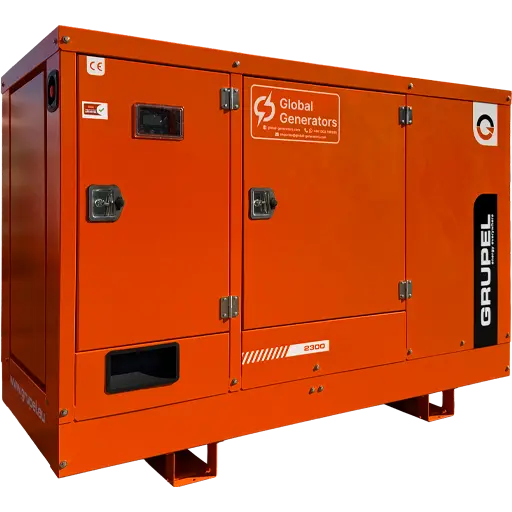
Grupel PL110D5
Cummins C110D5Q

Cummins C110D5Q
Cummins C110D5
Cummins C110D5