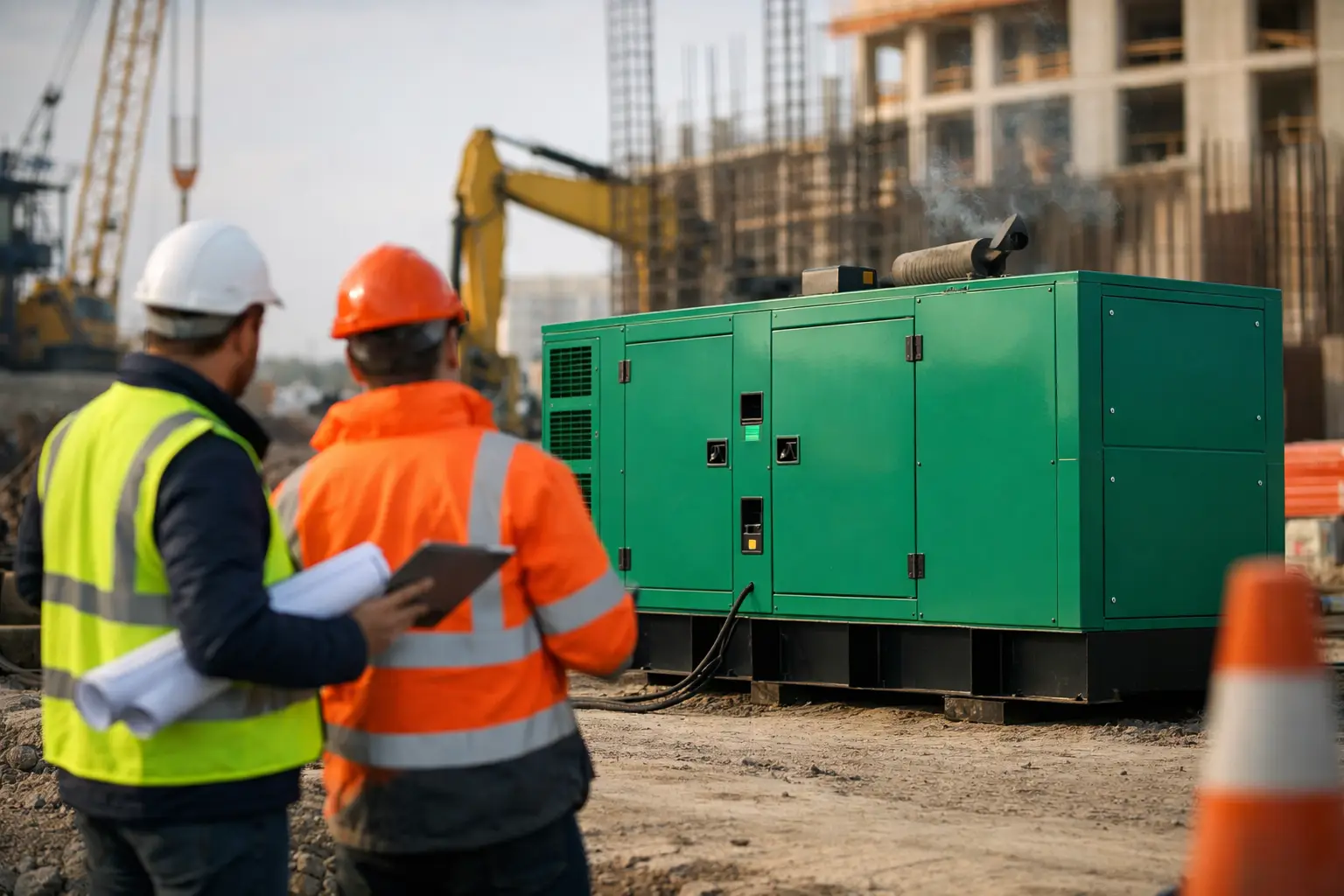
A generator can be correctly sized, delivered on time and fitted by a competent contractor, yet still leave a site exposed if the compliance work is treated as an afterthought. For facilities managers, project engineers and procurement teams, this generator compliance guide sets out the practical decisions that should be resolved before standby or prime power equipment is commissioned in the UK.
Compliance is not one approval or certificate. It is the combined position on electrical safety, fuel storage, emissions, noise, installation design, testing and ongoing maintenance. The exact requirements depend on the generator rating, whether it operates only during outages or routinely as a prime power source, its location and the site’s existing infrastructure.
Start with the operating duty and site risk
The first compliance decision is not the enclosure colour or tank size. It is the operating duty. A standby generator is designed to support a load when the normal supply fails. A prime-rated set is intended for variable load over extended operating periods where utility power is unavailable or unreliable. Running a standby-rated unit as a routine production asset can create warranty, reliability and specification issues before regulatory obligations are considered.
Document the critical loads, starting currents, permissible interruption time and expected annual running hours. A hospital, telecoms facility or data-dependent operation may need automatic mains failure controls, synchronisation, load prioritisation and a fuel resilience plan that go well beyond a basic manual-start set. Construction compounds and temporary works have different risks, particularly around distribution, earthing and access.
The generator rating must also be based on the actual duty, not simply the connected load. Motor starts, harmonic loads, future capacity and altitude or ambient temperature can all affect the required kVA. An undersized unit may overload during a transfer event; an unnecessarily oversized unit may spend too much time at low load, increasing the risk of poor combustion and maintenance problems.
Generator compliance guide: electrical installation
Electrical work must be designed, installed and maintained so that danger is prevented, as required by the Electricity at Work Regulations 1989. In practice, this means treating the generator, changeover system and distribution arrangement as one engineered installation rather than separate purchases.
A competent electrical designer should establish the earthing arrangement and confirm how neutral-earth bonding will operate in both mains and generator modes. This is a common point of failure. The correct arrangement depends on the supply system, generator controls and transfer switching. A changeover panel that does not switch or bond the neutral correctly can compromise fault protection and introduce unacceptable touch-voltage risk.
The installation should also address protection coordination, fault levels, cable sizing, isolation, labelling and safe access for operation. Automatic transfer switches must prevent back-feeding into the public network. Where parallel operation with the grid is proposed, the connection arrangements and protection requirements are more complex and must be agreed with the relevant network operator.
After installation, inspection, testing and clear records are essential. Periodic testing should prove more than engine starting. It should confirm transfer performance, generator voltage and frequency stability, alarms, fuel supply, emergency stops and the response of the real critical load. Where a full site transfer is not operationally possible, a planned load-bank test can provide valuable evidence, but it does not replace validating the complete system under a controlled site test.
Control emissions, exhaust and air quality
Diesel generators produce exhaust gases, heat and particulates. The compliance position depends heavily on engine type, operating hours, location and whether the unit is treated as stationary plant. Environmental permits or local authority requirements may apply, particularly for larger installations and sets used frequently.
Do not assume that an emergency-only generator is automatically exempt from every control. Its actual use matters. Regular exercise, peak-lopping, demand response or prolonged operation after supply failures may alter the environmental assessment. Keep accurate run-hour records and define the permitted operating purpose from the outset.
Exhaust discharge needs careful design. The stack position must reduce the chance of fumes entering air intakes, occupied spaces, neighbouring buildings or public areas. It must also be compatible with fire separation, planning constraints and maintenance access. A generator placed in a plant room requires sufficient combustion air and cooling-air paths. Restricting airflow to reduce noise can cause overheating, derating and premature failure.
For sensitive sites, consider emissions control equipment as part of the initial specification rather than an expensive retrofit. The appropriate solution depends on the engine, duty cycle and local air-quality conditions. There is no universal filter package that suits every installation.
Treat noise as a planning and operational issue
Noise complaints can restrict generator testing and force remedial work after installation. Silent generators reduce noise at source, but enclosure performance alone does not determine the sound level at a boundary. Exhaust noise, cooling airflow, vibration transmission, reflections from walls and the time of operation all matter.
Assess noise at the nearest sensitive receptor, not only beside the generator. A roof-mounted unit, for example, may require acoustic screening, a suitable silencer and anti-vibration measures even when it is supplied in a weatherproof acoustic enclosure. Planning conditions or landlord requirements may impose defined noise limits, especially in mixed commercial and residential areas.
Routine exercise should be scheduled with the local setting in mind. A brief weekday test during normal working hours may be acceptable where overnight operation or repeated extended tests are not. Record the agreed regime and retain maintenance evidence in case the site must demonstrate why the equipment was operated.
Store fuel safely and plan for containment
Fuel resilience is central to uptime, but diesel storage creates fire, pollution and security obligations. The tank arrangement should be sized around the required autonomy, realistic generator consumption and refuelling access. More fuel is not always better if the stored volume cannot be managed properly or fuel quality degrades before it is used.
Tanks and fuel lines require suitable containment to prevent a spill reaching drains, soil or watercourses. The precise secondary-containment and inspection requirements depend on the tank type, capacity and location. Site teams should also consider protected fill points, overfill prevention, leak detection, emergency isolation and clear identification of valves.
DSEAR assessments may be relevant where diesel fuel, vapours, batteries or other hazardous substances create a risk of fire or explosion. Fire precautions should reflect the complete installation, including hot exhaust components, electrical equipment, fuel transfer equipment and battery charging. A clear emergency procedure is as important as the physical equipment: staff must know who can isolate the generator and fuel supply, and how a spill is reported and contained.
Fuel quality deserves equal attention. Water ingress, microbial contamination and sediment can disable a generator that has otherwise been well maintained. Long-term stored diesel should be sampled and treated under a defined fuel-management programme, particularly where the set is relied upon for life safety or high-value operations.
Build compliance into the installation design
Planning consent, building control approval and landlord consent are site-specific matters that should be checked before delivery. They can affect external generator placement, roof loading, flue routing, visual impact, fuel tanks, acoustic barriers and structural openings. Temporary generators may still require permissions or notification depending on duration and location.
Safe access must be designed in for refuelling, service work and eventual replacement. An open generator may suit a secure plant area with purpose-built acoustic treatment, while a silent canopy set can simplify external deployment. Neither format is automatically compliant. The selection must match the environment, security level, weather exposure, noise target and maintenance strategy.
For indoor installations, consider lifting routes, fire stopping, ventilation louvres, drainage and the safe removal of exhaust heat. For external sets, account for base design, flood risk, vehicle impact protection and clear working space around access doors. Equipment that cannot be serviced safely will not remain reliable for long.
Keep evidence, not assumptions
A defensible compliance file makes future inspections, insurance reviews and handovers far more straightforward. It should be updated when the generator, controls, fuel system or site use changes. At commissioning, retain at least the following records:
- Generator data sheets showing standby or prime ratings, voltage, frequency and engine details.
- Electrical design information, test certificates, earthing details and transfer-switch settings.
- Noise, emissions and planning assessments where applicable, together with any permits or consents.
- Fuel tank specifications, containment checks, spill procedures and fuel-quality records.
- Commissioning reports, maintenance schedules, exercise logs and fault rectification history.
Compliance is not static. A site expansion, new tenant, changed operating hours or additional critical load can invalidate assumptions made at the original installation. Review the generator system whenever the electrical distribution or operational risk profile changes.
For new projects and replacement sets, involve the generator supplier early enough to confirm duty rating, enclosure, fuel autonomy and control requirements before civil and electrical works are fixed. Global Generators can support this specification process with generator sets across standby and prime power applications. The practical objective is simple: install equipment that can be proven safe, lawful and ready to carry the load when normal power is no longer available.