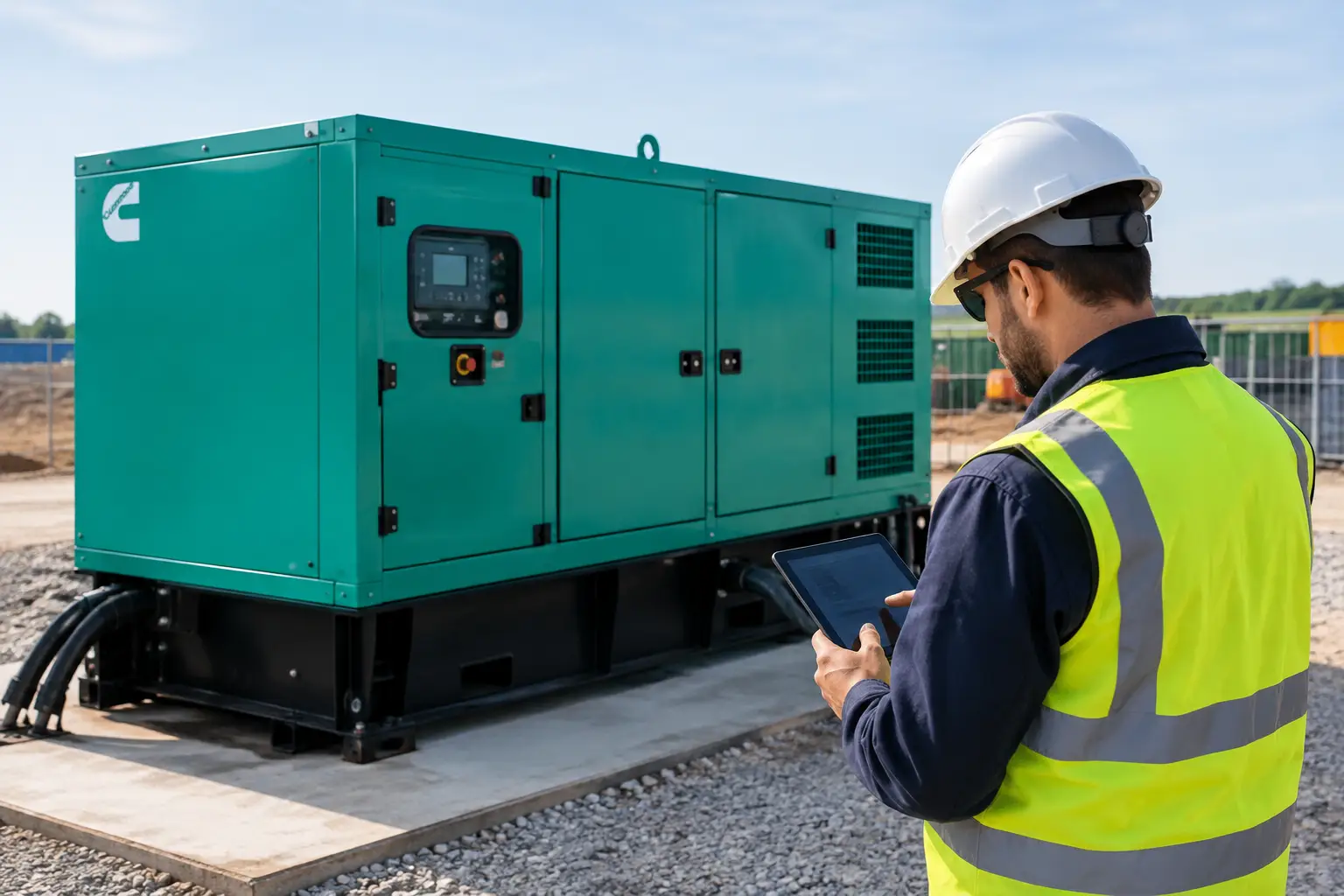
A generator can appear correctly sized on paper and still overload the moment a large motor starts, a second distribution board is energised, or a site’s load profile changes. Knowing how to prevent generator overload means looking beyond the generator’s headline kVA rating. The real requirement is a matched system: generator, connected loads, starting sequence, protection settings and operating duty must all be considered together.
For critical standby and prime-power installations, overload is not simply an inconvenience. It can trip the output breaker, cause unacceptable voltage and frequency dip, disrupt sensitive equipment, accelerate engine wear and leave essential systems without supply. The right approach begins before a generator is selected and continues through commissioning, operation and maintenance.
Understand what generator overload looks like
Generator overload occurs when the electrical demand exceeds the capability of the generating set. This may be a sustained overload, where running demand is higher than the available rated output, or a short-duration event caused by motor starting, transformer energisation or a sudden block load.
The generator’s alternator, engine and control system must all respond to that demand. When a load is applied too quickly or exceeds capacity, engine speed can fall and frequency will drop. The automatic voltage regulator may struggle to maintain voltage. If protection operates, the generator breaker may open to protect the set. Where protection does not operate correctly, repeated overloading can damage alternator windings, overheat cables and place unnecessary stress on the engine.
A key distinction is between kVA and kW. Generator ratings are usually stated in kVA, while many site loads are described in kW. The relationship depends on power factor. A 500 kVA generator at 0.8 power factor has a nominal 400 kW capability. Selecting a set solely against a kW total, without checking power factor and load type, is a common source of under-sizing.
How to prevent generator overload through accurate sizing
The most effective control is to specify the right generator from the outset. Start with a load schedule that identifies every load the set must support, its running kW or kVA, voltage, phase arrangement, power factor and expected operating hours. Include loads that may be added during an emergency or shift change, not only the equipment normally running at the time of survey.
Add the running loads, then assess the largest starting demand. Motors, pumps, compressors, conveyors and refrigeration plant can draw several times their normal running current during direct-on-line starting. That starting current may only last seconds, but it can still exceed the generator’s transient load acceptance capability and cause a trip or severe voltage dip.
Do not assume that a larger kVA figure automatically solves every starting issue. The alternator specification, engine response, motor starting method and permissible voltage dip all influence performance. A set serving a fire pump, large chiller or process compressor may need to be selected around motor-starting performance rather than steady-state load alone.
The duty rating also matters. A standby-rated generator is intended for emergency use, typically during utility failure, and has different operating limits from a prime-rated set that supplies variable load for extended periods. Using standby capacity as though it were unrestricted prime power creates a predictable overload risk. For sites with frequent outages, remote operation or planned utility downtime, confirm that the chosen rating reflects the true duty cycle.
Allow sensible spare capacity for planned growth and uncertain operating conditions, but avoid excessive oversizing. A diesel generator that continually operates at very low load can experience poor combustion and wet stacking. The correct set is not simply the biggest available unit. It is the unit that handles running load, transient demand and future requirements while operating within an appropriate load range.
Control starting currents and load steps
Once capacity has been established, control the order in which loads are applied. This is particularly important where several motors are connected to one generator. Starting all equipment at once can create a combined inrush demand far above the generator’s capability, even if the total running load is well within rating.
Use a staged start sequence through the control system, building management system or motor control centre. Bring essential loads online first, allow the generator to stabilise, then start the next load after a defined delay. In a standby application, life-safety and operationally critical circuits should take priority. Non-essential plant can be held off until stable supply is confirmed.
Motor starting methods can reduce the load step imposed on the generator. Star-delta starters, soft starters and variable speed drives may lower starting current compared with direct-on-line starting. The trade-off is that each method must be assessed for the specific motor and driven equipment. Variable speed drives, for example, can introduce harmonic distortion, which may require alternator and generator sizing consideration beyond the basic running kW.
For larger sites, load shedding is an effective secondary defence. A load-shedding scheme monitors generator loading and disconnects predefined non-critical circuits before overload protection trips the whole set. Suitable loads might include comfort cooling, non-essential heating, selected process equipment or battery charging circuits. The sequence should be documented, tested and agreed with operations so that automatic shedding does not create an unacceptable safety or production issue.
Match distribution and protection to the generator
A correctly sized generator can still be overloaded by poor distribution design. Verify that the main breaker, downstream breakers, cables, busbars and automatic transfer switch are rated for the generator output and the anticipated fault level. Protective devices must be coordinated so that a local circuit fault clears locally rather than causing the generator main breaker to open.
Check phase balance on three-phase systems. A generator may have acceptable total kW demand but excessive current on one phase, particularly where a site has accumulated single-phase loads over time. Uneven phase loading causes voltage imbalance, overheating and reduced usable capacity. Periodic measurement under representative load will identify whether circuits need redistributing.
Generator controllers generally provide overload, overcurrent, under-frequency and under-voltage protection. These settings should be commissioned to suit the generator rating, the load profile and the protection study. Raising trip settings to stop nuisance alarms is not a solution. It can expose the alternator, engine and distribution equipment to damaging conditions. Equally, settings that are too sensitive can trip the set during legitimate short-duration starting events.
Automatic transfer switches also need careful commissioning. If the generator is required to accept an entire building load immediately after mains failure, assess whether the resulting block load is acceptable. In some installations, a delayed or sequential transfer arrangement is preferable, particularly where multiple distribution boards, lifts, pumps or refrigeration systems are involved.
Monitor actual demand, not assumptions
Load schedules age quickly. New machinery, temporary cabins, additional chargers and operational changes can materially alter demand. Fit metering or use the generator controller to record kW, kVA, power factor, current by phase, frequency and peak demand. Review these figures during normal operation and during generator testing.
A regular load-bank test is valuable where the site’s emergency load is too light or unpredictable to prove generator performance. It confirms that the engine, alternator, cooling system and controls can operate at a meaningful proportion of rated capacity. However, a load bank does not fully replace an on-load test with the real site equipment. Actual testing is needed to verify transfer operation, load sequencing, motor starts and load-shedding logic.
Treat sudden changes in frequency, recurring breaker trips, visible exhaust smoke, overheating alarms and repeated voltage dips as investigation points. They may indicate overload, but can also point to fuel restrictions, governor issues, alternator faults, poor cable connections or an incorrectly configured controller. Accurate fault finding prevents an operational issue being misdiagnosed as a simple capacity problem.
Maintain the generator for its stated output
A set can only deliver its rated performance when it is properly maintained. Restricted air or fuel filters, cooling-system faults, degraded batteries and poor fuel quality can all reduce reliability when load is applied. Ambient temperature and altitude may also require derating, as high temperatures reduce engine and alternator cooling capacity.
Maintenance plans should include checks of output connections, breaker operation, earthing arrangements, battery condition, fluid levels and controller alarms. For prime-power sets, monitor operating hours and loading trends closely. A generator that has gradually become overloaded will often show warning signs before it fails under a critical demand event.
When a new load is proposed, assess it before connection rather than waiting for the next test run to reveal a problem. Global Generators can support this process by matching standby or prime-rated equipment, enclosure type, voltage and capacity to the application. A clear load schedule and realistic starting profile give engineers the information needed to specify power that remains available when the site needs it most.