Quick answer
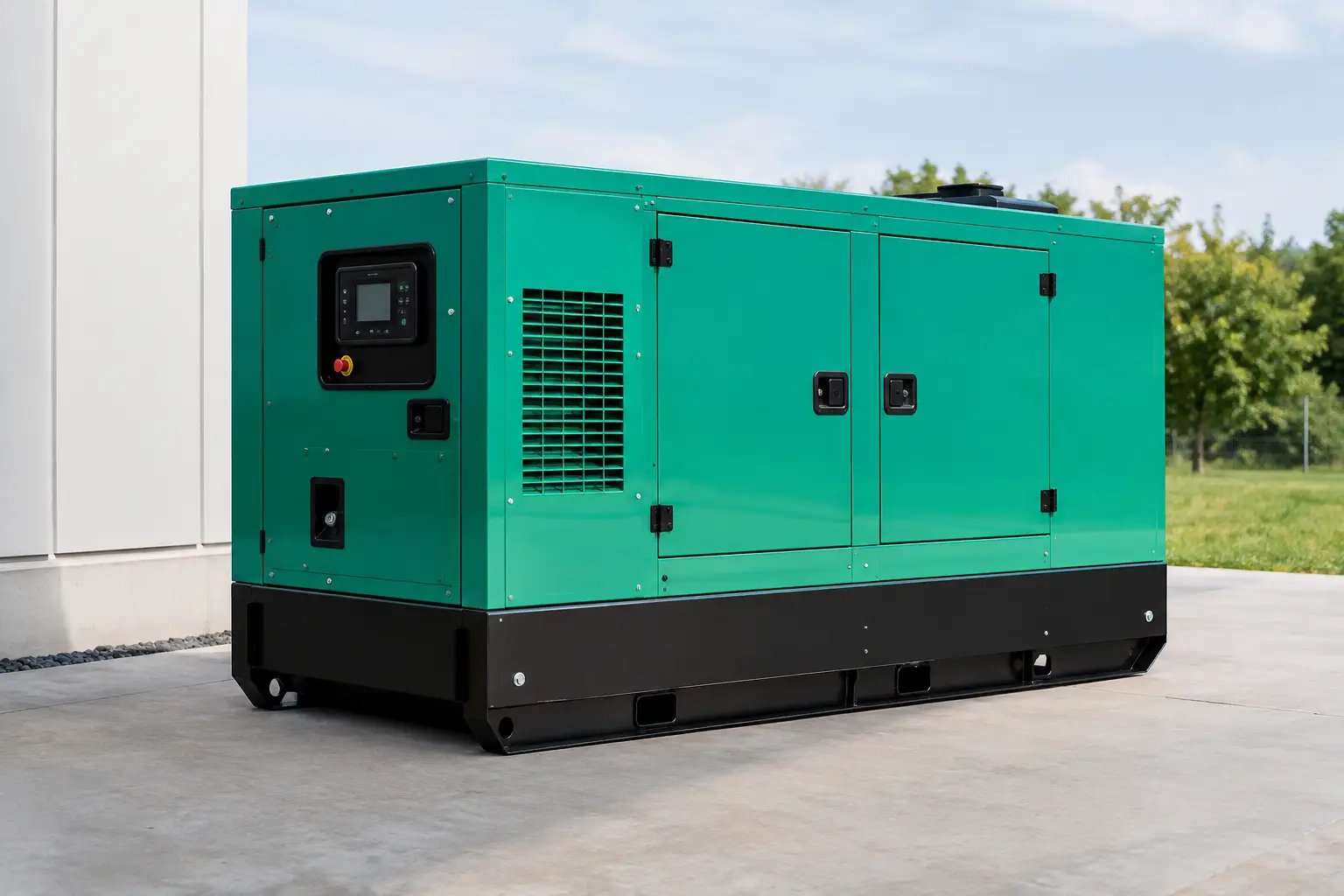
A 30 kVA generator delivers 24 kW of three-phase power on its prime rating (at the standard 0.8 power factor), or 27 kW on the single-phase Cummins C38D5-1P. That is enough to run a whole house, a small farm, a workshop that starts its largest motor on its own, or a small office or retail unit. The catch is the label: depending on the model, "30 kVA" can mean 24 kW or 30 kW, and a three-phase set only gives each phase about a third of its total.
This guide uses datasheet figures from the 30 kVA generators in our range, plus real installations, to show what a 30 kVA set can run and where its limits sit. If you are comparing sizes, our guides to what a 20 kVA generator can run and what a 50 kVA generator can run cover the sizes either side.
What does 30 kVA actually mean?
kVA measures apparent power, while most equipment is labelled in watts or kW. On a three-phase set, multiply kVA by the power factor of 0.8: 30 kVA × 0.8 = 24 kW. Plan around kW, not kVA.
Three models in our 30 kVA range show how the labels differ:
| Model | Supply | Standby rating | Prime rating |
|---|---|---|---|
| Cummins C33D5 | Three phase, 400 V | 33 kVA / 26 kW | 30 kVA / 24 kW |
| Cummins C33D5-1P | Single phase, 230 V | 28.3 kVA / 28.3 kW | 25.7 kVA / 25.7 kW |
| Cummins C38D5-1P | Single phase, 230 V | 30 kVA / 30 kW | 27 kVA / 27 kW |
Three points stand out:
- "30 kVA" means different things. The three-phase C33D5 is 30 kVA on prime and 33 kVA on standby. The single-phase C38D5-1P is 30 kVA on standby and 27 kVA on prime. Always check which rating a listing quotes.
- Single-phase sets list more kW per kVA. The single-phase models list kW equal to kVA, so the C38D5-1P offers 27 kW prime against 24 kW for the three-phase C33D5.
- Standby is for emergencies. Plan around the prime figure if you will run the generator often.
> Expert tip: Two "30 kVA" generators can differ by 6 kW of usable power. Ask which rating is quoted, and whether the supply is single or three phase.
Single phase or three phase: the limit to understand
Most homes in the UK have a single-phase supply. Workshops, farms and many commercial premises use three phase. On a three-phase generator, single-phase equipment draws from one phase only.
For the three-phase C33D5, that means:
- Each phase carries roughly one third of the total, about 10 kVA on the prime rating. At 230 V that is around 43 A per phase.
- The product page lists 48 A per phase at the standby rating, which matches 33 kVA split three ways.
- Single-phase sockets, lighting circuits and small machines should be spread evenly across the three phases.
So a three-phase 30 kVA set is a poor fit for a single-phase house with an electric shower and EV charger, and a single-phase set such as the C38D5-1P is the better match. For a deeper comparison, see our guide to single phase vs three phase, or browse our single phase generators and 3 phase generators.
Why starting loads matter
Motors, compressors, pumps and fridges draw several times their running current for a moment as they start. As a rough guide, a motor started direct-on-line should be no more than about a third of the generator's kW rating, which on a 24 kW set is around 8 kW. Soft starters or star-delta starters allow larger motors. Alternators differ, so confirm the figure with the supplier for the exact set.
What can a 30 kVA generator run in a home?
A single-phase 30 kVA set can carry a whole house. We supplied a Cummins C33D5-1P as whole-house backup for a rural home in Newton Abbot, Devon, and the case study describes capacity for heating and hot water, the cooker and kitchen appliances, lighting, freezers, broadband, home office equipment and EV charging. Typical running loads:
| Appliance | Typical running load | Notes |
|---|---|---|
| Fridge-freezer | 100 to 300 W | Higher surge on start |
| LED lighting (whole house) | 100 to 300 W | Very light load |
| Gas boiler, pump and controls | 100 to 250 W | Keeps heating running |
| TV, router, laptops | 200 to 400 W | Light load |
| Kettle | 2 to 3 kW | Short bursts |
| Electric oven | 2 to 3 kW | Cycles on and off |
| Induction hob (two zones) | 3 to 4 kW | Use one or two zones |
| Washing machine | 0.5 to 2.2 kW | Peaks when heating water |
| Electric shower | 7.5 to 10.5 kW | Large single load |
| EV charger (home type) | About 7 kW | Continuous while charging |
Worked example 1: a full house without EV charging. The essentials (fridge-freezer, lighting, boiler, TV and router, kettle) come to about 4.3 kW. Add an 8.5 kW electric shower, a 3 kW oven and a 2 kW washing machine and the total is about 17.8 kW, roughly 66% of the 27 kW prime rating on the C38D5-1P. That is comfortable.
Worked example 2: the same house with an EV charger. Adding a 7 kW charger takes the total to about 24.8 kW. That is 92% of the 27 kW prime rating and about 83% of the 30 kW standby rating. For occasional emergency use it can work, but for regular running you would manage the loads or step up a size.
A house generator should be connected through a properly installed changeover switch by a qualified electrician, never plugged into a socket. The HSE's electrical safety guidance covers the general principles. If you are comparing options for a property, see our generators for homes.
What can a 30 kVA generator run in a workshop, on a farm or in an office?
Three-phase machinery suits the C33D5, as long as the biggest motor starts on its own.
| Equipment | Typical running load | Notes |
|---|---|---|
| Air compressor (5.5 kW motor) | 5.5 kW | Biggest starting load |
| Dust or fume extractor | 2 to 3 kW | Start it first |
| Machine tools (lathe, saw) | 2 to 3 kW each | Surge on start |
| Milking vacuum pump | 4 to 5.5 kW | Start before other motors |
| Milk cooling compressor | 3 to 4 kW | Priority load |
| Water heater | 3 kW | Steady load |
| Air conditioning or VRF | 5 to 8 kW | High start-up surge |
| Refrigeration | 2 to 4 kW | Compressor surges |
A workshop. A 5.5 kW compressor, a 3 kW extractor, 1.5 kW of lighting, two 3 kW machines and 3 kW of small power total about 19 kW. That is about 79% of the 24 kW prime rating, and the 5.5 kW compressor is under the 8 kW direct-on-line guide.
A farm. A small dairy with a 5.5 kW vacuum pump, a 4 kW milk cooler, a 3 kW water heater, a 2.2 kW wash pump, 1.5 kW of lighting and a 2 kW feed auger totals about 18.2 kW, around 76% of the prime rating.
A small office or retail unit. 8 kW of air conditioning, 2.5 kW of lighting, 2 kW of IT, 4 kW of small power, 3 kW of refrigeration and a 0.5 kW automatic door come to 20 kW, about 83% of 24 kW. That is workable for backup but leaves little headroom for growth.
For a real example of the size, see our Cummins C38D5Q supplied to a groundwork contractor's workshop in Buckinghamshire.
> Expert tip: On a three-phase generator, spread single-phase equipment evenly across the phases. Loading one phase can trip the generator long before the total reaches its rating.
What a 30 kVA generator will not run comfortably
- Several large motors starting at the same moment.
- A motor above about 8 kW started direct-on-line on the three-phase set.
- A single-phase house with an electric shower, EV charger and other large loads all running together.
- A full commercial kitchen alongside other loads.
- Large single-phase loads concentrated on one phase of a three-phase set.
- Continuous running at close to 100% load with no headroom.
How to size a 30 kVA generator for your site
- List everything that must keep running. Be strict and include only essentials.
- Find each running load on the rating plate, in kW or amps.
- Identify the largest starting load and check its starting method.
- Decide single or three phase from your supply and your largest single-phase load.
- Add 20 to 25% headroom, and aim for a typical load of 40 to 80%, because diesel engines run lightly loaded for long periods can suffer from wet stacking.
> Not sure your load list adds up? Send us your equipment list, your supply type and how often the generator will run, and we will check it against a set from stock. Use the contact page or call +44 1302 700200.
30 kVA or 50 kVA?
Choose a 30 kVA set if your realistic load stays under about 19 kW on three phase, or about 22 kW on the single-phase C38D5-1P, which is 80% of the prime rating in each case. Above that, or with large motors to start, look at a 50 kVA generator, which gives 40 kW on its prime rating. If your load is smaller, a 20 kVA generator may be enough. Our guide to sizing a generator around critical loads explains how to build the load list.
Fuel use and run times
The Cummins C33D5 datasheet gives fuel consumption at each load on its prime rating. Run time depends on the 175-litre tank.
| Load | Output | Fuel use | Tank run time (175 litres) |
|---|---|---|---|
| 25% | 6 kW | 2.9 litres per hour | About 60 hours |
| 50% | 12 kW | 4.1 litres per hour | About 43 hours |
| 75% | 18 kW | 5.6 litres per hour | About 31 hours |
| 100% | 24 kW | 7.6 litres per hour | About 23 hours |
At the standby rating the same datasheet shows 3.0, 4.4, 6.1 and 8.7 litres per hour. The single-phase C38D5-1P is listed at 9 litres an hour at full prime load, with 19.4 hours of autonomy on its 175-litre tank. Run times use nominal tank capacity, so allow a reserve in practice. For ways to cut fuel use, see our guide to fuel saving methods for generators.
Standby or prime, and how it starts
Standby versus prime. Standby is for emergencies during a mains failure and prime is for regular running. Warranty cover reflects that: on the Cummins sets it is two years or 500 hours for standby, and one year with unlimited hours for prime. For the full explanation, read our guide to prime versus standby power.
Automatic starting. These models use the Cummins PowerStart 0600 controller. The C38D5-1P product page lists automatic and manual start, remote start, and automatic mains failure functionality, which suits standby generators that must start without anyone on site.
Size, weight and noise
| Specification | Cummins C33D5 | Cummins C38D5-1P |
|---|---|---|
| Supply | Three phase, 400 V | Single phase, 230 V |
| Length × width × height | 2,253 × 969 × 1,619 mm | 2,253 × 969 × 1,619 mm |
| Dry weight | 1,092 kg | 1,127 kg |
| Wet weight | 1,127 kg | 1,162 kg |
| Fuel tank | 175 litres | 175 litres |
| Canopy noise | 77 dB(A) at 1 m | 77 dB(A) at 1 m |
The 1 m figure is not directly comparable with figures quoted at 7 m, so read our guide to how quiet a silent generator really is before choosing.
Safety and regulations
- Connection and earthing. Our generator earthing requirements guide explains what applies on UK sites.
- Ventilation and exhaust. Diesel exhaust contains carbon monoxide. Never run a generator indoors or in an enclosed space.
- Permits. Environmental permit rules for medium combustion plants and specified generators apply to far larger installations than a 30 kVA set. You can confirm the thresholds in the GOV.UK guidance on medium combustion plants and specified generators.
Frequently asked questions
How many kW is a 30 kVA generator?
On a three-phase set at a 0.8 power factor, 24 kW. The single-phase Cummins C38D5-1P lists 27 kW prime and 30 kW standby, because its listed kW equals its kVA.
Can a 30 kVA generator run a whole house?
Yes. A single-phase set can run heating, hot water, cooking, lighting and a shower, and in our Devon case study it provided whole-house backup. Adding an EV charger takes the load close to the prime rating, so manage the loads if you will run it regularly. Have it connected through a changeover switch by a qualified electrician.
How much diesel does a 30 kVA generator use per hour?
On the Cummins C33D5 datasheet, 2.9 litres an hour at 25% prime load, rising to 7.6 litres an hour at full prime load. The single-phase C38D5-1P is listed at 9 litres an hour at full prime load.
Is a 30 kVA generator single phase or three phase?
Both exist. The C33D5 is three phase at 400 V, and the C33D5-1P and C38D5-1P are single phase at 230 V. Choose by your supply and your largest single-phase load.
Why do some 30 kVA generators have different ratings?
Because manufacturers quote either the standby or the prime rating. The C33D5 is 33 kVA standby and 30 kVA prime, while the C38D5-1P is 30 kVA standby and 27 kVA prime. Always check which rating a listing quotes.
Is 30 kVA enough, or do I need 50 kVA?
If your realistic running load stays under about 19 kW on three phase, or about 22 kW on the single-phase set, 30 kVA is usually enough. Above that, or with large motors to start, a 50 kVA set gives more headroom.
Conclusion
A 30 kVA generator suits larger homes, farms, workshops and small commercial sites, delivering 24 kW prime on three phase or 27 kW on single phase. Check which rating the listing quotes, choose the phase type first, start big motors one at a time and keep a sensible margin.
> Talk to a real person: Global Generators is an authorised Cummins reseller and an authorised Grupel and Pramac dealer, with new diesel generators in stock for UK delivery and export. Browse our full 30 kVA generator range or the stock list, then contact our team on +44 1302 700200 or at enquiries@global-generators.com and we will help you match a set to your load.